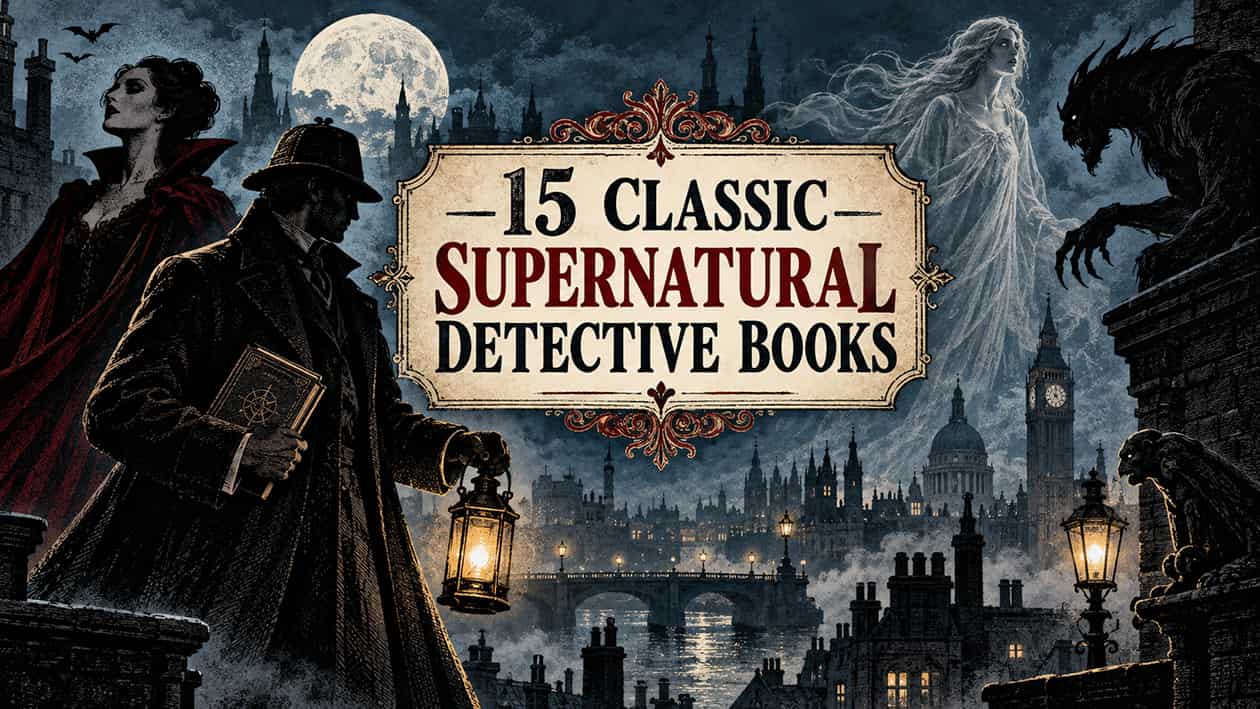
15 Classic Supernatural Detective Books and Stories You Can Read Free
Long before paranormal investigators filled modern mysteries, writers were already sending detectives (professional and amateur) into haunted houses and other places to look for supernatural evidence.
Here are fifteen classic supernatural detective books and stories that I find as unsettling as anything written today. The investigators track down ghosts, vampires, and various other forces that are otherworldly—or really seem so.
This is a companion to my guide to supernatural mystery books that are also great detective stories. Everything below can be read online, completely free.
How I Chose These
Four tests. Everything here was published in 1930 or earlier, so it is out of copyright in the United States and you can read it free today — in practice mine run from 1872 to 1926. Investigation has to drive the plot rather than decorate it. The threat has to be supernatural, or presented convincingly enough that the investigator has to take it seriously, which is why The Hound of the Baskervilles and The Phantom of the Opera belong here even though both end in natural explanations. And I had to have read it. Nothing on this list came off somebody else’s list.
Where to Start
- Start here — Carnacki, the Ghost-Finder. Short cases, a narrator who tells them over dinner in Chelsea, and Hodgson’s decision to make some hauntings frauds and some genuine. You will know within two stories whether this whole genre is for you.
- Most frightening — The Beetle. The opening chapters do something few Victorian novels manage: they put you in a dark room with something you cannot see and will not name.
- Strangest method — The Dream Detective. Moris Klaw sprays his forehead with verbena and sleeps at the crime scene to absorb what happened there. Nobody else here works that way, and nobody since has tried it.
- Best rational explanation — A Master of Mysteries. John Bell takes hauntings for the pleasure of dismantling them, and the pleasure for the reader is watching a Victorian rationalist do it without ever quite conceding that the alternative is impossible.
- Most overlooked — “Aylmer Vance and the Vampire”. Eight stories in a weekly paper in 1914, both authors drowned three years later, and the series went uncollected until 1998. It is still far less familiar than Carnacki or John Silence.
- Best woman investigator — Luna Bartendale in The Undying Monster. A woman author, a woman psychic investigator, and an inquiry conducted through family records and local legend rather than intuition.
- My own favourite — In a Glass Darkly. Hesselius has the strongest claim to being the first of these detectives, and Le Fanu works entirely by suggestion. The small black monkey in “Green Tea” has stayed with me longer than any vampire on this list.
Sheridan Le Fanu, In a Glass Darkly (1872)
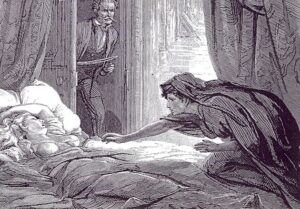
I believe Dr. Martin Hesselius, the “metaphysical physician” has the strongest claim to being fiction’s first occult detective. He documents strange events that show how the human soul can sicken and become ghastly.
The cases are quietly terrifying. In “Green Tea,” a gentle clergyman is followed by a small black monkey that only he can see; it sits on his open Bible and, in time, begins to speak. In “The Familiar,” a sea captain hears footsteps keeping pace with him through empty Dublin streets.
“The Room in the Dragon Volant” ends in a paralysis more horrible than death. “Carmilla” introduces a vampire figure that inspired Bram Stoker’s Dracula.
Le Fanu works by suggestion rather than shock, which is why these tales still unsettle.
Read In a Glass Darkly free at Project Gutenberg.
Arthur Machen, The Great God Pan (1894)
 Machen’s novella opens in a country-house laboratory, where Dr. Raymond makes a small incision in a young woman’s brain so that she may “see the great god Pan.”
What she sees destroys her mind in an instant. I was shocked by the scene.
The story then jumps ahead to London, where a mysterious Helen Vaughan moves through society and a succession of well-connected men hang themselves after an evening in her company.
Villiers, an inquisitive man-about-town, interviews, documents, and reconstructs the events. What he uncovers cannot be contained by any criminal explanation, and the closing pages describe a death that reviewers in 1894 found nearly unprintable.
Stephen King has called this one of the best horror stories. Its power lies in what Machen refuses to show: the horror sits just outside the frame, reported secondhand by witnesses who can barely bring themselves to speak.
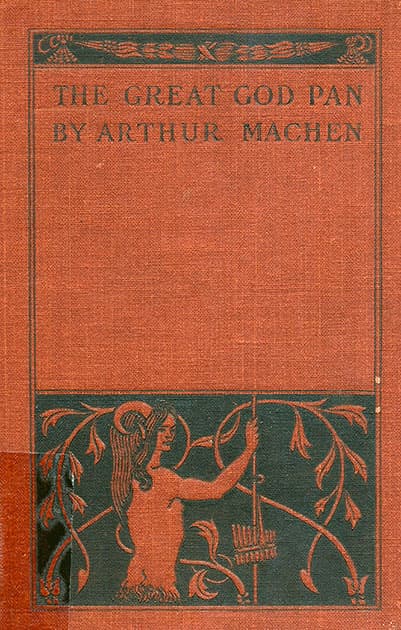
The cover is worth a look too. The Great God Pan came from the Bodley Head in 1894 with a design by Aubrey Beardsley, who in the same year illustrated Wilde’s Salome for the same publisher — the two books are products of one decadent moment. I have written elsewhere about Beardsley’s Salome images and the other great Salome pictures.
Read The Great God Pan free at Project Gutenberg.
Bram Stoker, Dracula (1897)
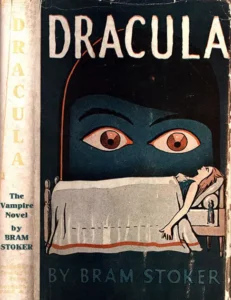 To my mind, Dracula is both Gothic horror and a supernatural investigation.
Van Helsing and his companions gather diaries, letters, newspaper clippings, phonograph recordings, and medical notes; they compare accounts, identify their adversary, work out the rules that govern him, and organize a pursuit across Europe.
The horror is in the details of the documents. Jonathan Harker, a prisoner in a Transylvanian castle, looks out a window and watches his host crawl head-first down the sheer wall like a lizard.
In Whitby, a ship runs aground with a dead captain lashed to the wheel and an enormous dog bounding from the hold. In London, Lucy Westenra wastes away no matter how much blood is transfused into her, and the newspapers report a “bloofer lady” luring children onto Hampstead Heath.
The evidence is all there. The reader assembles it just as the characters do, and the assembled picture is terrifying.
Read Dracula free at Project Gutenberg.
Richard Marsh, The Beetle: A Mystery (1897)
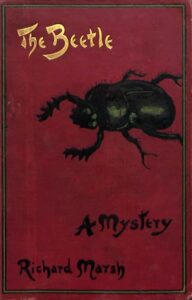 Published a few months after Dracula, The Beetle at first outsold it, and it is easy for me to see why.
The opening chapters are among the most frightening in Victorian fiction: Robert Holt, a starving clerk turned away from a workhouse, crawls through the open window of a dark suburban villa and feels something with many legs climb his body in the blackness. What waits inside is an ancient Egyptian being, sometimes a withered man, sometimes a woman, sometimes an insect the size of a cat, that can strip away a person’s will with a glance.
The story passes among four narrators, each contributing a piece of the evidence, until the detective Augustus Champnell takes charge of the inquiry and must race against time to forestall even more horror.
Marsh never resolves every question, and that is part of the effect. The Beetle is part police procedural, part imperial nightmare, and part occult thriller, and it moves at a pace Stoker never matched.
Read The Beetle free at Project Gutenberg.
L. T. Meade and Robert Eustace, A Master of Mysteries (1898)
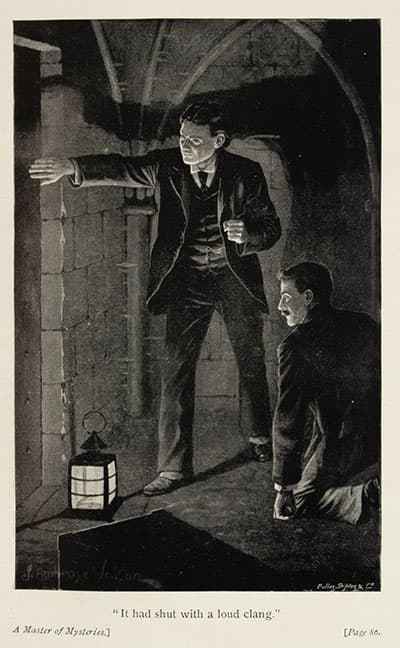 John Bell is a professional ghost exposer. I like that as a job title.
A gentleman of independent means, he takes on hauntings for the pleasure of explaining them, and his clients bring him the kind of problems that make a reader check the locks: a chamber in a country inn where guests are found dead in their beds, a family curse tied to a door that must never be opened, an idol that speaks. Bell arrives with instruments, patience, and a firm prejudice against the otherworldly.
He nearly always finds a human or mechanical cause, and the pleasure of the stories is watching a Victorian rationalist reason his way out of what seem like terrors of the occult.
“L. T. Meade” was Elizabeth Thomasina Meade Smith, among the most prolific women writers of her time; her collaborator Robert Eustace went on to write with Dorothy L. Sayers.
Read A Master of Mysteries free at Project Gutenberg.
E. and H. Heron, Ghosts: Being the Experiences of Flaxman Low (1899)
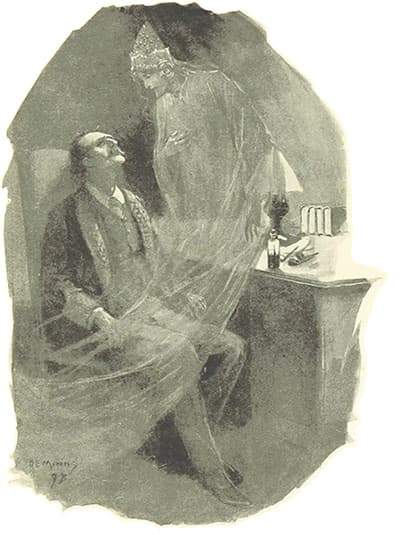 I see Flaxman Low as fiction’s first recurring psychic detective.
Called to a troubled house, he studies its history, takes the testimony of the frightened, sits up through the night to observe the manifestation for himself, and then explains it with a theory of the occult as confident as any physician’s diagnosis.
At Baelbrow, a family’s harmless old ghost turns murderous after an Egyptian mummy is brought into the house. On the Moor Road, something without a proper shape follows travelers across the heath.
In a Hammersmith villa, guests wake in the night certain that something is in the room with them. Low’s explanations mix vampires, elementals, and the newest psychical research, made oddly persuasive.
“E. and H. Heron” was the joint pseudonym of Hesketh Prichard and his mother, Kate Prichard.
Read the illustrated 1899 edition free at the Internet Archive.
Arthur Conan Doyle, The Hound of the Baskervilles (1901–1902)
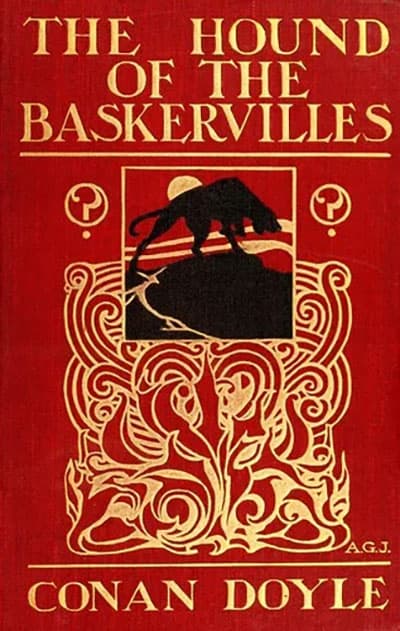 A family curse, an enormous spectral hound, an isolated mansion, and the fogs of Dartmoor appear to place Sherlock Holmes in one of my favorite supernatural stories.
The legend comes first: the wicked Hugo Baskerville, run down on the moor by a hound from hell, and his descendants dying badly ever after. Then Sir Charles Baskerville is found dead at his own gate, his face twisted with terror, and beside the body a doctor notes “the footprints of a gigantic hound.”
Holmes refuses to accept the supernatural conclusion without evidence, but he sends Watson to the moor alone, and the middle of the book belongs to Watson: nights of howling from the Grimpen Mire, a candle signaling from a window, an escaped convict loose, a figure standing motionless against the moon.
The explanation is ultimately natural, but the terror leading up to the conclusion is most definitely unnatural.
Read The Hound of the Baskervilles free at Project Gutenberg.
Algernon Blackwood, John Silence, Physician Extraordinary (1908)
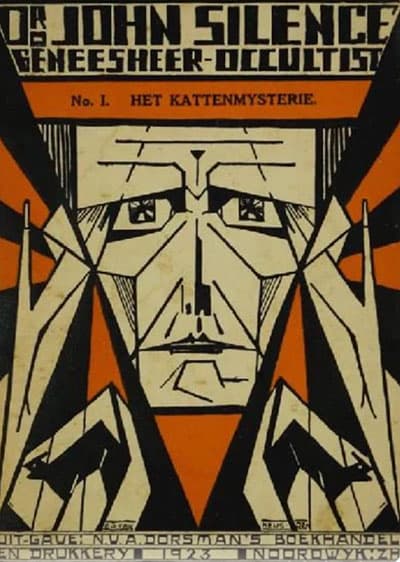 Dr. John Silence treats disturbances of the soul rather than of the body.
He takes no fees and accepts only the cases that interest him, which to me means he takes cases that would send anyone else running. Unlike Holmes, he knows from the outset that the supernatural may be real.
In “A Psychical Invasion,” a comic writer who has experimented with drugs finds his house occupied by the lingering will of a woman hanged for murder; Silence spends a night there with a cat and a dog, watching which one bristles.
In “Ancient Sorceries,” a timid traveler steps off a train into a French hill town whose people move like cats and gather after dark for something older than the church. In “Secret Worship,” a man revisits the school of his boyhood in the Black Forest and finds his old teachers waiting for him, unaged.
The book was launched with a London billboard campaign, a novelty for fiction in 1908, and the stories combine the structure of a medical consultation with a sustained sense of spiritual danger.
Read John Silence free at Project Gutenberg.
Gaston Leroux, The Phantom of the Opera (1909–1910)
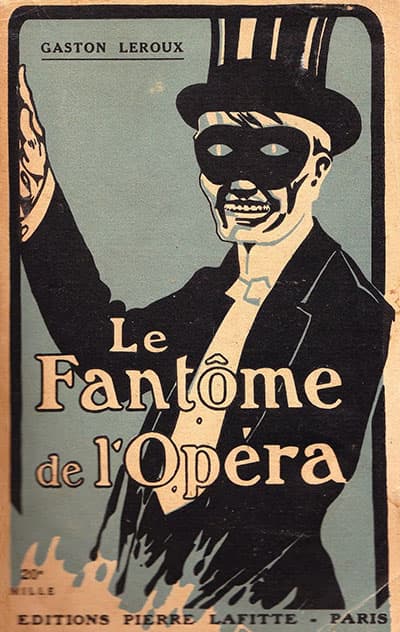 Leroux presents his novel as an inquiry: the narrator claims to have searched the archives of the Paris Opera and interviewed surviving witnesses to establish whether the “Opera Ghost” really exists.
The evidence he assembles is unnerving to me. A stagehand is found hanged in the cellars with no rope in sight. Box Five is kept empty at the Ghost’s written command. A chandelier crashes into the audience in the middle of a performance. And the young soprano Christine Daaé is being taught to sing by a voice that comes through the walls of her dressing room.
The investigators follow the clues downward, through trapdoors and secret passages to a lake beneath the building and a house on its shore, where the story becomes a terrifying ordeal in a chamber of mirrors.
The Phantom is human, but the world he has built lets him operate as a supernatural being, and the moment he tears away his mask remains one of the great shocks in popular fiction.
Read The Phantom of the Opera free at Project Gutenberg.
William Hope Hodgson, Carnacki, the Ghost-Finder (1913)
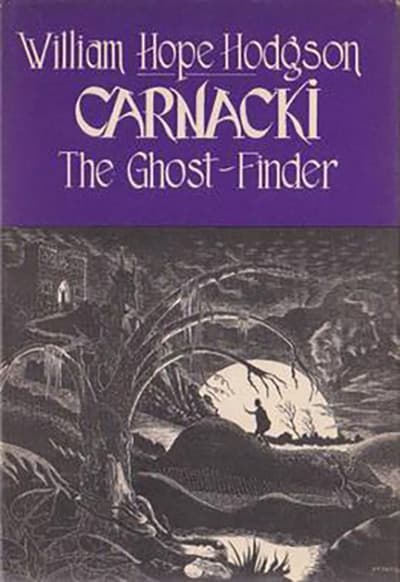 Carnacki is the best known of the early occult detectives, and I think the most practical.
He investigates hauntings with cameras, sealed doors, wires stretched across corridors, colored vacuum tubes, an ancient manuscript of protective rituals, and his famous Electric Pentacle, a glowing barrier inside which he crouches through the night while something works to reach him.
He tells his cases to friends over dinner in Chelsea, which somehow makes them more disquieting.
In “The Whistling Room,” a chamber in an Irish castle gives off a hideous whistling that grows until Carnacki sees the whole floor pucker into an enormous pair of lips. In “The Gateway of the Monster,” a bedroom door slams itself all night and a huge black hand reaches into the light.
In “The Horse of the Invisible,” hoofbeats gallop down the corridors of a country house toward a bride. Hodgson’s cleverest decision was to vary the solutions: some hauntings are frauds, some are genuine, and at least one is both, so neither Carnacki nor the reader can ever be sure.
Read Carnacki, the Ghost-Finder free at Project Gutenberg.
Alice and Claude Askew, “Aylmer Vance and the Vampire” (1914)
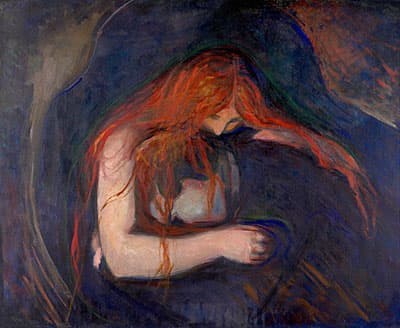 Aylmer Vance is a clairvoyant investigator, a “ghost-seer”; the stories are narrated by Dexter, a solicitor who discovers to his alarm that he has the same gift.
I find it fascinating that Alice and Claude Askew worked as a husband-and-wife team. They wrote eight Vance cases for the Weekly Tale-Teller in 1914; three years later both drowned when their ship was torpedoed in the Mediterranean.
“Aylmer Vance and the Vampire” is short, and is the most popular of the stories. A robust young man marries a beautiful woman who has inherited an old Scottish castle and, within months, is pale and failing; his doctors find nothing. Vance traces the decline to the family’s history, to a curse on the women of the line, and to something the wife herself does not understand about her own night-time doings.
Vance accepts psychic evidence and confronts frightening causes that the police can do nothing about.
Read “Aylmer Vance and the Vampire” free at Project Gutenberg Australia.
Arthur B. Reeve, The Dream Doctor (1914)
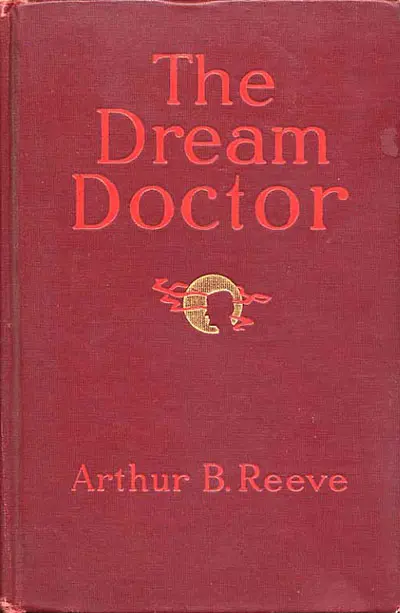 Craig Kennedy was billed as the “American Sherlock Holmes,” and I’m impressed that he uses the latest technology and ideas: the detectaphone, the X-ray, blood serums, the dream analysis of Freud and Jung.
The Dream Doctor takes its title from the opening case, in which Kennedy reads a troubled woman’s dreams to identify the person who wants her dead. Other cases involve a mummy’s curse, a supposed vampire draining the life from its victims, and poisons that leave no trace.
Kennedy generally arrives at a rational explanation, but the stories capture a moment when science itself seemed uncanny, when invisible rays, wireless voices, and the subconscious mind were as strange to newspaper readers as any ghost. Reeve’s narrator, the reporter Walter Jameson, keeps the tone breathless, and the cases move fast enough that the line between laboratory and séance room blurs. These are supernatural mysteries viewed from the laboratory door, and a vivid record of what frightened Americans in 1914.
Read The Dream Doctor free at Project Gutenberg.
Sax Rohmer, The Dream Detective (1920)
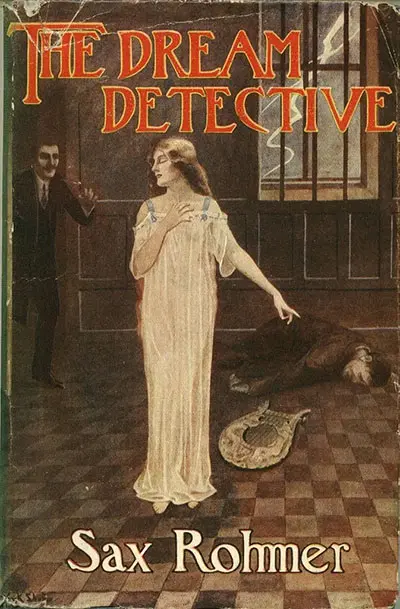 Moris Klaw keeps a curio shop in Wapping, sprays his forehead with verbena, and solves crimes by going to sleep at the scene. I can’t think of an odder approach to investigating the supernatural.
Stretched out on a cushion he has “odically sterilized,” he absorbs the mental impressions left behind by moments of terror and wakes with a picture of what happened. His daughter Isis, elegant and unflappable, assists him; the police, understandably, are doubtful.
The cases lean hard toward the macabre. A night attendant is found dead in the locked Greek Room of a museum, near a harp no living hand has touched. Mummies in a private collection are decapitated one by one. A country house is haunted by whispering in the poplars, and an Egyptian potsherd carries a curse into a London study.
Rohmer, who would soon be famous for Fu Manchu, gives Klaw a method as distinctive as Holmes’s deductions or Carnacki’s pentacle, and the stories combine murder investigation, Egyptology, and popular occultism in exactly the proportions that made him a bestseller.
Read The Dream Detective free at Project Gutenberg.
Jessie Douglas Kerruish, The Undying Monster (1922)
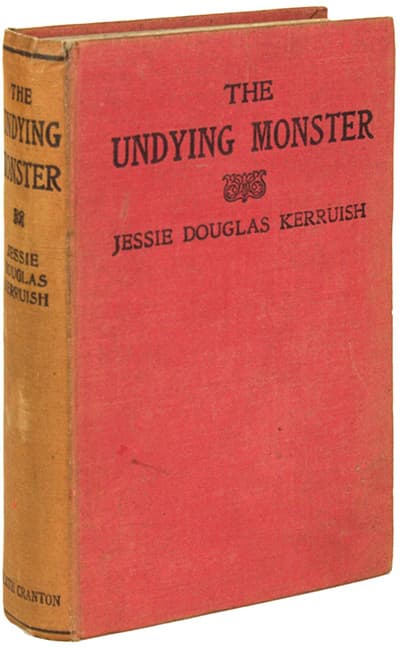 On a frosty night on the Sussex downs, Oliver Hammand, head of an ancient family, is found half-dead on a lonely path with his dog killed beside him and a village girl badly hurt, and nobody can say what came out of the dark.
I find it curious that the Hammands have more or less taken this in stride. The “Undying Monster” has attacked their line for a thousand years, always on nights of hard frost. Oliver’s sister Swanhild, refusing the family’s fatalism, calls in Luna Bartendale, a psychic investigator known as the “White Witch.”
Luna’s inquiry is the book: family records, local legend, a haunted hollow in the woods, the science and pseudoscience of the 1920s, and finally a séance-like descent into the family’s inherited memory that reaches back to Norse paganism.
Kerruish subtitled the novel “A Tale of the Fifth Dimension,” and she gives us both a woman author and a formidable woman detective. Hollywood filmed it in 1942, but the novel is stranger, and better.
Read The Undying Monster free at A Celebration of Women Writers.
Dion Fortune, The Secrets of Dr. Taverner (1926)
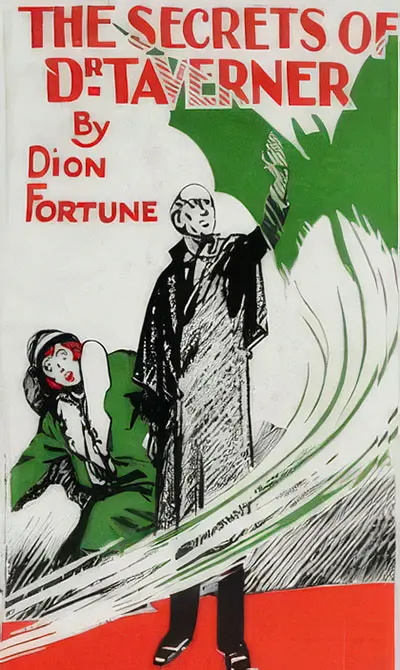 Dr. Taverner runs a country nursing home for patients whose troubles I can only describe as impossible for an ordinary physician to name, much less treat.
Narrated by his assistant Dr. Rhodes, an army surgeon with shattered nerves, the cases include a young officer who has come back from the trenches with a craving for blood, a patient whose body is quietly being sublet to another soul, a death hound sent by a black magician, and a scent designed to drive its victim to self-destruction.
Fortune, born Violet Firth, was a practicing occultist who insisted that Taverner was drawn from her own teacher and that the cases were founded on fact.
Whether or not one believes her, the stories treat supernatural forces as realities governed by discoverable laws, and the sense that the author knows more than she is telling gives them a peculiar chill.
Read The Secrets of Dr. Taverner free online. A free LibriVox recording is also available.
From Rational Detection to Occult Investigation
I see these books as an interesting mix of applying reason and belief in investigating the supernatural. Doyle, Leroux, and Meade’s John Bell make the apparently supernatural submit to reason. Hesselius, Flaxman Low, John Silence, Carnacki, Luna Bartendale, and Dr. Taverner retain the detective’s habits—collect evidence, test possibilities, reconstruct events—but allow that the impossible may be true.
That combination remains potent. A detective promises an explanation; a supernatural story warns that some things resist explanation. Bringing the two together creates a struggle not merely to identify a culprit, but to decide what kind of world we actually live in.
For contemporary versions of that struggle, see my guide to 15 supernatural mystery books that are great detective stories. It is also the engine of my own novel Murder in the Haunted Chamber, in which a Baltimore doctor and a private detective confront a medium’s séances in 1910 and must decide whether the dead are really speaking. And for the branch of detective fiction that went the other way, out of the séance room and into the mean streets, see my review of Detectives in the Shadows, a history of the hard-boiled detective.
Images are reproduced from public-domain editions or public-domain photographs.