
The Real Life Follies of “Bubbles” Wilson — by Herself
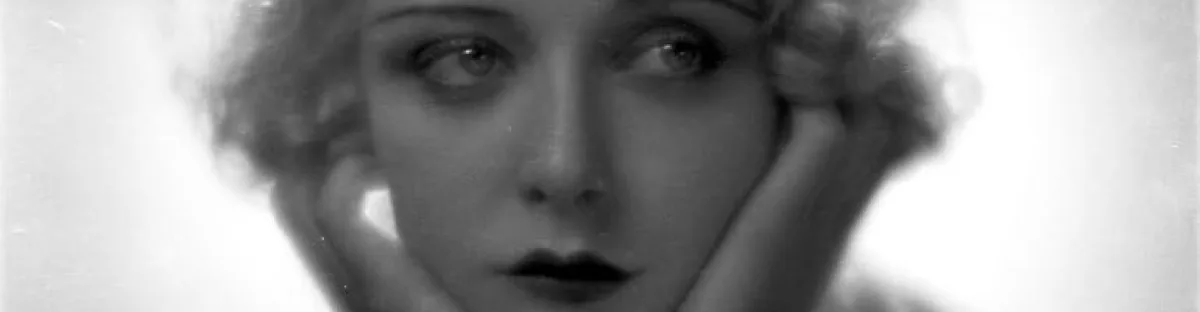
See my biographical post: Mary Nolan: Tragic Ziegfeld Beauty.
Broke, mostly forgotten, and one step above the gutter, Mary Nolan — born Imogene Robertson, made famous as the Ziegfeld showgirl Imogene “Bubbles” Wilson — sold the story of her life to Hearst’s Sunday magazine in the autumn of 1941. It ran in eight installments over eight consecutive Sundays, from October 12 to November 30, under a title that reached all the way back to the name that had made her. She meant to expand it into a full autobiography; she died before she could. What survives is transcribed in full below, each chapter headed with a link to its original scanned page.
Installment 1 — Sunday, October 12, 1941
URL: https://www.loc.gov/resource/sn88063294/1941-10-12/ed-1/?sp=106 (Continues on p. 108: https://www.loc.gov/resource/sn88063294/1941-10-12/ed-1/?sp=108)
REAL LIFE FOLLIES OF “BUBBLES” WILSON — by Herself “No Follies Girl Ever Had Such Luck—Good and Bad”
[Editor’s preamble box]
ON THESE pages today begins the life story of Imogene (“Bubbles”) Wilson, one of Broadway’s most famous beauties, known today as Mary Nolan.
It is told for the first time in most intimate detail by Miss Nolan herself. In its chapters she bares, unreservedly, all hitherto undisclosed details of her career from the day she was suddenly transplanted, when only thirteen years old, from a Southern convent into the night life of New York during its gayest era.
Here are revealed drama and tragedy of an unsophisticated girl upon whom sudden success and fame were thrust, only to be followed by love slavery, heart-break, disillusionment, drugs and finally the desperation of trying to rehabilitate a career which fate had most cruelly shattered.
Read here the first chapter of Real-Life Follies by one of the most famous and frankest Follies Girls.
© 1941, by American Weekly, Inc. Great Britain Rights Reserved.
By MARY NOLAN The Former Imogene Wilson, “Miss America” of the Ziegfeld Follies
CHAPTER I
THE little country girl in the Big City. That was my role when I first set foot in New York.
I walked wide-eyed through the jostling crowds of the Grand Central Station nervously fingering my nickels and dimes. They added up to exactly thirty-five cents. I didn’t know a soul. I had no place to go.
I was as green as a 13-year-old girl just out of a convent could be.
The next day I was standing partly [unclothed] beside an artist’s easel. It was the first time in my sheltered life that anyone had seen me that way. I wasn’t greatly embarrassed. Perhaps I was too much of a child to be.
In my hand was a fifty-dollar bill, my pay for a couple of hours’ posing.
It was more money than I ever had seen before in my life!
Many more such days as a model followed closely. There [were] many more bills, with the clothes and finery they could buy to replace the harsh, sombre attire I always had known.
In a few short weeks I heard myself acclaimed “Miss America,” chosen for the title, not from a bevy of bathing beauties at Atlantic City, but selected by the vote of the greatest artists in America to represent the embodiment of all that American girlhood should stand for, physically, morally, and spiritually.
It was too high a pedestal.
Therefore, when the first of the tragic events in my life toppled me from my lofty throne the spotlight of the country was focused on me to highlight my disaster in bold relief.
By the time those first short kaleidoscopic weeks flashed by I found myself behind the footlights, one flower in the world’s greatest garden of feminine beauty, the Ziegfeld Follies.
Yes, you may say, I took New York overnight. But New York took me, too.
Perhaps I’ve paid dearly for the success that swept me to the pinnacle of fame and dropped me just as quickly, but with all the anguish that went with it there were luminous moments that even the darkest days of later dope-ridden years couldn’t take from me.
Most vividly my life with Frank Tinney, the famous comedian, stands out.
I cherish those memories and seek no pity. Some may say I am the victim of my own folly—but I’ve always wondered why life seems to expect so much more of a beautiful [woman than it does of her less-favored sisters].
[Then there are] the thrills of the life of a Follies girl, the nightly round of fabulous parties, showers of jewels, millionaires scrambling for a smile and a kiss.
It’s of those days that I want to tell, and of the glamourous figures who stalked through them, some to lasting fame—others to squalor and friendless death.
I doubt if anyone ever was more terrified than I was the day I walked out into the bustling streets of New York. The roar of traffic, the incessant mumble of voices, the swish of the crowds, all left me bewildered.
A strange spectacle I must have been, if New York had taken pause to look. My plain blue serge suit and square little school cap must have made me conspicuous.
But no one noticed me. I almost wished somebody out of the sea of faces would speak—and I probably would have fainted if anyone had. I was alone in the midst of millions of people and scared to death.
I saw a policeman and was frightened. I had been told a man in police uniform actually might not be a policeman [and so, afraid to ask for help, I wandered on until, hungry, I went into a Chinese restaurant].
[A waitress spoke to me.] I never had heard anything like it before. Her painted face startled me. Rouge and lipstick were something new.
The nuns always had told us that Chinamen would [prey upon] us in a big city. That danger signal flashed through my mind.
Maybe these funny-looking women were Chinamen’s wives! Maybe they were even Chinamen themselves. I was too frightened to answer.
I grabbed up my bag and ran out of the place, leaving my food untouched, the laughter of these strange denizens of the city wilderness ringing in my ears.
My stomach was empty—but I still had my thirty-five cents. On an impulse to do something, get anywhere, I jumped onto a street-car, paid my fare and sat down.
I rode and rode. Crowds piled on and crowds piled off. I couldn’t see anything but faces, more people than I dreamed were in all the world.
It began getting dark. The lights came on. I still sat huddled in my seat, too frightened to move, not knowing what to do. Why the conductor didn’t put me off I don’t know, but he didn’t. [I’ll never] forget him. He was my first friend in New York and one of my kindliest advisers.
Tears were streaming down my face. My eyes were as red as my hair from crying.
“You’re in trouble, little girl,” the man said. “Are you lost?”
“No-o,” I sobbed. “I—I’ve nowhere to go.”
“Well, don’t cry,” he said, and put an arm gently around my shoulder. “I’ll take you home with me.”
I looked up at him. He didn’t look like what I imagined a Chinaman would be. But by that time it didn’t matter much.
I didn’t realize it then but I already was caught in the vortex of New York life. Little did I dream that night where that chance meeting on a street-car at midnight would lead me.
“You come along with me and everything will be all right,” the man’s voice reassured me. Besides [—], [I went] with [him]. And that woman who let us in—was she really his wife, or one of the kind I had heard mentioned vaguely in whispers?
That night it didn’t matter. I was too tired to care. The lady fixed me something to eat, then led me to a nice clean room and tucked me in. I was safe so far. The morrow would have to [take] care of itself.
That man who took me into his home was Arthur William Brown, the noted illustrator and artist. I never will be able to repay him for his kindness.
The next morning I got up early and slipped into my clothes, intending to get out before my benefactor discovered I was gone. His remarks about being “just what I’ve been looking for” still puzzled me. I didn’t know who he was.
Just as I opened the door Mr. Brown heard me.
[Continued on p. 108 →]
Photo captions on this page:
- (Center portrait) “Bubbles,” at the Height of Her Success and Popularity as a Follies Beauty, After She Was “Glorified” by Flo Ziegfeld.
- (Right) Imogene, Before Her Theatrical Success, When She Made a Surprisingly Good Living as an Artist’s Model.
- (Left illustration) Frank Tinney [in his celebrated “boy scout” monologue costume].
Continuation (p. 108, jumping to p. 111 / “Page 17”)
URL: https://www.loc.gov/resource/sn88063294/1941-10-12/ed-1/?sp=108 → https://www.loc.gov/resource/sn88063294/1941-10-12/ed-1/?sp=111
Fidelity note: On this jump page the memoir is interleaved column-by-column with two unrelated features and an ad, and the Library’s OCR scrambles their order. Every sentence below is Nolan’s, recovered from that OCR; the sequence has been reconstructed by narrative sense and is not yet verified against the scan. Treat ordering as provisional until image-checked.
[Continued from the opening spread]
“…Who are you?” By that time I was getting wise to a few of the city tricks.
“I’m Will Page, his press agent. He wants to talk to you. Come along.”
I wouldn’t believe the man [at first]… That chance incident put me in the Follies.
Rehearsals followed immediately. The show was being whipped into shape when I joined it. I was lost in the maze of beauty. I didn’t know a cue from a spotlight. About all I did was mix everybody up and mess up their lines.
At the first dress rehearsal I didn’t know what to do. Everybody was running around, just as excited as they would have been on an opening night.
“What shall I wear?” I asked one of the other girls.
“[Duck] into a dressing room, honey, and put on any costume you can find,” she said.
I did. I found the most elaborate gown in the place. It was a gorgeous bridal costume. I strutted out on the stage full of confidence and certain I would attract attention. I got it—all right, but not the way I had hoped.
Ned Wayburn, the stage manager, took one look and started tearing his hair. “What are you doing out there in that costume?” he screamed. “Get her off the stage!”
Crestfallen, I ran for the dressing rooms. Wayburn’s anger was mild compared to the fury I encountered there. Vivienne Segal, the prima donna, was just about to tear the place apart. She couldn’t find her costume—the gown she was to wear in the big wedding scene. I felt so small I think I crawled out of it under the hem of the train. After that I was careful [what I did].
“Miss America” was a creation of Flo Ziegfeld. Six weeks after I arrived in New York I was preparing to step out behind the footlights, a featured attraction in the greatest musical show on Broadway—and that meant in the world. Named by vote of the illustrators, I was crowned at the first matinee of the 1923 Follies. Can you imagine a girl of thirteen, who never had seen a show before, being spotlighted [like that]?
[Over my] shoulders was a beautiful chinchilla wrap, a present from Mr. Ziegfeld. It was so lovely every other girl in the show was [envious] of it. Mr. Ziegfeld called me Emmy. Much as I loved him I hated to have him call me Emmy. But he did, and I had to like it.
Just before the curtain he came to me. “Emmy, everyone in the show is jealous of you in that fur,” he [said]… [I remember] the almost hysterical excitement, people scurrying in and out of dressing rooms, shouts of the electricians and stage hands, poor Ned Wayburn gnashing his teeth at unforeseen hitches, the hum of voices in the audience, the blood-tingling strains of the orchestra’s prelude, the sudden [rise of the curtain]. [Then] there was a hush. Then came a burst of applause, the first I ever heard—applause really [meant for me].
[The party afterward was] strictly a celebration for the cast and entirely theatrical. It wasn’t like the parties I came to know later in New York, when the millionaire playboys would invite one of the girls out after the show. Those were the wild parties when each girl found a hundred-dollar bill under her plate or received a jeweled box of candy with a big bill folded under the cover. But I’ll never forget that [first] party because it was my first one as a Follies girl. Of course, Mr. Ziegfeld was there. Sam Harris, Oscar and Arthur Hammerstein, Irving Berlin, Tallulah Bankhead, [and] Pat Somerset were among the other famous ones.
[Later, one night, a man] during the evening stepped in and closed [the door] behind him. He is a man who later became famous in Hollywood, so I will not mention his name. He threw off his dressing gown and started to get into my bed. Yes, I was green, but smart enough by that time to know what his intentions were. I jumped up and ran screaming into the lounge of the suite. The first person I ran into was Arthur Hammerstein. “Why, Imogene, you look frightened,” he said. “What’s the matter?” “That man,” I cried. “He tried to get into bed with me.” “Now, now, don’t cry,” he said—and then he got me another room.
[Continued on Page 17 → p. 111]
(Jump-page caption: “Among the Competing Beauties in the ‘Follies’ Was Edna [Leedom?], Whose Dancing Fascinated the Young and Bewildered Imogene.”)
Conclusion of Chapter I (p. 111 / “Page 17,” continuing to “Page 19”)
URL: https://www.loc.gov/resource/sn88063294/1941-10-12/ed-1/?sp=111
Fidelity note: Same as above — Nolan’s sentences recovered from column-scrambled OCR, order reconstructed by narrative sense, not yet image-verified.
(Caption: “Tallulah Bankhead, Who Was One of the Celebrated Guests at Imogene’s First ‘Follies’ Party at Atlantic City.” — Culver Service)
[Continued from Page 16] …for me. It was almost impossible for me—to whom so many sensations had come in those few short weeks—to realize that the roars of handclapping were for me. If I hadn’t been holding my heart in my mouth I’m sure it would have pounded right through that thin crêpe de chine bodice.
Will Rogers [stepped] into the spotlight. There were a few preliminaries, then Will and Fannie [Brice], as the king and queen of the Follies, fixed that aigrette head-dress on my brow. “We crown you Miss America!” There was more applause. The orchestra struck up. The entire cast—that collection of the most beautiful girls to be found anywhere—[paraded], and the show went on.
Will Rogers did his rope act in his usual awkward way. He always knocked his hat off, then barked up, stepped on it and dragged it off on his foot as he shuffled off the stage. Just an act, to be sure, but so natural with Will Rogers.
Then there was the irrepressible Fannie Brice, singing “My Man” as only Fannie could. One of her specialties was the egg dance. In it she leaped and cavorted all over the stage in an impersonation of Pavlova’s famous swan dance. And what Fannie couldn’t do with [an egg]!
Bert and Betty Wheeler were in the cast. I’ve seen them get so many encores that they were actually exhausted—they’d lie down on the stage to still the applause and finish their act after another number came on.
[Edna] Leedom and Dave Stamper: Edna was tall, Dave about half her size. He was her piano player and composed most of her songs. When they walked on the stage Dave always announced her with a flourish: “And now, I present Edna Leedom!” Then, as the applause died down: “Go on, Edna—tell ’em just WHERE you lead ’em.” They had their squabbles backstage, too, but Edna always came out best.
And there was little Ann Pennington. You couldn’t know her without loving her. She used to come out and dance in a little white satin costume that was just right to show her pretty, dimpled knees. Banjo [Buddy] Johns was sweet on Ann. He was a big chap, six feet or more tall. He could pick Ann up in one hand.
[One showgirl,] back on Broadway, had enough diamond bracelets given to her by admirers to cover both arms to the shoulders. She married and had a child, but staid married life was not for her. She died a few years later, penniless.
Paulette Duval was a beautiful French dancer Mr. Ziegfeld brought over from Paris for the Follies. She came on in a Ziegfeld version of Lady Godiva, riding a white horse.
Money and feminine beauty were the two cheapest commodities in New York in those days.
One day a man walked into Mr. Ziegfeld’s office and announced very formally that he wanted to give Imogene Wilson a party. “Who are you?” Mr. Ziegfeld asked. “I am the brother of the King of Spain.” “Well, I don’t care if you’re the King himself. You’re not going to take that kid out on any wild parties. She’s too young. There are plenty of other beautiful women in New York. Get them and let Miss Wilson alone.”
The man left—but the party was held anyway, and I was the guest of honor. That night this man bought out the first two rows, center aisle, and paid five hundred dollars apiece for them. He filled them with his friends. After the show we all went to the Waldorf. Our host had taken over an entire floor. It had been turned into a fairyland. Ben Ali Haggin, who was famous for his living-statuary creations, was engaged to arrange [it].
Each girl—about twenty of us attended—received a valuable present. Each girl, on turning over her plate, found a pile of gold pieces under it. My present, one of the prettiest I ever received from anyone, was a pin made of jewels in the shape of a cluster of forget-me-nots. In the center of each little jeweled flower was a diamond.
[Continued on Page 19 → p. 113]
Conclusion of Installment 1 (p. 113 / “Page 19”)
URL: https://www.loc.gov/resource/sn88063294/1941-10-12/ed-1/?sp=113
Fidelity note: Nolan’s text recovered from column-scrambled OCR (this page also carries an unrelated handwriting-forgery article and ads); order reconstructed by narrative sense, not yet image-verified.
[Continued from Page 17] I have never seen another [party] quite like it. Of course, champagne flowed like so much water.
They always said a girl sometime had to have a champagne bath before she was really initiated into the night life of those days. One of the girls in the party got hers that night. It was the high-light of the festivities. We filled a bathtub with bubbling champagne. She took off her clothes and stepped in. Then the parade started. We all marched by, dipped in our glasses and drank a toast to her health and success.
The cost of that party was tremendous. Naturally, I never knew how much—and probably didn’t give it a thought then. At any rate it was a great many thousand dollars. And the King’s brother? That was just a wealthy playboy’s whimsical idea.
For a time the life of a Follies girl seemed to be all glamour and glory, champagne parties and jeweled gifts, but I learned all too soon how much heartache could be hidden beneath the glitter and tinsel.
With the Follies, Frank Tinney came into my life—a figure destined to shape it and dominate it for years to come. I speak of it now with no regrets. Frank Tinney is dead. I wouldn’t say an unkind word about him even if I felt it—and I feel none. Frank was a great man, a great [comedian]…
I, a nobody through the eyes of my own inferiority complex, was wildly captivated by the attentions of the star of the “Music Box” show, the toast of Broadway. My starved vanity was fed by his favor. My head was in the clouds in those giddy, intoxicating days. I didn’t know my feet still were in the common clay.
One of the other girls in the Follies had a boy friend in the cast at Frank’s show at the Music Box. She used to meet him after rehearsals. One day she asked me to join several others who were going over with her. That sounded like an interesting idea. I went along. Their rehearsal still was on when we got there. I was standing in the wings, looking on.
“Why, silly, that’s the great Frank Tinney.” — “I don’t know any more now than I did before you told me. What does he do?” As far as I knew or cared there wasn’t another show in New York then, or in the world, besides the Follies. “Are you crazy? He’s the star of the show. Gee, he’s funny. You want to watch him.”
The rehearsal ended in a few minutes. Frank walked toward the wings, saw me, and stopped. “Hello,” he said, “where did you come from?” I didn’t answer. He turned to the Music Box stage manager: “Hey, where’d you find this? New g[irl?]…”
[“Have a drink?”] “No, thanks,” I told him. “I don’t drink.” “You don’t? Honey, you don’t know what you’re missing. Smoke?” I shook my head. “No? Swear?” “No,” I told him. He stepped back and rested his hands on his hips. He looked me over from head to foot like I was a freak in a sideshow. “Well, if that ain’t somethin’,” he exploded. “A New York show girl who doesn’t drink, smoke, or swear. I’ve seen Niagara [Falls] and [—], but this—it can’t be real.” He laughed and went to his dressing room.
I didn’t realize it, but I had [sealed] my fate—if you want to call it that—that afternoon when I paraded my virtue and innocence. It made me a novelty that Frank Tinney had heard about only in story books. Matinee idol that he was, Frank saw so much of women that they disgusted him. They fell over each other to win his favor or gain admittance to his apartment. They used to stand in line outside the stage ent[rance]…
[When at last I] got in[to his car], that short step linked my life with Frank Tinney’s from that day on. And no woman ever forgets the first man in her life, whether there be but one or many.
No matter what acquiescence or forgiveness I may have shown later, that night was—and ever will be—a night of horror. Frank’s secretary left us at his stop and we drove on. But instead of taking me home Frank directed us across to Long Island, up the shore to Long Beach. The storm that beat down upon us from outside was mild compared to the tempest that raged within my heart and soul. Frank, accustomed to having his way, didn’t deny himself that night. It wasn’t that he couldn’t have found plenty of others, and all eager to surrender. My freshness and simplicity were what he craved for the novelty of the moment. I was powerless. Whatever motivated him that night I don’t know, but I do know that he held me in an insanely jealous love from that time on.
But the happenings of those two mad years will have to be told in a later chapter.
(To be Continued Next Week)
End of Installment 1 (Sunday, October 12, 1941 — spanning pp. 106, 108, 111, 113).
Installment 2 — Sunday, October 19, 1941
URL (opening double-page spread): https://www.loc.gov/resource/sn88063294/1941-10-19/ed-1/?sp=98 and https://www.loc.gov/resource/sn88063294/1941-10-19/ed-1/?sp=99
Fidelity note: Opening spread transcribed from OCR + captions; the mock-“suicide” and marriage passages come off the column-scrambled right-hand page (sp 99), so their internal order is reconstructed by narrative sense and not yet image-verified.
(Left-page caption: “Edna Davenport, Who in Private Life Was Mrs. Frank Tinney—But There Wasn’t Much Privacy About Her Life After Imogene’s Memorable and Violent Visit to Edna’s Long Island Home.”)
© 1941, by American Weekly, Inc. Great Britain Rights Reserved.
By MARY NOLAN The Former Imogene Wilson, “Miss America” of the Ziegfeld Follies
CHAPTER II
FROM the night Frank Tinney carried me, screaming and kicking, into his apartment, my life was his. A few romantic ones may have called me a love captive. The world at large applied a harsher, uglier term—”Tinney’s woman.”
That I was only a child of fourteen didn’t matter. I was a woman in fact and in the eyes of the world. Many whose lives made a mockery of their own respectability perhaps even could visualize the scarlet letter upon my brow. Their scorn was soon to topple me from my throne as Miss America and drive me from Broadway.
For me to say I was a victim of circumstances sounds trite and a little c[heap]… [It was a torment] compensated by moments of unforgettable happiness. I have regrets, yes, but resentment toward none.
To Frank Tinney, a truly great comedian, life was just one big laugh. And so was I. That sounds a little incongruous in the light of the tragic events that stalked it. “We’re meant to be happy, Bubbles,” he used to say to me. His was a grand philosophy. Maybe we tried too hard to live it. Anyway, the more we struggled for happiness the more it seemed as if fights and heartaches ruled us.
I don’t remember ever sitting down to a meal at our apartment when there was a dish left [unbroken] on the table when we finished. Mad-house, you say? Yes—it was the tempo of our lives. We would sit across the table from each other for days without speaking a civil word. Frank usually was drinking. I know I was flighty and quick-tempered. Both of us were insanely jealous. I didn’t love the man, but I was infatuated with the realization that I held the love of a man who was the toast of Broadway.
(Caption: “…start the meal with a cutting remark. Then the dishes would begin to fly. Frank and I became expert at getting out of the way of flying chinaware. Bobby and Caroline quickly learned to keep out of range. It was the tempo of our lives.”)
(Series subtitle banner, on the facing page: “REAL LIFE FOLLIES OF ‘BUBBLES’ WILSON, by Herself. ‘No Follies Girl Ever Had Such Luck, Good and Bad,’ Says the World-Famous Beauty, in Her Intimate, Wide-Open Confessions of Her Rise From Obscurity to Sudden Fame, Her Tragic-Comic Servitude as a Great Comedian’s Love Slave—And of Her Desperate Fight to Recreate Herself From the Drug-Shattered Wreckage of Her Career.”)
[The mock “suicide”] …[After one quarrel] “Sign that,” he said, “then I’ll take you back and you can commit suicide.” I signed it, without ever looking at it, and we drove back to the apartment.
Still Frank wasn’t there. I stomped into my boudoir, put on my prettiest black lace nightgown, swallowed a few sugar-coated pills, and got into bed. My maid, Carrie, came in a few minutes later.
“Why, for Lan’ sakes, what are you all doin’ in bed, Miss Imogene?” she asked.
“I’m committing suicide, Carrie,” I said calmly.
“No, now, chile, you cain’t do that with all them people out there. You all git right up from that bed this minute.”
“No, Carrie, it’s too late. I’ve already done it.”
“Whadda you mean, Miss Imogene—whadda you gone an’ done?”
“I’ve taken poison, Carrie. It won’t be long now.”
Poor Carrie threw up her hands and started to scream. “Lawdy, Lawdy, Miss Imogene’s done pizened herself!” She ran crying through the rooms full of guests. “Somebody git a doctor, quick!”
Nobody believed me but Carrie. The guests, all hilarious by that time, trooped into my room. I might have been dying—they couldn’t have told it. They were so used to Frank’s pranks that they made [a joke] of my supposed suicide. They turned the party into a wake. All of them paraded around my bed. Someone delivered a short tribute.
[As they toasted] the departed, Frank came in. He arrived just as the mourners were lifting their glasses. Carrie was the first to run to him. “She’s done killed herself, Mr. Frank. She’s done killed herself.” Of course, he could see it was a joke. But it wasn’t his joke, so he was furious. He stormed and raved. Everybody was ordered to leave. The man who had taken me out stopped him: “Just a minute, Mr. Tinney,” he said. “I have a note Miss Wilson signed just before she did this. Maybe you’d like to [see it].”
(Caption: “It Was One of Flo Ziegfeld’s Easiest Tasks—That of ‘Glorifying’ Imogene, Shown Here in Two Glamorous Poses, as the Much Press-Agented ‘Follies’ Discovery, and Soon After Accepted as the Most Beautiful Broadway Showgirl.”)
[Frank’s wife] [Frank was married.] I didn’t know it for a good many months afterward, although I began having my suspicions that there was another woman in his life. His wife, Edna Davenport, was older than Frank. He was twenty years older than I. He depended a lot on his wife. She was steady and a good manager.
The first time I ever saw Mrs. Tinney was backstage at the Music Box one night. “Who is that woman?” I asked him. “She’s my manager,” he replied. “Well, you fire her right now,” I ordered. “All right, Bubbles, she’s fired.” He waved a dismissing hand at his wife. She merely smiled and walked out.
One of my silliest tricks was a habit I had of cutting out all the pictures I could find of Frank and pinning them all over my dress. Being a big star, his pictures were in the papers and theatrical dailies all the time. My cut-out costume pleased him, so I used to bedeck myself with [pictures of him].
[Frank] had a country home where Mrs. Tinney lived. Frank frequently went there on week-ends, getting away from me on some sort of pretext, but the rest of the time he lived in our apartment.
A thing that hurt me a lot was the time I thought Frank was buying me a car. He had taken me around to all the show rooms and looked at this limousine and that one until I finally found one—a gorgeous big town car. I really was bubbling over at the thought of having my own car. “We’ll have your monogram put on the doors,” Frank explained. The next day the car was driven up to the apartment. I flew down to inspect it. The first thing that caught my eye was that monogram. Instead of my initials the lettering read “E.D.T.” I had spent a week picking out a car I dreamed was to be my own, only to find it was being given [to his wife—Edna Davenport Tinney].
[Continued on Page 17 → p. 101]
Continuation of Chapter II (p. 101 / “Page 17”)
URL: https://www.loc.gov/resource/sn88063294/1941-10-19/ed-1/?sp=101
Fidelity note: The OCR on this page is noticeably rougher and is interleaved with a fiction serial and several ads, so this section is more heavily bracketed and its order is provisional — a good candidate for an image proof pass if you want it locked.
[Continued from the Double Page] …to Mrs. Tinney. I still think I had [reason] to make a scene that time. Anyway, I did. That night I went out to Long Island to the Tinney country home. It was the first time I ever had been there when Frank’s wife was [there], and I made a memorable [call]. Half of Long Island probably heard the commotion. When that scene ended I left. Frank was with me, but I didn’t have my car—although he gave me one [later], after that, to [soothe] my feelings.
But I must tell you about the wildest night of our whole mad life. As soon as [the show] at the Follies [was over] I’d rush over to meet Frank at the Music Box. If his show was over first he would come to the Follies for me. If we missed each other we were to go straight to the apartment. One night Frank had left the Music Box [before I got there]. I thought nothing of that and drove on to the apartment—but Frank wasn’t there. Friends always were dropping in; Frank kept [open house]…
[A wealthy admirer, it was said, had offered a fortune] in exchange for [the company of] a Follies girl. The price seems high, but the terms were of his own making and must have pleased him. After my affair with Frank Tinney broke into open scandal I had my only conversation with this man, and that was by telephone. He called and extended his sympathy. “Miss Wilson, I would like to offer you the refuge of my country home,” he said, “if it will enable you to get away from this trouble. You will have complete privacy, the use of my stable, servants—everything at my command.” I thanked him, and my thanks were from the bottom of my [heart].
[Jessie Reed] passed [away] in a Chicago charity ward. She was one of us who had everything—unrivalled beauty, millionaire suitors, wealth, great success. Poor Jessie died penniless, her life wrecked by drink, her beauty faded, forgotten by her fair-weather friends of earlier days.
Next week I will tell you more about my Follies days, and about the screaming scandal that hounded me from Broadway and drove me from America to seek refuge in a foreign land.
(To Be Continued Next Week.)
End of Installment 2 (Sunday, October 19, 1941 — spanning pp. 98, 99, 101).
Installment 3 — Sunday, October 26, 1941
URL (opening spread): https://www.loc.gov/resource/sn88063294/1941-10-26/ed-1/?sp=90 and https://www.loc.gov/resource/sn88063294/1941-10-26/ed-1/?sp=91 → continues on p. 96
Fidelity note: OCR + captions, order reconstructed by narrative sense, not yet image-verified.
© 1941, by American Weekly, Inc. Great Britain Rights Reserved.
By MARY NOLAN The Former Imogene Wilson, “Miss America” of the Ziegfeld Follies
CHAPTER III
MY LIFE with Frank Tinney was a nonsensical mixture of fights and laughs, about half and half. Those mad, merry days of the Follies—and follies—now seem rather symbolic of [it all].
[Drawing my bath was] one of his little pet attentions. It [was] almost a ritual with him. And I still can see Carrie, a good soul, standing aside, her big arms akimbo, with an expression of utter disgust, as Frank—humming a tune and tapping his feet—tested the water temperature, selected bath salts of a scent that just suited him, and then announced to “Her Ladyship” that her bath was ready. Perhaps Carrie was annoyed because he did the job so expertly. Sometimes Frank would shout at her or throw something at her to drive her from the room. At other times he would just whistle or hum, ignoring her, while he went on with his self-assumed duties as lady’s maid—combing my hair over his finger and putting on my make-up.
He could be the sweetest person in the world one minute, and a little later would do something that made me hate him.
One day Frank and I had our usual dish-hurling breakfast fight. He left the apartment in a rage. I was in tears. Carrie still was trying to soothe my ruffled feelings [when Frank telephoned]: “[The most wonderful thing has ha]ppened to me.” Of course, that aroused my curiosity. “I’ve just met a very important individual. He has power and position. I’ve invited him to dinner. You must help me entertain him royally and make a favorable impression. Get flowers. Have Carrie fix her finest dinner. You better hurry to the beauty parlor and dress your best. Promise me, darling, you’ll help to make this evening a great success. It means everything to me.”
I was won by that time. The morning quarrel was forgotten. I loved to meet important people, and we outdid ourselves putting things in order. Carrie called in a florist, who almost banked the dining room in flowers. “This is a great occasion,” I told her. “Mr. Tinney is bringing a very important man to dinner. Probably a big politician—like a Senator or somebody like that. Fix up the finest dinner you’ve ever cooked.” I hurried off to the beauty parlor around the corner and went for everything—massage, rub, manicure, and hai[r].
[Back home,] “Is his guest with him?” [I asked Bobby the houseboy.] “Yessum.” Bobby rolled the white of his eyes and dropped his head. “I reckon so.” I was in a dither. Here I wasn’t dressed. Frank would be angry, and there would be a scene with a strange guest present. Bobby knew all the symptoms when a storm was brewing, so it was no wonder he hung his head.
I hurried up to the apartment, slipped into my boudoir unseen, and put on my finest gown. With a final glance into the mirror I walked sedately into the living room to be presented. “I’m so sorry, dear, if I’m late, but—” The words froze to my lips. Frank was there, wearing his most engaging smile. In a corner, seated on a chaise longue, was a donkey! (It was the smallest donkey I ever saw. Its front feet were planted on an ottoman.) On the floor beside it was a girl from the beauty parlor, busily giving that jackass a manicure. Around its throat was a gorgeous necklace. I almost fainted.
[I began hurling ash trays.] The manicure girl swooped up her tray and ran for safety. The donkey just sat. “But, Bubbles darling, you don’t understand,” Frank yelled, as he ran behind chairs to keep out of my way. “This is really a very important individual.” I let another ash tray fly. “You’re not showing him proper respect.” At last I ran out of energy and things to throw. “Now, darling, have Carrie serve the dinner.”
Frank said something to the donkey. It lumbered to its feet and followed him into the dining room. Poor Carrie had a wonderful dinner spread out on the table. At a word from Frank the donkey squatted on the honored guest’s chair that Frank indicated and plopped its manicured front hooves on our finest linen. Well, of course, I refused to sit down. I was so furious I couldn’t speak—I just sputtered. Frank insisted that Carrie serve the dinner. I can laugh about it now, but it was tragic to me at the time: there was that donkey at the table with Frank, seated in the midst of our elegant furnishings and surrounded by the loveliest flowers I could buy.
Frank would talk, and the silly animal acted as if it understood him. “I didn’t deceive you when I told you our guest was distinguished,” Frank said. “You are being unreasonable and offending your visitor. This is a sacred donkey. It’s endowed by the gods. It knows everything and always speaks the truth. I’m entertaining his Sacred Highness tonight because there are a few questions I want answered truthfully. Are you ready, Your Highness?” The donkey nodded and almost stuck his nose in the caviar! “Very well. Is Bubbles true to me?” The donkey shook its head violently, its big ears flopping about like a pair of arms. “All right. Am I true to Bubbles?” The donkey nodded its head up and down. [And so, for every jealous question that always was my first fear.]
“Now, Carrie, you may serve the champagne.” Carrie brought in a cold bottle. Frank poured half of it in a bowl and set it before the donkey. The animal sipped it up, then curled its lips in an appreciative gesture. After they left the table Frank sat down at the piano. As he played, the donkey pranced around over the rug, keeping step to the music. A few minutes later there was a loud bray. “His Sacred Highness says he would like to go to your bathroom,” Frank interpreted. I screamed. “No, no, you fool. I’ve stood for all the rest, but you’re not going to take that animal into my bath. You’ve had your fun. Now get that thing out of here.” I started a fresh barrage of ash trays. That time Frank retreated, with his shaggy guest trotting along behind him. He led it downstairs, put it in the back seat of the taxi with him, and drove off. My nerves were shattered, and Carrie was in worse shape than I. It was days before I con[vinced myself it had really happened].
(Caption: “To Please Her Joke-Loving Sweetheart, Imogene Would Often [play along with his elaborate pranks].”)
[Another of his stunts followed one of my “suicide” pouts.] “Oh, darling, that’s terrible,” he said. “I’ll fix everything at once.” I was thoroughly enjoying my pout, hoping I had convinced Frank at last that I was in earnest, when the bell rang half an hour later. Carrie answered it and hurried into my bedroom wide-eyed. “Miss Imogene,” she stammered, “they’s two strange gennelmun here.” “Well, what do they want?” I said. “They got a funny-lookin’ basket an’ says they’ve come for the remains.” “You idiots,” I screamed, “I’m the corpse! Now get out of here with that hideous thing—and be quick about it.” Of course, Frank stepped in a few minutes later, to appear surprised at finding me alive and to enjoy his ghastly joke. I gave up the suicide idea after that.
Douglas Fairbanks and Mary Pickford were in New York taking in the shows. Naturally, they were receiving a lot of attention. Doug and his attire were the talk of the town. Frank was being crowded out of the limelight as the Beau Brummel of Broadway. Frank was intrigued by a fine pair of shoes Doug was wearing, so he phoned to ask Fairbanks where he got them. Doug told him. Frank could hardly wait to get down to the place—a shop that specialized in English-made apparel. The price was thirty-five dollars. Frank paid it cheerfully and hurried home with his shoes, but I don’t believe he ever had them on. The first thing I knew, he was shining them with my white ermine evening wrap. “I’ll get you another one, Bubbles, if I spo[il it].” “Why make a fool of yourself where everybody can see you?” I would say. “Darling, they’re too expensive to wear, but I want the world to know—if Fairbanks can afford thirty-five-dollar shoes, I can, too.”
FOR a time after my affair with Frank started, it was kept pretty quiet, except for the theatrical folks, who knew of our relationship. They regarded such things with a broad view. Our lives were our own business, according to the code of the footlights. Even Flo Ziegfeld didn’t know about it for quite a while. Will Page, his press agent, was delegated to be my good shepherd—to scare off the over-amorous playboys and see that I got in at a respectable hour. Well, poor Will had his troubles. Naturally, he quickly discovered I was living at Frank’s apartment. He finally had to tell Mr. Ziegfeld.
[Continued on Page 18 → p. 96]
[Mr. Ziegfeld called me into his] office shortly after that. “Emmy”—he used his nickname for Imogene, that I so abhorred—”what’s this I’m hearing about you and Frank Tinney?” He didn’t wait for me to answer. “I’m satisfied these stories are true. You’re just a child. I’m not going to have you spoiled by running around with that man. It has to stop.” “But, Mr. Ziegfeld—” “Never mind, Emmy. I’ll handle the matter. I’ll speak to Mr. Tinney myself.” “Oh, no, Mr. Ziegfeld,” I pleaded, “please don’t do that. If you do, he’ll have you fired!” Yes, I was still a child. In my eyes Frank Tinney was the greatest man on Broadway. It didn’t occur to me that Mr. Ziegfeld was the one who would have the say if any firing was to be done. “Very well, Emmy,” Mr. Ziegfeld smiled. “I’ll risk the consequences. You’ll be much better off if you end this association.” I didn’t heed his kindly advice. The merry-go-round was whirling too rapidly then to jump off. I was living for the present—living gloriously.
[The scandal was growing] more bitter. Things were moving swiftly to a climax.
One day in the Spring of 1924 Frank had been drinking more heavily than usual. He was in his bedroom asleep when a friend called to see me. My caller was a young fellow who had shown a kindly interest in me around the Follies. I was new in my career; he was trying to become a re[porter]. [Frank awoke, found him with me, and went berserk.] Then Frank grabbed him by the collar and dragged him out of the apartment. As he turned, he flew at me.
We’d had fights before, and Frank had struck me before, but never a knock-down-and-drag-out affair like this one. He was a maniac. [Carrie threw] her heavy weight against him and knocked him off balance for a moment. When she came at him again he was on his guard; that time he raised his foot and landed a vicious kick in her stomach. By that time my eyes were swollen and my lips bleeding. His anger spent, I think Frank began to sober up and come to his senses. In a few minutes the police arrived and he was overpowered.
“Take him to jail,” I demanded. “Don’t ever let him out.”
A doctor was called. He ordered an ambulance for Carrie at once and went to work patching me up. Before he had finished the job the phone rang. It was Frank. “Bubbles darling, I’m sorry.” With my head bursting I couldn’t appreciate his honeyed words. “Where are you?” I cried. “I’m at the station, darling. The captain just released me. I’m coming home to make it up to you.” “No, no, don’t you dare. I’ll[—]”
[Here is one of the things] that helps explain my attachment for him. While he was languishing behind the bars he wrote a song which he dedicated to me. It was “You’re in Love with Everyone but the One Who’s in Love with You.” And the next morning I had one of my weaker moments, too.
Of course, after the fight our apartment was overrun with cops, reporters, and photographers. Mr. Ziegfeld soon learned what had happened and sent Will Page to keep everybody out. Early the next morning Bobby, the valet, came in. He had been down to the jail to see Frank. “Man, you sure has to have a passport to get in this place now,” he said. “Miss Imogene, Mister Frank sent me up to get him a clean shirt—and some whiskey—to take to him down in the jailhouse.” That’s when I weakened. “Oh, Bobby,” I sobbed, “does he look bad?” “Yessum, kinda—but not half as bad as you do, Miss.” That reminder of my own discolored eyes, cut lips, and bruised body shook me back to reality, and I got mad all over again.
[I took the wor]st of the shafts leveled at me. I didn’t try to vindicate myself. I didn’t try to lay the blame on Frank. I’m glad today that I didn’t. He was at fault, yes. But merely because I didn’t know any better than to become his mistress, should I blame him alone? I don’t think so. I paid the price—higher than all the jewels and baubles that money could buy, as the subsequent events I am about to relate will show—but my conscience is clear. I am thankful for that when I think of others who came into my life later. The anguish they caused me leaves Frank Tinney in a place of high esteem in my memories of men I have known.
Frank went down, too, in the wreckage that tumbled about us. Mothers mentioned our names only in whispers. Clubwomen all over the land took up the hue and cry against us. From headliners, acclaimed by throngs, we became the untouchables, shunned by everybody. Everybody, that is, but Broadway. The theatrical world was kind to me. Mr. Ziegfeld tried to protect me from [the worst of it].
[When Frank sailed for England I went to] see him off. With Frank gone I felt the sense of freedom again—a release from the bondage in which I had been held. Once more I reached out for the freedom I’ve fought for all my life: freedom from the convent’s close confines, freedom from poverty, freedom from circumstances that shackled me to misalliances, freedom from the horrors of [that life]. Even then I didn’t realize that the world already had turned its back on me.
It was during these summer months that I met Arnold Rothstein. He was an intriguing, mysterious character—not handsome, but possessed of a quiet, dominating trait that attracted women to him. The men who associated with him were of two classes: those who hated him and those who feared him. There were none who liked him.
The first night I visited Rothstein’s place was another revelation to the little country girl, who after two years in the big city still was befuddled by its mysterious ways. The first floor of his establishment was fitted up as a piano store. [Behind it lay the gambling rooms.] But even then he may have been the master mind of a nationwide dope ring—as he was shown to be a few years later, when he was shot in a killing that rocked the underworld. That illicit traffic in narcotics, bartered for a stream of dollars from the trembling hands of dope-crazed addicts, netted him millions before he was slain. That would have meant little to me then, even if I had known it. Little did I dream, when I accepted his hospitality, that I, too, would live to know the day when I would be a victim of that curse on which he fattened—a member of the army of the living dead, those unfortunate souls who pour out their blood money to sate an unbearable craving. No, I remember Rothstein chiefly as a most gracious host, a man who loved to be surrounded by beautiful women and willing to pay handsomely for their company.
Through my acquaintance with Rothstein I met a man who lavished more money on me than any other admirer I ever had. He was a retired millionaire, old enough to [be my father].
[In time Frank sent for me, and] his representatives [came] to whisk me to his big flat in West London. It seemed a little strange that he didn’t even greet me at the door, but I understood the minute I stepped inside: my arrival had to be observed with something typical of Tinney originality. The first thing I saw was an aisle of eggs—two long rows of them—ending at a big chair at the far end of the room. There, of course, sat Frank, his feet on a cushion, a sceptre in his hand, the king of comedy on his throne, receiving his queen—or his humble servant—as his mood might be. I laughed at the ridiculous setting. “The eggs! Why the avenue of eggs?” “Bubbles darling, you always looked to me like you were walking on them. I just wanted to make your entrance a little more realistic.”
My hopes that our separation might have changed Frank were in vain. He became more exacting, more dependent on me than ever. I had to play nursemaid to him. Still drinking, he wouldn’t put on his make-up at the theatre unless I was there. [After a scene he made when he spotted me out front, I never sat in the audience] again. After that experience I kept out of the audience and stayed in the wings, but I had to be there, watching his every move, or Frank wouldn’t perform.
I arrived in London in October. By December a new crisis had arisen in our lives. Frank’s drinking became worse. My efforts to help him were getting nowhere. I wanted my own career and had a chance to go to work in pictures in Germany. Those circumstances led to our final break. It came in a dramatic setting marked by a foreboding of violent death and ended in a tender New Year’s kiss outside a fog-shrouded London window. But that will have to be told next week, with other details of my life in Europe.
(To Be Continued Next Week)
End of Installment 3 (Sunday, October 26, 1941 — spanning pp. 90, 91, 96).
Installment 4 — Sunday, November 2, 1941
URL (opening spread): https://www.loc.gov/resource/sn88063294/1941-11-02/ed-1/?sp=94 and …/?sp=95 → concludes on p. 98
Fidelity note: OCR + captions, order reconstructed by narrative sense, not yet image-verified. (The German-career line names her “Mary Robertson,” almost certainly an OCR slip for her actual screen name, Imogene Robertson — bracketed below.)
© 1941, by American Weekly, Inc. Great Britain Rights Reserved.
By MARY NOLAN The Former Imogene Wilson, “Miss America” of the Ziegfeld Follies
CHAPTER IV
A MEMORABLE incident of my first days in London was the night King George V and Queen Mary attended the theatre where Frank Tinney was appearing. The royal box was draped [in state, and Frank—being Frank—addressed the King] casually, as if he had been addressing a pal from Broadway.
A few gasps and restrained titters swept the audience. The English were shocked at such easy familiarity, but that didn’t stop Frank. “You know, George,” he went on, “I really like your country, but I’m miserable here. I’ve been here six weeks now and I haven’t been able to get a bath.” There was another scattering of horrified “ohs” from the spectators. “And it’s all your fault, George. Every time I get in the tub and start to sit down, somebody starts playing ‘God Save the King,’ and there I am, standing at attention in my bath.”
That’s an old gag now, but it was new then—and funny. The King chuckled, and that broke the tense reserve of the audience. Before the performance was over Frank had won them all. When he walked off the stage King George stood and applauded. He had captured the hearts of the aloof Londoners.
If all of Frank Tinney’s life could only have been of such moments. But that was not to be. [When I told him of my chance to work,] he went wild. “You can’t work,” he shouted. “I won’t let you. I want you with me.” He refused to budge and began drinking more heavily than usual. I gave up that chance. He demanded that I remain constantly at his beck and call.
Frank was just as popular in London as he had been on Broadway, if not more so. And as in New York, our flat was overrun with his friends and admirers. Titled celebrities, even the Prince of Wales, were his guests. I felt left out at those affairs. Perhaps I stood too much in awe of Frank’s haughty friends. I had been somebody in New York; in London, with Frank’s associates, I was a nobody again. My old inferiority complex came to the fore once more. I wasn’t jealous of Frank, but I felt that I didn’t belong. I resented the coolness of those who admired him. At any rate, it heightened my resolve to be somebody [in my own right].
[Time and again I refused the film man, and time and again Frank forbade me.] “All right, Frank,” I told him. “You win. I won’t do it.”
This was the last of December, nearly three months after I had rejoined Frank. By that time I was ill. Frank was in terrible shape, too. We called in doctors for him, and one of them told me I was doomed to break and die if I didn’t leave him at once. Our crazy, mad life was killing me. Frank was becoming more violent all the time. He got so cruel to his valet, Bobby—who had come over on the boat with me—that I had to send him back to New York to get him out of Frank’s sight.
I was almost a prisoner in the eight-room flat we had in West London. The Italian valet we engaged after Bobby went home began telling me about a persistent man who kept calling to see me about a picture contract. I knew I didn’t dare see him at the flat. I remembered only too well what had happened in New York when Frank found me talking to a caller. He was watching me even more closely now. But my determination was growing. I was getting frantic to break [away].
(Caption: “Imogene, in the Role of ‘Sister Angel,’ When She Was a Star of the German Movies. Her Success in Berlin Was Marred by [Her] Usual Bad Luck.”)
[At last I signed a contract to appear in Ger]man pictures at a figure equivalent to $1,000 a week. I signed. Then I was too frightened to tell Frank. I was supposed to leave for Germany on New Year’s Day. Between Christmas and New Year’s I mustered all my courage. “Frank, I’ve signed a contract to go to Germany in pictures,” I managed to say. “Isn’t that wonderful? You can go on here. We can still see each other.” The words rolled from my lips, but Frank had heard only the first few. He looked at me strangely. “Let me see that contract.” His voice was cold and bitter.
[When I refused] to see him throw himself away, I followed him to the door. He slipped off his dressing gown and got into bed—with a bottle. “I’m going to rest, Bubbles,” he said. Then, coldly: “I’ll murder anybody who comes in this bedroom. Fire the servants—all of them. I want you here with me alone.” He gave notice to the theatre that he wouldn’t appear again.
I hurriedly called the doctors. “Miss Wilson, it’s very dangerous for you to be here alone with that man,” they told me. “We have studied him and must tell you he plans to kill you. This is your warning.” I thought they might be right. I knew Frank wasn’t in his right mind. The two or three quarts of whiskey he had been drinking were only a starter now.
The doctors ordered male nurses. Frank was put on reduced whiskey rations—I believe it started with three ounces every hour. The first nurse failed to give Frank all he wanted, and he almost made good his threat to murder the first person who stepped into his room. [I had learned] from past experience not to interfere. I really thought he would kill the nurse.
The doctors came hurrying back. “He is planning to do to you just what he did to that nurse,” they told me. “You’ll be killed the minute you’re alone with him. As his common-law wife, we must insist that you have him committed to an institution.” They showed me pictures of the room he would have and boasted about the care, but no matter how they described the place it still was an insane asylum. “No, I won’t do that,” I told them. “You may call me his common-law wife, but we’re closer than that. Such a decision will have to be made by his father.” I cabled Frank’s father what the doctors wanted me to do. He was irate and threatened dire things if I allowed Frank to be sent to an asylum. With that backing I put my foot down. “Frank stays here,” I told the doctors. “Threats or not, I’m going to do my best to take care of him.”
[I dismissed the doct]ors, nurses, and servants—everybody. But as silence settled over the rooms that had been in such a turmoil for days, I couldn’t dismiss the doctors’ warning, no matter how I tried. “He’s going to kill you! He’s going to kill you!” The words dinned through my ears with every step, like some refrain. Then, in the first calm moment I had had in a week, came recollection that momentarily had been blotted out—that night was New Year’s Eve. The next morning I was due to leave for Germany. I was too upset to cry.
(Caption: “Frank Sat by the Clock Waiting for the End … Broken Only When He Would Repeat, ‘I’m Going to Kill You,’ as I Had Been Warned.”)
Frank got up and came to me that evening while we were alone in the big place, now suddenly grown quiet. He seemed strangely changed. He was tender. I was frightened by an unnatural look in his eyes, but I fought hard to conceal my fears. “Frank darling, do you really want to stop drinking?” I asked him. “Yes, Bubbles, if you will only stay with me,” he said, “but let’s not talk of that now. It may be only in eternity,” he added, mysteriously. “Tonight we must be alone, ab[solutely alone].”
“Now, you can reach that bell. Bend the knocker so it won’t ring. Careful, dear, don’t fall.” I bent it just a little, but he was watching me closely. “More than that, Bubbles. I want to be sure it doesn’t ring—that no one gets in tonight. I must not be disturbed!” So fearful was I after what the doctors had told me about Frank’s murderous scheme that I secretly had made the butler promise to return at 2 o’clock in the morning, even though he had been discharged. When I bent that bell, I felt that I was cutting my last tie with the outside world. The butler might come back too late. In the midst of that great city I was completely alone with a liquor-crazed man.
(Caption: “A Fragment, Which Imogene Still Preserves, of Her Promising but Ill-Fated Contract in the German Films.”)
I couldn’t shut out the doctors’ terrifying words: “He plans to kill you! You won’t be alive in the morning!” “Now, Bubbles,” Frank said after the bell was fixed, “pull out the phone wires.” [My impul]se was to lock the door and start screaming for help, but I was afraid—afraid even to lock the door, fearing that act might throw him into a rage.
Frank was waiting with that strange smile on his face when I came out. “We must eat something,” he said. “But I’m not hungry.” “I’ll fix it. You sit right here.” A minute later Frank walked out of the kitchen. In his hand was a huge butcher knife. My heart stopped. I was so paralysed with fear I couldn’t speak or move. I felt sure he intended to cut my throat. I tried to eat, but couldn’t. Frank kept drinking and soon was very drunk.
He drew two chairs close together before the fire in the big drawing room, turned out all the lights, and we sat down. “Hold my hand, Bubbles,” he whispered. “This will remain with me always. You are not going to [leave me].” I didn’t dare trust my voice to speak. Frank kept his eyes glued to the clock while he toyed with the point of that gleaming knife. There we sat in silence, broken only at intervals when Frank would [murmur that he was waiting for the right time].
In the clamor of that New Year’s Eve I expected to see him reach for me with that murderous knife. Instead, he turned to me and took me in his arms. “Bubbles darling, tell me you love me.” “I do love you, Frank, with all my heart.” I believe those were the first words I had spoken for hours. With his arm around me Frank led me to the [window].
[Continued on Page 14 → p. 98]
There were two windows, separated by a narrow strip of wall. He threw them open. The sounds of voices and bells were louder, rising in a roar from the depths of the [fog]-veiled city we couldn’t see. “He intends to throw me out,” was the thought that flashed through my mind. “You put your head out this window,” Frank said. “I’ll put my head out the other one.” I did. Our eyes met in the misty darkness. “Lean over, Bubbles, and kiss me. This is different. No one has ever celebrated a New Year this way before.”
So there we greeted the start of another year, locked in a strange embrace, hanging half out of the windows of our flat in the heart of London. That was the moment for which he had kept me in suspense, expecting death, for hours! Frank was only a boy at heart in his pranks and actions, but there may have been something more than a prank in his mind that night. Our midnight kiss there above the hilarious streets of London was symbolic. We were [parting for good].
Finally, I said: “Don’t you think I should fix the bell? Some of our friends will be dropping in.” “Oh, certainly, by all means.” Frank seemed himself again. That reassured me. I climbed up and fixed the bell. I had hardly turned away before it rang. It was the butler. In a few minutes the other servants were at the door—they had been waiting nearby all night. Frank was as delighted to see them as I was. “You’re hired again,” he told them. In a little while friends began to stream in. The champagne [flowed].
[On New Year’s Day the film man came for me.] “I can’t go. I’m not going to leave him,” I sobbed to the film man who was waiting for me. “You are going,” he said sternly, “if I have to drag you all the way to Germany.” He gripped me by the arm and started to lead me out. As I stepped through the door, Frank stirred. “Good-by, Ed,” he said. Knowing every other ruse had failed, he thought he might stop me by arousing jealousy, with the feigned farewell to his wife, Edna.
[He fought me every step of the] way to the station, but the die was cast. Frank was behind me. I was on my way to a new life and career in Germany. Fortune was kind to me there. The people showed me every consideration. I was given every courtesy at the studios. The public was kind enough to like my pictures. I soon found fame as Mary [Imogene] Robertson, the film star. Imogene Wilson, the “Miss America” of the Ziegfeld Follies, was buried, for a time at least, with the scandals that drove her into exile.
[Frank followed me to Germany, and one day he] watched me go through a love scene. That seemed to make him bitter. “I would hate to be an actor and have to work in your company,” he sneered. I told him he would have to leave Germany if that was to be his attitude. There was another proposal and another fight, but at last I got him in a car for his train. He was a pathetic figure. That leave-taking was harder than our separation in London. I wish that one at midnight New Year’s Eve could have been the last. It was plain to see, as I helped Frank on that train, that he was a broken man—overcome by grief, beaten and alone. I gave him [my arm].
My arms instinctively reached out as they would for a child. I [almost] said, but to myself: “Oh, I can’t leave him! I’m going with him! I’ll devote my life to him!” It was an impulse of sentiment. Just as I started to move toward the bowed figure, a stronger power than my own will seized me, turned me around, and directed my steps toward the exit. That moment on the train was the last time I ever saw Frank Tinney. It was a sad, heart-rending one. How I wish I could have seen him happy and smiling once more.
Frank soon returned to America. After I returned and went to Hollywood he wrote to me. They were rambling letters, but [I] never will forget them. In each one he described our imaginary marriage—details of the chapel, what I wore, how sweet I looked, and always how happy we were. It seemed an obsession with him. A dream of what might have been.
Notwithstanding the happiness and success I was to enjoy in Europe, my life there was not entirely free from tragedy. The spectre of scandal [would follow me even there]. [Next week I will tell of my life and career in Europe, how I became Mary] Nolan, and something of the fresh heartaches that again marred my happiness.
(To Be Continued Next Week)
End of Installment 4 (Sunday, November 2, 1941 — spanning pp. 94, 95, 98).
Installment 5 — Sunday, November 9, 1941
URL (opening spread): https://www.loc.gov/resource/sn88063294/1941-11-09/ed-1/?sp=94 and …/?sp=95 → continues on pp. 99 and 100
Fidelity note: OCR + captions, order reconstructed by narrative sense, not yet image-verified. The jump pages (sp 99, 100) interleave the memoir with ads and an unrelated Irish-legend serial.
© 1941, by American Weekly, Inc. Great Britain Rights Reserved.
By MARY NOLAN The Former Imogene Wilson, “Miss America” of the Ziegfeld Follies
CHAPTER V
SOON after my arrival in Germany I renewed the acquaintance of a man I had met on the boat going from New York to England. He was Dr. Robert Reinhart, one of the most cultured men I ever have known, and I thought him extremely handsome. He was a tall, elderly man, very masculine in appearance, with a dark red goatee and waxed mustache. His eyes were the same color as the sea, and looked just that deep.
He taught me a great deal in those few days on board ship. I knew the hurly-burly of show life, and I knew the mad frivolities of New York night life, but I knew nothing of the fine manners and sophistication of which Dr. Reinhart was a master. A brilliant conversationalist, he gave me a foretaste of the life and customs I was to encounter on the Continent. [One evening in the stateroom] he shared with two companions—one a lawyer, the other a poet—Dr. Reinhart pulled out a small locker trunk and opened it. I almost fell over. It was filled with jewels of every description—rubies, emeralds, pearls, brilliants—by the handfuls. Never have I seen such a sight. I just gazed at them in amazement.
(Caption: “Older—And Wiser—Than When She First Captured the Heart of Broadway: A Study of a Maturer ‘Bubbles’ Wilson, At the Time of Her Split With Mr. Tinney That Sent Her to the German Film Lots.”)
Under my adopted name, Dr. Reinhart knew me only as an actress en route to Europe. He suggested that I come to Germany—that he had many influential friends who could help me. I didn’t avail myself of his offer of help, but our acquaintance was resumed as soon as I began appearing in pictures, and that led to my attendance at my most elaborate party.
[Among his jewels was a stone said to carry a curse upon its] owner. Being so sophisticated and not at all superstitious, I’m sure my host took no stock in these tales when he presented it to me. Frank admired it, so I gave it to him, set in a ring, before he returned to New York. He prized it highly, but I always felt a little unhappy about him having it.
Dr. Reinhart had a baronial manor at Heidelberg. That’s where this party was held. I was merely one of some 300 guests. There was a beautiful garden that sloped down to the edge of a small lake. The guests gathered there while groups of gypsies, so picturesque in their gay colors, strolled through the trees and flowers, playing their violins, singing their sweet, plaintive songs, and dancing. That was a scene never to be forgotten—a sojourn into a land of fantasy.
Before the banquet was served we went into a room that would be called a cocktail lounge in this country. An incredible sight was unfolded there. Scattered around the room in groups of six were young girls on their hands and knees, their heads pointed outward from each circle. All were entirely nude. Their bodies were lacquered black, so dark they shone like onyx. Resting on the backs of each cluster of these supposed slave girls was a tray filled with cocktails. As casually as if they were lifting their drinks from a table, the guests sauntered through the room, chattering and laughing, picking up their glasses from these human pedestals. I had seen many nude girls in the show business, and arrayed around walls for decorative effect at gay New York parties, but I never have seen anything as breath-taking as that spectacle at Heidelberg.
In the huge dining hall where the banquet was served was an all-girl orchestra. They, too, were lacquered black. Each one wore a black lacquered wig. The lighting was amazing in its effects. [At one point the] opera Mignon was presented for our enjoyment. I stood in awe of it all. I was supposed to be sophisticated like all the others, but I wasn’t—I still was naive and spellbound by the glamour. Dr. Reinhart was so charming and gracious; he sensed my feeling and did everything to make me feel at ease. By that time I had learned to speak German, but even with the language at command I felt out of place in that throng of celebrities.
(Caption: “Imogene Lay for Weeks at the Point of Death From a Nervous Breakdown, Due Mostly to Homesickness.”)
BEFORE I left England I had met the King of Spain. He came to the theatre one night with a party of guests. He was charming, a most interesting man. On a trip to Paris, after I had become quite famous as a star in Germany, I met him again quite by accident, in a boulevard café. [Dorothy—so popular on the Continent—was] among others in the party. On that occasion King Alfonso, merely because he regarded me as a pretty girl, gave me a gift that I prized most highly. It was a lovely brooch, an exquisite piece of jewelry, that once had belonged to his mother.
(Caption: “Gay King Alfonso, at a Party in Paris Before His Fall. Imogene Made His Acquaintance by Accident at This Boulevard Café. Neither Then Realized the Bad Luck In Store for Them.”)
I was happy again in those days. The Europeans took me to their hearts just as Broadway had when I first went to New York. The parties they gave were in the best of taste—in fact, the best of everything. The chivalrous conduct of the men fascinated me. They may have been motivated by the same desires, but their suave, genteel manners were quite a contrast to the take-’em-and-leave-’em attitude of the playboys I had known.
An Italian Count proposed to me on bended knee, quite in the approved manner of the storybook knights of old. He was a man I had met first at Dr. Reinhart’s party at Heidelberg. I saw him again later in Paris. I accepted his proposal. It seemed the interesting thing to do, but I never entertained [him as] little more than a casual friend, met at one of the affairs I had attended in the German capital.
Quite naturally, we resumed our acquaintance on the flight to Vienna. We both took suites at the leading hotel when we arrived. “I have some business matters to attend to,” he said, “but please do me the honor to be my guest at dinner tonight.” I accepted, and we arranged to meet at a certain time. I went out and returned to the hotel a few hours later to dress. As I opened the door to my suite a horrifying sight greeted me. Slumped in a chair, dead, a pistol by his side, was my friend.
Panic seized me. For a few moments I was too terrified to speak; then I ran screaming from the ghastly scene. I was too frightened to give any thought to the consequences that might come from the news that a man had been found shot to death in my room—that perhaps I might be accused of the crime. Police and hotel officials came hurrying to the suite. I couldn’t explain what he was doing in my rooms. [I saw the career] I had created for myself besmirched once more with scandal, yet I knew I was innocent of any wrong.
A private hearing was held before a magistrate. Just when circumstances looked blackest for me, a telephone operator at the hotel appeared. She told the officers that shortly before I returned to my suite and found the body, a telephone call had been made from my phone to Berlin. That was quickly checked. The party to whom the call was made confirmed it, and said my friend had expressed great despondency over [the out]come of a business matter. I was cleared. The victim was influential enough that the circumstances of his tragic death were hushed up. That time, at least, fate was kind to me—but finding a man dead in my room in the heart of gay Vienna was a shock I never could erase from my mind.
ONCE while I was in Europe I turned gypsy. I must tell of that. It was one of my happiest experiences. I was making a picture called Sister Angel, playing the role of a nun. [Each morning I would] put on my make-up and nun’s habit, then go for a stroll through the hotel gardens. It was lovely there. One morning I spied a group of gypsies at the gate. They were singing and dancing and seemed so happy and carefree in the cool morning air that I envied them. At first they mistook me for a real nun. I walked to the gate and gave them some money. Then they saw the make-up on my face, and began jabbering and laughing.
An uncontrollable impulse to be one of these strange people—perhaps to get from them the secret of their perpetual gaiety—swept over me. At last, through a mixture of tongues, I conveyed my wishes to them. Again they laughed, threw open the gate, and beckoned to me to come on. I gathered up my heavy skirts and ran with them. For three days I was a gypsy. It was wonderful. By day we plodded along through the countryside, stopping at each cottage or little village to play and sing. [Meanwhile the film company w]as pacing the floor over my disappearance. The papers were full of it. No one knew what had happened to me or where I had gone. The cast was dumbfounded—and probably thought I had lost my mind—when I wandered into the hotel grounds leading a band of gypsies, but all soon was forgiven when I explained the fancy that had taken me away.
MORE than two years rolled by. I had played in many pictures. I had proved to myself and the world that I could achieve success on my own merits. But that success wouldn’t fill an aching void in my heart. I became homesick for the homeland that had driven me into exile—so homesick that I finally suffered a nervous breakdown, and for weeks I lay at the point of death in a Berlin hospital. After my recovery, I saw European picture stars being signed up all around me by American producers. I was ignored, left behind. That hurt me.
[At last a producer came to me.] “[We] think you’ve earned your laurels,” he said. “You’ve paid any penalty that is due. You’re a star in German films, but your place is in your own country. We want you.” I signed a contract. Nils Asther, the Swedish star who played in a number of pictures with me, was signed to come to America at the same time. We sailed together on the Majestic—he to a new land, I to my own. Tears of joy ran down my cheeks as the boat came into sight of New York’s sky-line. I looked upon the upraised torch of the Statue of Liberty as a symbol of my own liberation from exile.
But that moment of happiness didn’t last. Broadway and Main Street hadn’t forgotten after all. The stain of scandal hadn’t been erased by my success as a film star in Germany. I was not greeted as an actress home from exploits abroad, but as a notorious creature returning to the scene of her shame. The big film producers who had me under contract hurried me out of New York’s bitter atmosphere to Hollywood, where I hopefully awaited the [chance to prove myself].
[Continued on Page 17 → p. 99]
[I awaited my] chance to prove that I had reclaimed my life and had something worthwhile to offer the screen. “Are you really Imogene Wilson?” people would ask me. I must not have looked as wicked as they expected. I couldn’t deny my identity, and why should I? But I got more stares than smiles. Oh, there were some kindly friends and civil acquaintances, but for a long time I remained outside the barrier of Hollywood life, shunned by the elite of the film colony.
Protests about me poured in. The film producers grew alarmed. They were afraid they had a white elephant on their hands. I had been in Hollywood several months, patiently waiting to be called to work, when I was summoned to the studio. “We’re sorry,” I was told, “but we don’t seem able to find just the right vehicle for you. How much would you want to cancel your contract and return to Germany?” “I don’t want any money,” I replied. “And I’m not going back to Germany. I’m staying here.” “What are you going [to do]—[make a picture for someone else]?” “[If n]ot for you, then for someone else.” “In that case you’ll make one for us. However, your name, Imogene Wilson, is too long for lights. We’ll have to have something shorter. How about taking the name Mary Nolan?”
Of course, they were trying to tell me in a polite way that Imogene Wilson and everything associated with that name would be booed from the screen all over the land. They had to give me a new identity, a fresh start, in an effort to bury my past. I agreed. The matter was taken to court, and, by a stroke of the judge’s pen, Imogene Wilson—”Miss America,” once the toast of the Ziegfeld Follies—was legally abolished. Mary Nolan had walked onto the scene. The public relented enough to give me a chance.
Immediately after becoming Mary Nolan I was given my first chance in pictures—the role of “Molly” in Sorrel and Son. It was a good part. I was happy. A few weeks later I was on my way back to England with the film company on location. Nils Asther, Anna Q. Nilsson, [and others were in the cast].
[I was on probation.] One word of unfavorable publicity would ruin me. I was on my way home from the studio when a gorgeous array of flowers at a sidewalk stand attracted me. I asked my chauffeur to stop while I bought some. Just as I was stepping back into the car with an old-fashioned bouquet in my arms, a girl walked by. I paid no attention to her until she stopped and came back. She was bedraggled and forlorn-looking, but gave me a nod of recognition.
“Hello, Imogene,” she said in a flat-toned voice. “Heard you were out here. Back from Europe, eh? And making good in the movies. Well, ain’t life just grand to some people? But how are you, anyway?” “Just fine, thank you,” I replied, “but I don’t believe I know you, do I?” “Oh, gone high hat, huh? Well, listen, kid, don’t try to pull that stuff on me. I knew you when.” Her voice was cold and hard. Her eyes shone in a glassy stare. “How do you rate a chauffeur?”
[Then recognition came, and my heart sank.] “Helen!” I said. “Please forgive me. I didn’t know you for an instant. It has been so long.” I tried hard to make amends for my unintentional slight. “But, dear, you look ill. You fooled me completely. Come, get in the car, and let me drive you home.” With her eyes staring straight ahead, Helen stepped into the car and sat down beside me. We drove the rest of the distance to my home with scarcely a word spoken between us. Just what was in Helen’s thoughts I can only imagine. My mind was racing back some five years to the bright lights on Broadway.
I could see a beautiful, tall, statuesque girl, proudly and naturally graceful. She was a lady by birth and training. Her rare beauty and lovely bearing quickly earned her a place of prominence in the front ranks of the Ziegfeld Follies. She was acclaimed [as one of the loveliest]. [She avoided the wild] parties staged by the millionaire playboys; when she did attend, it was one of the more decorous affairs, her escort usually some socialite. The last I had heard of her, she was engaged to a young man whose family was in the blue book. Now this! I couldn’t believe it!
When we reached my home I got out. I had guests coming to dinner and had to hurry, but I [asked her in]. “O. K., Emmy”—she used Mr. Ziegfeld’s pet name for me, in that flat, metallic voice—”but I’ll be seeing you.”
I was a poor hostess that night. I was in a daze. I couldn’t get that girl off my mind. The guests left about one o’clock and I retired, but not to sleep. I was wrestling again with that baffling question I’ve never had answered—why the world gives many beautiful women so much, so quickly, then robs them of everything and casts them aside.
About three o’clock in the morning the doorbell began ringing frantically. The housekeeper answered it. As she opened the door a taxi driver pushed in, half carrying a screaming blonde woman. Blood was streaming from a gash in her wrist. Her nightgown was streaked with crimson. Her eyes glared. “Where’s Imogene?” Her cry shrieked through the night stillness as the driver and the housekeeper tried to quiet her. It was Helen.
[Continued on Page 18 → p. 100]
[When I reached her she] spoke. “For heaven’s sake, Helen, why pick on me? I’ve had my troubles, plenty of them, but I’m playing straight now. Why come to my home in this condition and create a scene? Why didn’t you call someone who could help you—a doctor?” “I did,” she sobbed, “but he wouldn’t come. That’s why I did this.” “I don’t understand. There are lots of doctors.” “No, no, Imogene. You don’t understand. You see, I’m in love with him. I can’t help it. Please call him a[gain].”
[A doctor was brought, and after tending her wound he gave her a hypodermic.] “There,” he said, “that will quiet her nerves and take care of her until morning. I’ll call again then.” “No, no!” Helen had lost a lot of blood, but she had enough strength to utter a scream that echoed through the house. She seized his hand and held it tightly until he knelt beside her. “Don’t leave me until I fall asleep,” she whispered drowsily. The hypodermic already was taking effect. I tiptoed from the room. When I stepped in later, Doctor Nelson was gone. Helen was sleeping soundly.
Soon after that, Helen and Doctor Nelson were married at Tia Juana, Mexico, and took up their residence together in the doctor’s home. Eventually the whole world knew of their strange alliance. Trouble was inevitable. There were separations and reconciliations, and at last divorce, five years after their marriage. But the end of the trail was not yet. For a time Helen was committed to a sanitarium by court order. It was said she had hallucinations and insomnia. Then came arrests on dope charges. Poor Helen was caught in the grip [of addiction]. [For a while she found] hope—but new misfortunes soon hurled her back into the clutches of dope.
Eagerly she threw herself on the mercy of the court, hoping that confinement in jail might bolster her courage to win her fight. “I’m an addict. I guess I can’t fall any lower,” she sobbed. “I thought I could break the habit, and I still believe I can. I want to go back to jail because I am sure I can make a new start in life from there.” The judge granted her request, and, as I said, she has completed her voluntary jail term and is now well along the road of rehabilitation. Poor Helen! I know from my own experience the agony she has gone through.
Yes, there’s a high price on beauty and fame and folly. Too soon came a day when Mary Nolan sank to depths far below any ever touched by Imogene Wilson, lived through an era of bitter degradation, and experienced the deepest anguish a human can know—”living death” as a dope addict. Real friends were few, but men again came into my life. There always were men. They were to rule my later l[ife] as my relationship with Frank Tinney had ruled and ruined my earlier years.
(To Be Continued Next Week)
End of Installment 5 (Sunday, November 9, 1941 — spanning pp. 94, 95, 99, 100).
Installment 6 — Sunday, November 16, 1941
URL (opening spread): https://www.loc.gov/resource/sn88063294/1941-11-16/ed-1/?sp=96 → continues on p. 102
Fidelity note: OCR + captions, order reconstructed by narrative sense, not yet image-verified. The jump page (sp 102) is heavily ad-interleaved, so the ordering of the addiction passages is reconstructed.
© 1941, by American Weekly, Inc. Great Britain Rights Reserved.
By MARY NOLAN The Former Imogene Wilson, “Miss America” of the Ziegfeld Follies
CHAPTER VI
MY SCREEN debut in Sorrel and Son was very favorably received. My new career in Hollywood seemed safely launched. The public was accepting Mary Nolan. It even was kind enough to say she was beautiful and talented.
Of course, I was intensely happy. It looked as if the unfortunate events of my past were forgotten. Other picture assignments followed. Associates in the film world relented, too. Doors that once had been closed were opened to me. I was privileged to enjoy a certain measure of the social life of Hollywood. Living was sweet for a few memorable months.
There was one unforgettable birthday party given for me at Agua Caliente in Mexico. That was a famous rendezvous then. Almost everyone in Hollywood attended. I felt flattered and thrilled. It was a gorgeous setting, a gay night in the casino, reminiscent of the revelries of the Follies days in New York. [I remember, too,] that Tom Mix gave me a New Year’s party. Tom always was kind to me. The first time I met him he asked me to marry him. Of course he was joking, but it took me by surprise. “You don’t even know me,” I replied. “Why would you propose to me?” “Oh, just because it seemed like a nice thing to do,” he laughed. “People probably expect it of me.” It was his way of flattering.
There were Hollywood premieres with all the stars present, football games, happy afternoons at the Riviera polo matches. With all of it, of course, went lovely dresses—clothes that every woman adores—attentions from admirers, flowers by the armloads. I paid $750 for the gown I wore at my Caliente party, a gorgeous satin creation studded with ruby-like brilliants. I wouldn’t think of wearing the same outfit in public twice. It couldn’t be done. That was the cost of maintaining prestige.
But with all the happiness there were saddening moments to mar the glamour, too. One of my closest friends was a beautiful girl [named Casalda, whom I] came to know in life. Of course, I was not an addict then, and although she was, I didn’t know it for a long time after we became acquainted. I saw her only as a lovely, sweet character. She was that until her death. I didn’t know the outward characteristics of that fiendish craving that became so familiar to me later. But as I look back now, it seems strange that so many of my friends should have fallen victims to that affliction.
Visitors I didn’t know used to slip in and out of my hotel apartment when Casalda was visiting me—and later, when I moved into a home in Beverly Hills. She always made some plausible excuse for their calls: they were delivering a message, or conferring on business. I wasn’t suspicious then, but I learned later they were dope peddlers. One morning at my home Casalda began acting quite strangely at the breakfast table. Her eyes and nose began streaming. Yawns wracked her in gasps. Then she lost [her composure]. [She was taken to a sani]tarium near Los Angeles for a “nervous breakdown.” I went to see her.
“I’m sorry,” an attendant said when I walked in, “we’ll have to search you before you can see her.” “Search me?” I protested. “Why—what do you mean? I’m one of her best friends.” “Those are orders.” I didn’t see Casalda, but before I left the place I had learned why she was there—why her visitors were searched. The terrible truth staggered me. Casalda was in a straightjacket—or restraining sheet, as they sometimes called it on polite occasions. She was being forcibly held in the torture that only an addict knows. All morphine was withheld from her. I left the place sobbing at the awful discovery I had made. I wanted to do something to help that poor, suffering girl, but I didn’t know how.
A very wise and very brilliant man—a famous wit and writer—was one of my friends. I went to him that night and cried out my story of finding Casalda strapped to her bed, screaming piteously for a shot she couldn’t have. [A few days later a friend] called me on the telephone. “Do you know, Mary, the strangest thing has happened,” she said. “Somebody has been getting dope in to Casalda. They can’t understand how.” “Is that so?” I was as much astounded as my informant, knowing how strict they were at the sanitarium. “Yes—and there hasn’t been a soul to see her except family. The sweetest thing, though: her father has been coming to see her every day and spends a few minutes visiting with her.” “Her father? Oh! Of course. That is sweet,” I answered—and the face of a man lined with a deep understanding of the frailties of humankind took form before my eyes. [My brilliant friend had passed himself off as her father.]
Casalda never was cured, but she was released. I don’t believe she ever mustered the will that it takes to throw off dope’s strangling hold. My new knowledge of her addiction didn’t affect our friendship. We were together a lot. There were other dope fiends around her—they like the companionship of fellow sufferers—but in all the time I knew her, never once did she suggest that I join in her “thrill.” However, the habit became an obsession with her. She worshiped morphine.
[The Hollywood nights rolled on.] That was a day when Lew Cody, Norman Kerry, Jack Pickford, Wilson Mizner, and Owen Moore were in the forefront of Hollywood night life. There was a continuous round of gaiety.
(Caption: “Mary Nolan in a Scene from ‘Outside the Law,’ and as She Looked at the End of Each Working Day at the Studio, When Her Illness and Drug Addiction Forced Her to Rest at Night in a Private Hospital.”)
[Then came my own illness, and the operations, and the hospital where—to ease my pain—they gave me morphine. One night, resolved to prove I needed no such] stuff, [I threw it away.] “I would show them how stupid it was,” [I thought]. I felt better. I was sure I was getting well. I went to bed and quickly fell asleep with a free mind and conscience. A few hours later I awakened out of a nightmare in terrible agony. Every nerve in my body felt like a thread of searing flame. Every fiber in me throbbed with pain. My frantic screams brought the nurse running. She rushed for her kit. Of course, it was gone.
“Did you—what in the world did you do with it?” she asked. I told her. “You can’t do that. You have to have it. You can only suffer now until the doctor gets here.” She called him immediately. In the half hour it took him to get there, I did suffer—tortures I never had known before. I lived days, it seemed, before he came. He quickly prepared a hypo. The instant the needle penetrated my arm I felt relief—but with relief came the most sickening realization I ever have experienced. “It’s true! I am one! I’m lost!”
Hospital bills, nurses, doctors’ fees, operating costs had taken all my salary and more. I finally discharged my nurse, determined to fight this thing out alone. Perhaps I was becoming reconciled to my fate. I held a certificate from my doctor authorizing me to obtain narcotics. I was registered in Washington as a hopeless addict—an incurable sufferer who had to have it because of my physical condition. Any doctor to whom my credentials were presented had to supply me.
After my nurse left I faced the task of giving myself my first shot. I had been taught how to do it, but the thought of giving myself a hypo horrified me. I boiled the needle as directed, but I trembled while I did it. When I finally got the solution prepared I sat looking at the needle. My hand was trembling so I cou[ldn’t hold it steady. At last I did it, and] something hardened in me. “O. K., then, I am a hop-head,” was my thought. “Fair enough. I don’t give a damn!” With that surrender I had another skeleton that had to be kept hidden in the closet.
THE country was becoming more and more critical of the lives of the movie stars. Scandals and tales of Hollywood orgies had brought the entire film industry under the lash of rebuke. Rumors of dope addiction were prevalent. Filmland was warned to mend its ways. Clauses went into contracts to curb scandalous conduct—private lives must be free from stain. There was I, my career in the balance, saddled with an illicit affair with a married man, and now a slave to dope. I tried hard to keep my secrets covered. One word and my world was shattered. My life became an existence of terror—fear of exposure alternating with a dope-fed craving that brooked no denial. Caught in the mesh of circumstances I stumbled on, “normalizing” myself with relieving “shots,” keeping up a front to safeguard my work.
[Continued on p. 102]
[The married man who held my heart was jealous to the point of madness, and I was watched constantly.] [One day a young man—Wallace—talked his way up to see me.] “I was crazy to meet you. I’ve seen you so many times in pictures, so I played cards with the fellows at the station for a chance to come up.” While we were talking, my protector walked in. Always suspicious, he started to get ugly. “Who is this?” he demanded. I was panicky. I had to say something quick. I lied. “Oh—why, this is my brother,” I stammered, not very convincingly. “Is that so? I never heard you mention him.” “Well, he dropped in very unexpectedly.” “Are you her brother?” he turned sharply to Wallace, who caught the cue and said yes. “Sit down, son. It’s funny Mary didn’t say anything about your coming.” “Oh, you see,” it was Wallace’s turn to lie, “she di[dn’t know I was coming].”
[So I lived,] in the hands of my master. The threat of exposing my addiction to dope constantly was held over my head. I knew that step would bar me from the screen overnight. So on down the fateful road I trudged, bowing to every whim, locked again in circumstances that were bearing me swiftly to the brink of despair.
Next week I will tell of my banishment from Hollywood, my strange loveless marriage, and the rapid downward strides that soon dropped me back on the sidewalks of New York—a lonely, furtive outcast combing the lowest dives of the city for a pittance to buy the only thing that life held for me: dope.
(To Be Continued Next Week)
End of Installment 6 (Sunday, November 16, 1941 — spanning pp. 96, 102).
Installment 7 — Sunday, November 23, 1941
URL (opening): https://www.loc.gov/resource/sn88063294/1941-11-23/ed-1/?sp=90 → continues on pp. 91 and 96
Fidelity note: OCR + captions, order reconstructed by narrative sense, not yet image-verified. Jump pages (sp 91, 96) interleave the memoir with ads and an unrelated serial.
© 1941, by American Weekly, Inc. Great Britain Rights Reserved.
By MARY NOLAN The Former Imogene Wilson, “Miss America” of the Ziegfeld Follies
CHAPTER VII
IT SEEMS absurd that a man would force a woman he loves to marry someone else, but that is just what happened to me. I drank a cocktail that was a strange mixture of spite, fear and pride. Although I had success in pictures, my life no longer was my own. My every action was governed by two relentless forces—a forbidden love affair that I tried to keep secret, and the tightening clutches of dope.
The climax in my Hollywood life came with dramatic swiftness. I was compelled to give up my home in Beverly Hills and move to a place at Santa Monica beach. A bodyguard, hired by the man I thought I loved, was assigned to watch me. I lived a constant nightmare. I was told where I could go and when I could go. My bodyguard was my escort. [I had] everything a movie star’s public expects her to have, but I had nothing else, except loneliness. Night after night I sat alone, surrounded by my finery, waiting for a telephone that never rang, watching for visitors who knew my plight and didn’t dare come to see me. My hypodermic became my closest companion in those days. I soon was turning to it every four hours for the only moments of tranquility I knew.
Wallace McCreery, the wealthy New Yorker who fell in love with my image on the screen and worked a ruse to meet me by playing cop, had been forbidden to visit me. Foolishly perhaps, he ignored the warnings. He called to see me one day in my prison on the beach. It was all very innocent, but the consequences were nearly fatal. Wallace always wore a slouch cap and gloves. He took them off when he walked in, threw them into a chair in the corner, and sat down. My sister was with me. The three of us had been chatting for a few minutes when I heard footsteps that I recognized coming [down the hall. I hid Wallace in the closet.]
“There’s somebody in here. Who is it?” “You’re just imagining things—always suspicious of me.” He started to look around, into every room, under the beds. While the search was on I was quaking. Wallace’s cap and gloves still were in plain sight on the chair. I didn’t dare try to hide them then; that would have been disastrous. At last he came to the closet door. Maybe the lock hadn’t caught. He tried the knob, then gave it a yank. It wouldn’t budge. “Who’s in that closet?” “My evening clothes and furs. It’s always locked.” “You’re lying. Where’s the key?” I fumbled through my purse and handed him two keys. I knew they wouldn’t work, and they didn’t. “You know I can get a master-key downstairs?” [That] would give me a chance to slip Wallace out.
“But I have a better idea,” he went on, walking into another room. He came out an instant later with a revolver in his hand. “I think this will open it quicker. Come out of there, whoever you are, before I shoot.” There wasn’t a sound. I wanted to scream. I didn’t know what to do. I give Wallace a lot of credit, because he knew the man’s temper. The gun came up level with the closet door. The hammer clicked back. “Are you coming out?” Still not a sound. “All right,” my suitor said, finally, “I guess you win.” He put up the revolver and sat down.
A short time later the bodyguard came into the apartment. He spied the telltale cap and gloves at once. He gathered them up under his coat and was starting to hide them when my jealous admirer caught him. That sent him into a new rage. “I knew that kid was here,” he stormed. “How do you know they belong to him?” I was fighting for time. “You don’t wear a man’s cap and gloves.” [Wallace slipped out of the closet during the commotion,] but the bodyguard did find Wallace before he could escape from the boiler room, and gave him a horrible beating.
The next morning I was handed my ultimatum. “I’m through letting you make a fool of me,” I was told. “If that kid’s in love with you, that’s just swell. I’ll see that you marry him. California isn’t big enough for both of us. So you’re leaving.” “No, I am not!” I put my foot down. “You can’t do that to me. My work is here, too. I’m not going!” A hard look came into his eyes. “You are leaving tonight!” The grim, set faces of the bodyguard and the man to whom I had surrendered my life told me all too well that my fate was cast. I had no choice. I was too weak to fight. The threat of exposing my dope addiction—a step that I knew would drive me from pictures overnight—was a powerful weapon. That was one thing I couldn’t ward off. I would have preferred to die then rather than to have the world know I was an addict.
I even was watched on the train. “You are not to leave your compartment,” I was told. “Your meals will be served here.” At Chicago a man met me. He was pleasant, but he made sure I didn’t get out of his sight until I was safely on the Twentieth Century Limited for New York. I was lost and befuddled again in the Big City—almost as completely as I was the first day I walked out of Grand Central Station as a little convent girl—but an offer came from a Philadelphia theatre where one of my pictures was showing. I accepted and went there for two weeks, the first of a long series of personal appearances that carried me through every field of entertainment until I hit the bottom, doing my feeble best with a song and dance to earn a few dollars in the toughest dives around New York. Poor Wallace, perhaps thinking he was to blame for my banishment from Hollywood, followed me to New York. He was quite innocent [of any real part in the scheme].
[Continued on p. 91]
[One day a visitor came from the man I once thought I loved, and dictated a telegram for me to send.] “Have I your consent to marry Wallace?” the message read. “He is a nice boy and I’m in love with him.” “No, no,” I protested. “I can’t send that. I have no intention of marrying Wallace. What is the idea of this ridiculous telegram?” “It will be much healthier for you if you send it,” the visitor said coldly. My tears meant nothing. The message was finally sent.
The next morning stories came chattering over the wires from Los Angeles that Mary Nolan had found romance, was in love with a wealthy New Yorker, planned an early marriage. I was stunned at the news put out in Los Angeles as a result of the telegram I was forced to send. But in the lucid moments that my growing need for morphine allowed me, I began to see the pattern of the scheme laid out for me. My being in love and marrying another man would do much to still the ugly tales. My trip to the altar would go far to discredit the scandalous gossip. Wallace, innocently enough, fell in with the plan.
(Caption: “[Mary Nolan] on Broadway, Just Before the Almost Fatal Illness Caused by Narcotics Overtook Her.”)
[It was raining the day we married—a cold] rain. I thought it would never end. Only a few people were invited to attend the wedding. The reporters and photographers outnumbered the guests. As I started to walk down the aisle it seemed as if I would never reach the altar. It seemed so far away, as if I had been walking toward it for hours. When the words “Do you take this man to be your husband?” were spoken, they sounded far away. I couldn’t realize they were addressed to me. I didn’t answer. A prompting jarred me back to reality and I murmured, “I do.” It was my wedding—but I wasn’t there. When the time came to hold out my hand to receive the ring I stood numbed. Wallace finally lifted my hand to receive the golden circlet, symbolizing my troth.
I didn’t feel as sorry for myself as I did for Wallace that night. He was sincere and honest and sweet about it all. I was just a human automaton, stalking through a sacred rite. It was mockery.
(Caption: “Mary, With ‘Toy,’ Her Pet Dog, to Which She Clung In Her Despair. ‘Toy’ Was the [Only] Symbol of Loyalty In Her Crumbling World.”)
We had our separate bedrooms and respected each other’s privacy. Wallace was finely bred and well educated. He was highly sensitive to the feelings of others and respected mine—that is more than I can say of most men I have known. He realized our position and gallantly took it as a matter of course. Naturally, we were not happy. We pretended to be gay when our friends were around and when we appeared in public. He always was tender and considerate, but the sham of it all drove me home in tears every time we went out. In our apartment we sat in silence with our thoughts of what might have been. We used to drive through Central Park in the old horse-drawn cabs, but always silently and alone. Then we’d go to a good show, with a dance and supper afterward. We tried, but there was a barrier too wide for love to bridge.
[Wallace had met Frank Tinney once—before he fell in love with me.] Frank looked at him blankly and uttered one sentence, but it spoke volumes: “Son, don’t ever go near a stage door!”
I went on with all the personal appearances an agent could book for me, but week after week more and more doors were closed on me. “Sorry, Miss Nolan, we can’t use you,” came to be the standard reply. They were too polite to say, “We can’t use addicts.” Besides, I never liked personal appearances. I couldn’t sing well enough to be a hit. My talents showed to their best advantage in dramatizations with a stage cast or before a camera.
[I felt the mis-mated mar]riage must come to an end. I was filled with an urge to fight my way back to Hollywood, to make another attempt to regain my place in pictures. My life and my addiction threw me in contact with a good many people who certainly weren’t to be found in the Blue Book. One was Dutch Schultz. That he was a kingpin of the racketeers and chieftain of a ruthless gang of New York mobsters [didn’t] matter to me. I was hard then, too. I was disillusioned about all mankind. I was heartsick over my broken screen career. The demand of my body for dope had me at its mercy. I could look any man in the eye—whether he be a killer or a jabbering idiot in the gutter—and feel a current of understanding. Dutch Schultz was introduced to me by a police lieutenant when I was appearing at the Palace Theatre in New York. Dope had not yet robbed me of my beauty. Schultz became interested in me. I never felt that I deserved to be called a gunman’s moll, but in those days it wouldn’t have mattered.
[Continued on p. 96]
[As Schultz’s guest, no one bothered me.] On one of my black days—and there were many of them—Schultz wanted to know what was troubling me, if there was anything he could do for me. I opened my heart to him. “I would like to go back to make another start in pictures before the world forgets me,” I told him. He had power. I had none. I had no scruples about using any advantage he could give me. He said nothing, and I forgot the incident. A few weeks later he called me. “Be at my apartment at 2 o’clock sharp tomorrow afternoon,” he said brusquely. “Why? What’s up?” I asked. “You want to go back to Hollywood, don’t you?” “Yes, but what does that have to do with it?” “Plenty! If you want to go, be here.” “Well, I do, but I don’t understand.” “You will tomorrow.” He hung up the receiver.
I was in Dutch Schultz’s apartment half an hour early. All I could pry out of him was that I would get a phone call. Exactly at 2 o’clock the phone rang. “Answer it,” Schultz said. [It was a Hollywood studio, offering a contract.] [Something in his] rasp made me shrink from it—perhaps it was fear of other ordeals such as I had known before. Hollywood was a place of mixed memories, some sweet, but mostly filled with heartaches. At times on the train I was tempted to get off. I actually hoped that something would happen to prevent its arrival. But nothing did. I finally had to step off the train, not wanting to.
A man met me. He was a representative of Dutch Schultz. Reporters and photographers were on hand to take pictures and interview me. Schultz’s man had rented a home for me. I sat in it alone for a week with just my thoughts and my [needle]. [In those days some kindly men would come and we would si]t down on the floor, eat caviar sandwiches and drink champagne. It all sounds very silly, but it gave each of us a chance to cry on the other one’s shoulder. Many a night we went through the same routine, talking until morning with the champagne and caviar on the floor beside us. The companionship of these kindly men filled a void in my lonely life that kept me from going stark mad.
But like every sweet thing that happened to me in Hollywood, there was a bitter sequel. My picture was finished, and I was negotiating for another contract, when a story about Wallace came out of New York. It was something about a scene he was supposed to have created at our former honeymoon suite at a New York hotel. They said he was carrying the torch for me—that I had left him and returned to Hollywood. Of course, that put my name in the headlines again. The contract offer was withdrawn. The door was closed on me in Hollywood.
For the second time in my life I had no choice but to turn my back on my chosen career and retrace my weary footsteps back to New York—the scene of my first triumph as a Follies girl, the backdrop of my deepest heartaches. I was bitter. I was hard. The downward steps were taken in swift strides. My whole life soon revolved entirely around one thing. That was dope. Nothing else mattered. My existence was divided into two recurrent periods—rushing some place to take a shot, then waiting a few hours, living in agony, knowing that the insatiable craving soon would return, to be relieved only by more of the deadening drug. It was a vicious cycle: lucid moments of mental anguish, born of awareness that other moments of physical torture soon were to follow.
[New York, which had once crowned me, knew me] now only as a denizen of its streets. There was only one bright spot in my life in those tragic days. That was a dog, my Pomeranian, Toy. I had brought the pet with me on my last exile from Hollywood. Toy was the one real thing in the world I had to give me a shred of faith. His loyalty was never in doubt. Regardless of what my fellow man thought of me, I was a goddess in the eyes of that little dog. What I did, what I was, where my erring footsteps led me, didn’t matter. His faith never swerved. He gave me an unquestioning affection that was denied me by human kind. He lent me courage for the greatest fight I ever made. I returned Toy’s love. He always was fed, even though I might have to go without food.
While I was groping at the foot of the ladder, hurrying from one dive to another to earn a few dollars for dope, moving every few days from one cheap dwelling to a cheaper one, another man came into my life. There are many fine, unselfish souls in the world. He was one of these. [But the greatest b]attle of my life still was ahead of me, and it was a battle I had to face alone.
Next week I will tell of these events, and of the nightmares I lived before I finally emerged from the dope-ridden world of the living dead.
(To Be Concluded Next Week)
End of Installment 7 (Sunday, November 23, 1941 — spanning pp. 90, 91, 96).
Installment 8 (conclusion) — Sunday, November 30, 1941
URL (opening): https://www.loc.gov/resource/sn88063294/1941-11-30/ed-1/?sp=100 → concludes on p. 108
Fidelity note: OCR + captions, order reconstructed by narrative sense, not yet image-verified. The jump page (sp 108) is heavily ad-interleaved.
© 1941, by American Weekly, Inc. Great Britain Rights Reserved.
By MARY NOLAN The Former Imogene Wilson, “Miss America” of the Ziegfeld Follies
CHAPTER VIII
JUST when life was blackest, a helping hand was stretched out to me one day in New York. I had slipped out of my squalid hotel room, taking care to dodge the landlady with her inevitable questions about room rent, and turned off a side street into Eighth Avenue. My teeth were chattering. A cold wind stabbed through my thin clothes to the bone. I had reached the level about one step above the gutter.
An examination of my purse brought back a memory of the first day I stepped timidly out of the Grand Central Station into the streets of the big city. I had thirty-five cents in my pocket that day, when I was a simple little convent girl of thirteen, bewildered by the labyrinth around me. Ten years and more had passed. I had just thirty-five cents now. Fame and success, disillusionment and heartaches had come to me in that span [of years, and left me here].
[A man stopped me.] “[I’ve] admired you ever since you were in the Follies. Isn’t there something I can do to help you?” “No, thanks.” “Now, come on up to my hotel and have a drink. You look as if you need it.” Clothes were of little concern then—they came only after more urgent things were provided—but at the mention of my appearance my eyes dropped to the shabby coat and rumpled skirt I was wearing. They weren’t much like the satins and silks Miss America wore. “No, I don’t drink.” Liquor and dope don’t mix. “But I sincerely would like to help you,” he went on. “This is my birthday. Suppose I celebrate by getting you a present?” “O. K. You win.” I managed a smile. I didn’t have much to lose. My craving left me few scruples.
A few blocks away we turned into a dress shop. “Let this lady select anything she wants—a complete outfit—and send the bill to me,” the man said, handing the manager an engraved card. “I’ll be back shortly,” he said to me. [He supported me] for several months, concealed for a time from the outside world under a mask of respectability—but it was only a mask. I was not happy. Demands of my body for dope made my physical existence a constant torture, whether rags or fine raiment covered me.
When my efforts to get work in New York failed, my friend suggested I might do better in London. I welcomed any opportunity. He arranged my transportation and bought me a new wardrobe. A few days later I once again saw the lights of New York twinkle out behind me as my boat steamed down the harbor and out to sea. In London I took the same flat that Frank Tinney and I had occupied—so long ago, it seemed. A doctor was the first person I contacted, to arrange for my morphine. Then I obtained an agent who got an engagement for me at the Piccadilly Theatre. I tried hard to make a comeback, but my vitality was so low it was hopeless. The cold and fog, which addicts feel so much more than others, made me miserable. [I fell ill, and the money] for my return came on the next mail.
As soon as I was able to travel I started for home. It was not like my first return, when I came with high hopes from my screen success in Germany. This time I dreaded it. I had failed completely. With the last bit of will my all-consuming habit had left me, I made a firm resolve on that trip to New York: if I salvaged my life, I knew I would have to do it on my own courage, alone. I would have to fight this thing out by myself. The kindness and charity of friends couldn’t do it for me.
My benefactor met me at the boat. “Your old suite is waiting for you,” he said. “You have been so terribly ill, I want to go on helping you.” It was a big temptation to revoke the decision I had made. I knew the comforts he would provide. He knew of my addiction and had offered to finance a cure, but I knew that wouldn’t work. I would be pampered too much. If I won, I would have to do it the hard way.
[Continued on p. 108 — but first, the depths]
[No respectable house would] give me a night’s booking. In the days that followed I believe I met or saw about every gangster in New York—Legs Diamond, Owney Madden, and all the rest. The only places that would permit me to appear were the dives that harbored the underworld. Occasionally these men would do me a favor, perhaps out of pity, because I had lost all physical attractiveness. One would walk up to a table where I was waiting my turn to go on. “You’re lucky, kid. Your horse won,” he would say. A hand would drop something in front of me. “Here’s what you got back.” I hadn’t bet—but there usually was a twenty-dollar bill or two, charity in the gangster fashion. Some of the managers weren’t so considerate. More than one tried to pay me for my poor efforts in drinks. I didn’t want that. If they had offered morphine I would have accepted gladly.
As the hypodermics of dope I was taking became larger and larger, I began living in a ghost world, a realm of fantastic creatures. [A ghost child] came to me time and again in my dope-born land of fantasy. Its presence was as vivid as any experience in my life. There were times when I even heard its imaginary footsteps pattering around the room or down the hall. Locked doors and windows were no barrier to my ethereal visitors. The ghost child used to take me by the hand and lead me off into the strangest places, all awesome and grotesque. On those jaunts into dreamland I became one of the personalities that detached itself completely from my weary body. I could look at myself as much as to say, “Poor Mary Nolan—I’m glad I’m not in her shoes.”
There were other ghost-like figures that harassed and tortured me. They would glide noiselessly around me, their long, thin fingers reaching closer and closer to my body. Some of them seemed to have dozens of arms. Each spot they touched burned as if I had been touched with a searing needle. That was just my body setting up its cry for morphine, my aching physical being trying [to reach me through the fog].
[One dawn I woke sane eno]ugh to realize that I had to get to my doctor to get my morphine. I frantically counted my money. I had enough to buy a day’s supply. I hurried out into the street. It was barely six o’clock. It would be three hours before the doctor’s office opened. I knew I would have to stand the agony that wracked me until that time. I had learned from experience that he wouldn’t appear early; he was used to people who cringed and begged and even threatened to get their shots at all hours of the night. I thought of walking to his office just to kill time, but I couldn’t do it. The cold morning air pierced my body. I was sneezing. My nose and eyes were streaming as an addict’s do. My face was twitching with grimaces I couldn’t [control]. I scurried into a subway station, hoping I’d find a seat on an early-morning train where I’d be alone to hide my face. In the subway station I found a jog in a wall where I must have waited two hours or more, as trains shuttled in and out.
(Chapter continues on p. 108.) [Some time later, in a doctor’s waiting room, I came to myself with] a trembling hand. My senses played so many tricks on me I didn’t trust my eyes. Then I looked around the room. Upon a desk was a daily calendar. The big figure read “24.” It was the day before Christmas. I had forgotten there was such a thing. My Christmas present was being arranged in the front office—commitment to a state hospital for narcotic addicts. [I broke i]nto hysterical laughter, gazing at the beautiful, tasseled tree, symbolic of the sweetest memories of mankind.
My mind is confused about the next few months, but the doctors were gentle and kind. They and the nurses matured me bit by bit to get better, to throw off the chains that had dragged me down. I was kept asleep most of the time. The amount of morphine I was taking was gradually reduced, with a milder narcotic substituted to make me sleep. In that period, which is largely a blank in my mind, I was actually taken back to infancy and all but reborn. [I would not believe that the wast]ed image I saw could really be me. I was allowed to see myself for a purpose—I wouldn’t eat. “You see how badly you need nourishment,” I was told after the peek into the mirror. “If you eat as we want you to, you will regain the beauty you have lost.” I didn’t believe it, but I tried. They used to stuff me with food. The doctor begged and coaxed until he got me to eating nine slices of heavily buttered bread each day—three slices a meal, besides my other food.
Slowly I began to grow stronger. I learned to walk alone. One day a sudden realization came to me as my mind revived the past. I wasn’t living in terror of four-hour periods that marked the moments when I had scurried furtively into a restroom to take a shot to relieve my jumping nerves. There were no pains, no yawns, no jerking muscles. I was free! The desire was gone! It was the most wonderful sensation of my whole life. I knew then that I had won my fight.
[When at last I was well enough to leave, I set out for California—] though I had been told I never could go there again. My sister lived there. I had no one else, no other place to go. Before my train left I was taken to luncheon in a large New York hotel. It had been so long since I had dared to step into such a place with my head up. I walked in that day proudly. It brought back memories. There had been a time, in the Follies days, when I had led a fashion parade in that very place, the magnet of all eyes. I took a look at myself in my new attire and tried to smile. I didn’t look so bad. “Maybe I’m not Miss America,” I thought to myself, “but I’ve come a long way since the days in the gutter.” As I turned from the mirror I glimpsed a man at a nearby table looking at me. I didn’t know him; he didn’t know me; but I’m grateful to him for his attention that day. He gave me a confidence I hadn’t felt before—a feeling that I had not lost all attractiveness.
[I tried the studios again.] [I made the rounds, and every one said they would try to find] something for me, but all came back with the same answer: “Sorry, nothing doing. You understand how it is?” I did understand, too well. I was hurt at finding I couldn’t go back to the screen. I had been cured of the dope habit. My health was fine. I thought I had earned a chance.
[One day a stranger spoke to me on the street. I was wear]ing slacks and a big floppy hat. I couldn’t have been very glamourous. “My dear, you’re wasting your time,” the lady said. “You should be in pictures.” “Thank you—you’re very flattering,” I told her, “but that’s not for me.” “I don’t know why not,” she went on. “You know, you remind me a great deal of an actress who used to be very famous.” “Really?” “Yes, her name was Imogene Wilson. She was a star in the Ziegfeld Follies. Oh, she was famous. She was the girl who broke up Frank Tinney’s home. Surely you must have heard of her.” I was grateful for that hat that spared me an answer. “She came to Hollywood and changed her name to Mary Nolan. She made a hit in pictures, but the poor thing became a dope fiend and just threw her life away. It was too bad.” “Yes—[it was],” [I said].
Beauty was my crowning glory, but success robbed me of happiness. I didn’t misuse these things that were given to me. They misused me. But I don’t believe anything bad will ever happen to me again. I hope the rest of my life will be normal and nice. I don’t know what the future holds for me, but whatever it is, I will face it with faith and courage. I owe that to those who had faith in me.
Three years have passed. Already I have learned how much joy there is in being just a plain, normal person—free to gaze untroubled at the stars at night, or to walk alone beside the rolling sea, unguarded and unwatched. God has been good to me. The cynical may scoff at that. Let them. I know my own heart.
(THE END)
End of Installment 8 (Sunday, November 30, 1941 — spanning pp. 100, 108). End of the series.
Transcriber’s postscript (not part of the 1941 text): Mary Nolan’s hopeful ending did not hold. She never regained her screen career, and her addiction returned. She died in Hollywood on October 31, 1948, of a barbiturate (Seconal) overdose — accidental or suicidal, undetermined — at age 45, roughly seven years after these confessions were published.
Cite This Transcription
This transcription is deposited with Zenodo and carries a permanent DOI. If you need a citation that will outlast this website, cite the DOI rather than the page address.Part of a collection. This transcription is one of a growing set of Jazz Age primary sources, transcribed in full — memoirs and articles from the silent-film and Ziegfeld world, each taken from the original printing and deposited with a DOI.