Mary Nolan: The Tragic Life of a Ziegfeld Girl and Silent Film Actress
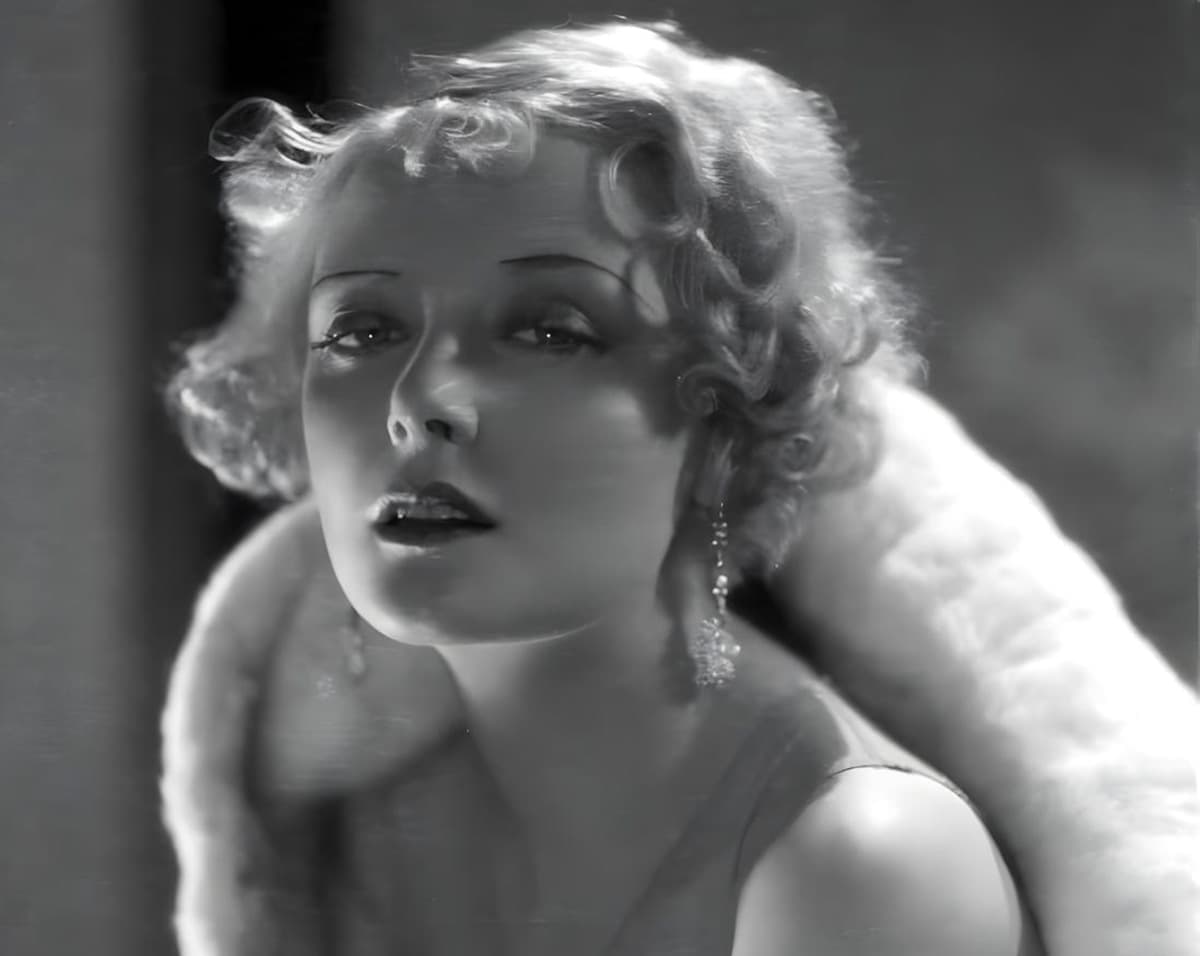
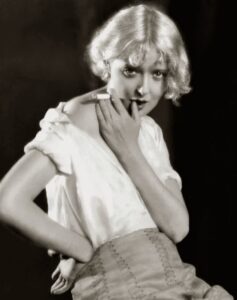
Mary Nolan, born Mariam Imogene Robertson, was an American Ziegfeld Girl and silent-film actress who also performed as Imogene “Bubbles” Wilson and Imogene Robertson. Best remembered for West of Zanzibar (1928), she later told her story in an eight-part 1941 memoir. She died in Hollywood in 1948 from a Seconal overdose; whether the overdose was accidental or suicidal is unclear.
Mary Nolan at a glance
- Birth name: Mariam Imogene Robertson
- Other names: Imogene “Bubbles” Wilson (Ziegfeld Follies), Imogene Robertson (German films), Mary Wilson (later vaudeville and nightclubs)
- Born: 1902, Kentucky (some accounts say 1905)
- Died: October 31, 1948, Hollywood, California
- Occupation: Ziegfeld Girl and silent-film actress
- Best-known film: West of Zanzibar (1928), opposite Lon Chaney
- Memoir: “The Real Life Follies of ‘Bubbles’ Wilson, by Herself,” serialized in The American Weekly, 1941 (full transcript)
- Cause of death: Seconal overdose; whether accidental or suicidal was never determined
Mary Nolan: From a Kentucky Orphanage to Model
She was born Mariam Imogene Robertson in 1902—some accounts say 1905—in Kentucky. Her mother died when she was young, and she went to an orphanage.
She ran away to New York City at age 13, so she claimed (she was at least 17, if not older).
In New York her striking beauty was quickly noticed, and she became a favorite of the era’s most sought-after artists, including Childe Hassam and James Montgomery Flagg.
Flagg introduced her to producer Arthur Hammerstein, who put her on the stage. She was rechristened Imogene Wilson, and she made her debut soon after arriving in New York in the 1922 musical comedy Daffy Dill at the Apollo Theatre.
This was the first of several stage names she would choose and then discard.
“Bubbles” Wilson and the Terror of Frank Tinney
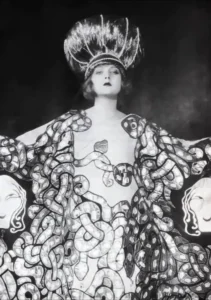
Florenz Ziegfeld signed the young woman to a contract. She was thrilled to be “one flower in the world’s greatest garden of feminine beauty, the Ziegfeld Follies.”
She appeared in the Ziegfeld Follies revue of 1923 and 1924 and became one of the most photographed women in America. As one chronicler of the period put it, “Only two people in America would bring every reporter in New York to the docks to see them off. One is the President. The other is Imogene ‘Bubbles’ Wilson.”
She shared those 1923 and 1924 Follies stages with another doomed blonde, Hilda Ferguson, the “shimmy queen” whose story followed much the same arc: early fame, scandal, bad company, drink and drugs, and a death that came far too soon. The Follies made stars, and broke some of them, too.
Nolan was involved in a very public affair with Frank Tinney, a popular blackface comedian. Tinney was married but also a heavy drinker and womanizer. According to Nolan, he literally swept her off her feet. “Tinney carried me, screaming and kicking, into his apartment” and “my life was his.” She wondered if she was “a love captive” or merely “Tinney’s woman.”
In 1924, Tinney was enraged when he found her talking with a male reporter and assaulted him, the maid, and Nolan herself. Nolan pressed charges, recounting how Tinney had knocked her to the ground, kicked her, and hit her in the head with a cigarette stand. The assault became a national spectacle. Ziegfeld’s physician, examining her injuries, reportedly said the girl looked “as though she had been struck by an automobile.” And yet, despite the visible wounds and corroborating witnesses, a grand jury refused to indict him.
Ziegfeld fired her from the Follies, and the publicity cost Tinney his marriage and his career. He had a nervous breakdown and spent his last years in a hospital.
Reinvention in German Cinema: Imogene Robertson
The Tinney scandal had a high cost. Mary Pickford, who had admired Imogene Wilson in the Follies, signed her to a Hollywood contract, but dropped her over the bad publicity. Wilson told Screenland she still meant to get into movies, “even if she has to change her name.”
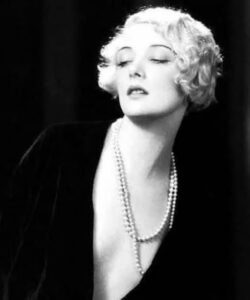
She went to Germany and launched a flourishing film career as Imogene Robertson. She appeared in seventeen German silent films, including Das Panzergewölbe (The Armored Vault) directed by Lupu Pick in 1926. She also starred in Erinnerungen einer Nonne (Memoirs of a Nun), directed by Arthur Bergen in 1927.
But gossip circulated that she was difficult to work with and given to throwing manipulative tantrums. A director supposedly attacked her when she rejected his advances, leaving her confined to a sanatorium with “shattered nerves.”
She also became tangled in the first of many legal disputes over unpaid bills and alleged theft, including a charge that she had stolen from her maid before firing her.
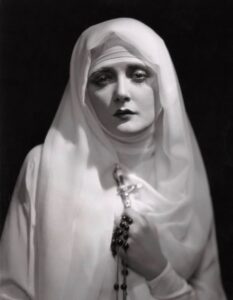
Her German cinema success drew Hollywood’s eye, and in 1927 she signed a Hollywood contract under “the deceptively wholesome name” Mary Nolan.
She signed with Universal Pictures and made her studio debut in Good Morning, Judge, directed by William A. Seiter in 1928.
Her Hollywood career was short and not especially memorable from an acting perspective. She was “a capable if not exceptional leading lady” opposite such stars as Lon Chaney, John Gilbert, and Edward G. Robinson; she received top billing in a few minor efforts.
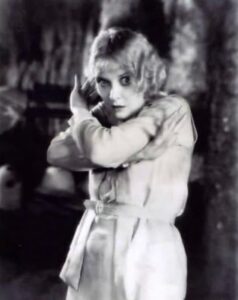
Her best-remembered role was opposite Lon Chaney in the controversial horror film West of Zanzibar, directed by Tod Browning, 1928. Nolan played Maizie, a prostitute from the “lowest dive in Zanzibar.” In the film she becomes an alcoholic and is set to be burned on a funeral pyre before escaping via a trick coffin.
Her time in Hollywood was further shortened by her reputation for lateness, illness, and bad temper. On one film, What Men Want, “the temperamental Nolan” clashed with director Ernst Laemmle, a nephew of Universal’s founder, and was fired from the film. Supposedly she filmed only thirty scenes in the nine days she was on set.
But there was another reason floated for her “bad breaks”: she was just too beautiful, too innocent. That was the gist of a maudlin story about Nolan in the May 1931 edition of Motion Picture Magazine.
I don’t know what chance they have—these beautiful and damned… One of many frail, feminine, exquisite things tossed into the thick of Life with no book of knowledge in their hands. No background. No home. No parental love and care. No place to go… Think of your daughter, your sister, your sweetheart alone in New York at fourteen, starved for the glittering thing called Life, brought by the sheer propelling force of her beauty to the slave markets of the town, where men with hot eyes appraised her and found her good… Men who knew well how to call a hideous thing by a soft cajoling name… Women, hurt by her beauty, trying to destroy her.
Whether too difficult or too beautiful, by 1933 she was finished in the movies.
Eddie Mannix, Morphine, and the Machine That Buried Her
The most consequential relationship of her time in Hollywood was with Eddie Mannix, the MGM executive whose off-the-books talent for making studio scandals disappear made him a legendary “fixer.”
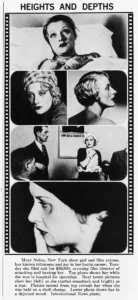
According to Nolan, when she tried to end the affair in 1929, Mannix beat her so badly that she was hospitalized for months and endured fifteen operations. It was during that long recovery that doctors put her on morphine, leaving her addicted.
“I was a dope addict,” she later wrote, “but I didn’t realize the fatal significance of those words then.”
In July 1935 she sued Mannix for $500,000 and alleged that he had beaten her and used his studio power to wreck her career. It was a fight she could not win.
Mannix and the MGM publicity apparatus leaked damaging material about her private life, and Mannix reportedly had her set up to be arrested on a morphine charge if she did not drop the case.
She withdrew the suit, but her star had sunk.
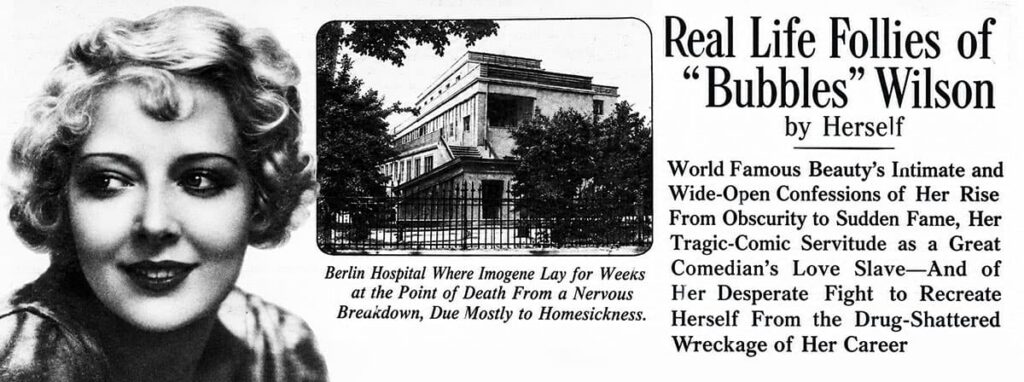
“The Real Life Follies of Bubbles Wilson”
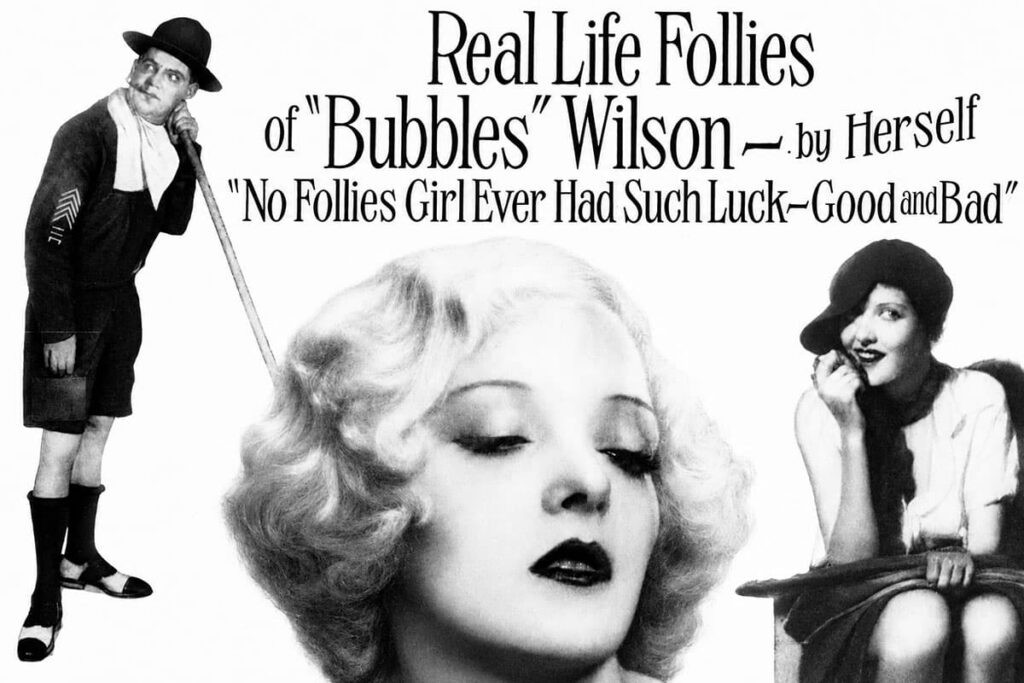
In 1941, Mary Nolan sold her life story to the Hearst Sunday supplement The American Weekly, which serialized her memoirs under a title that reached all the way back to the name that had made her: “The Real Life Follies of Bubbles Wilson, by Herself.”
The paper billed it as the “World-Famous Beauty’s Intimate and Wide-Open Confessions of Her Rise From Obscurity to Sudden Fame.” A teaser that October promised readers the “intimate memories” of “Mary Nolan, once known as Imogene ‘Bubbles’ Wilson, one of the loveliest beauties of Broadway.”
The installments ran week after week through November 1941 in papers across the country—The American Weekly was the most widely read magazine in America. “Some may say I’m a victim of my own folly,” she wrote, “but I’ve always wondered why life seems to expect so much more from a beautiful woman than it does of her less-favored sisters.” A woman who had been Mary Nolan for fourteen years reached back all the way to “Bubbles” Wilson—the girl she had been before all her travails.
She meant to expand the series into a full autobiography, but her health failed and she died.
“Poison for Ladies”: The Happy Ending That Never Came
Nolan’s confessions had a strange afterlife. In November 1945—three years before her death—The American Weekly folded her story into a national cautionary series on women and addiction, “Poison for Ladies.” Drawing on Nolan’s memoirs from four years earlier, its fourth installment used her as the central example of how drink can slide into drug addiction and wreck a career.
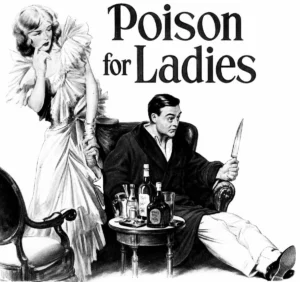
Imogene Wilson, it reports, reached New York at thirteen, “an unsophisticated little dreamer of a convent girl,” with “only 35 cents in her pocketbook.” Frank Tinney, “used to being dominating in his dealings with women,” met her backstage the very night of her Follies debut and set out to “educate” the girl who had just told him she had never had a drink and never intended to.
He once drove her not home but out to “a lonely Long Island beach,” and kept her, by her account, in his apartment for two years. One New Year’s Eve, the article recounts, he sat “slouched in a chair” with “his eyes [fixed] at a clock,” a chef’s knife in his hand, repeating “I’m waiting for the right time”—then flung the knife away and pulled her into his arms as the midnight whistles blew. She never knew whether he had meant it.
The magazine reported that Mary Nolan had been “pronounced completely cured,” had learned “to walk all over again,” and had found a quiet living as the manager of a bungalow court, “working cheerfully in her garden.”
It reads like a recovery story. It wasn’t one. Three years later she was dead of a barbiturate overdose.
How Did Mary Nolan Die? Her 1948 Seconal Overdose
She tried to revive her career in vaudeville and nightclubs—briefly performing again under yet another name, Mary Wilson—but with little success. She worked at ordinary jobs; she was hospitalized more than once for psychiatric care and for the consequences of the addiction that had started on a hospital ward two decades earlier.
On October 31, 1948, she was found dead in her Hollywood apartment. An autopsy attributed her death to an overdose of the barbiturate Seconal; whether the overdose was accidental or suicidal was undetermined. The lives and deaths of related performers are examined in 15 Silent Film Actresses Who Died Young.
She was forty-five. Her final resting place was the Hollywood Forever Cemetery, not far from the studios.
Read the memoir: the complete text of Mary Nolan’s 1941 confessions — all eight installments of “The Real Life Follies of ‘Bubbles’ Wilson,” transcribed in full, each chapter linked to its original scanned page in the Library of Congress.
Nolan’s story is one of fifty-three collected in Ziegfeld Girls and the Birth of Hollywood Glamour, a book of portraits of Ziegfeld Girls who went to Hollywood. Her story also appears alongside fifteen others in 16 Forgotten Silent Film Stars.