
Sex, Art, and Salome: Historical Photographs of a Princess, Dancer, Stripper, and Feminist Inspiration
For two thousand years, one woman has haunted Western art.
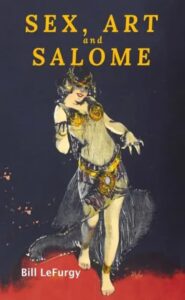 Sex, Art, and Salome: Historical Photographs of a Princess, Dancer, Stripper, and Feminist Inspiration tells the story of how a young woman who danced at a king’s birthday party became the most reinvented femme fatale in history—and why every era remakes her in its own image.
This is a lavishly illustrated history of Salome and the culture that could never leave her alone. The book traces her from a few terse Bible verses to the decadent icon of the fin de siècle, through Gustave Moreau’s shimmering canvases, Aubrey Beardsley’s notorious drawings, Oscar Wilde’s banned play, and Richard Strauss’s scandalous opera.
Also covered is “Salomania,” the dance craze that swept America and let a generation of women command the stage on their own terms.
The book draws on hundreds of images: paintings, photographs, and posters rarely gathered in one place. Here is the story of how sex, art, and spectacle collided in a single figure, and how she became the template for the modern femme fatale. Along the way you’ll meet Maud Allan, Theda Bara, Mata Hari, the Ziegfeld showgirls, and the artists who turned a Bible story into the Salomania sensation.
Why Salome Became a Modern Obsession
The Gospels say little about Herodias’s daughter. They do not name her, describe her dance, or mention seven veils. Those gaps gave later artists unusual freedom. Painters could make her innocent, calculating, ecstatic, or horrified; writers and composers could turn a court entertainment into a struggle over desire, power, and forbidden speech.
During the late nineteenth century, that freedom transformed Salome from a supporting figure into a symbol of dangerous modern womanhood. Gustave Moreau made her a jeweled vision. Oscar Wilde gave her a voice and an obsessive desire of her own. Richard Strauss amplified Wilde’s drama into an opera that provoked censorship and scandal. American dancers then carried the image into vaudeville, burlesque, musical comedy, and early film, where “Salomania” became both a popular craze and an argument about women’s freedom onstage.
Sex, Art, and Salome connects these worlds rather than treating them as separate stories. It shows how museum art, avant-garde theater, popular entertainment, advertising, celebrity photography, and early cinema repeatedly borrowed from one another. The result is a cultural history of how a biblical princess became a modern media phenomenon.
What Readers Will Find
The book is written for general readers as well as students of art history, performance, women’s history, opera, and silent film. More than 130 historical photographs and illustrations make it possible to compare the many Salomes who appeared across Europe and the United States.
- How the brief biblical account grew into the Dance of the Seven Veils.
- Why artists, critics, and censors treated Salome as both a threat and an inspiration.
- How Maud Allan, Ruth St. Denis, Mata Hari, Alla Nazimova, Theda Bara, and other performers reinvented the role.
- How Salomania gave women new ways to command attention, shape public identities, and test the limits of acceptable performance.
Book Details
- Paperback, 144 pages
- More than 130 historical photographs and illustrations
- Published October 8, 2022
- ISBN-13: 978-1-7345678-6-1
The companion essays below offer a preview of the people, artworks, performances, and controversies explored in the book.
Explore the History Behind the Book
- Salome paintings and the modern femme fatale
- Salome dance history
- Richard Strauss’s scandalous Salome opera
- Salome in silent films
For more about Salome, start here: What Is the Story of Salome?
Bill LeFurgy is a historian and former Library of Congress historian who writes about the crime, culture, and celebrity of America’s Gilded and Jazz Ages. More about Bill →