
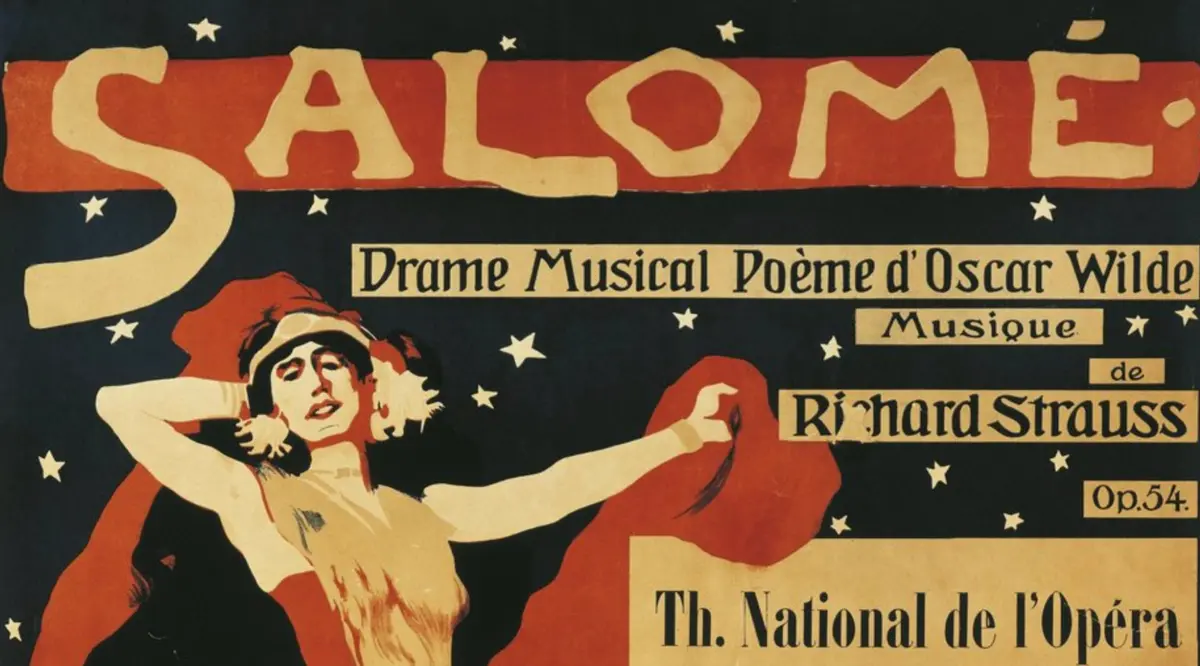
Salome Opera: How Scandal Made Richard Strauss’s Career
When Richard Strauss attended a Berlin theater production of Wilde’s play Salome in 1902, he imagined a Salome opera, feeling the play “cried out for music.” By choosing this provocative story for operatic treatment, Strauss courted controversy—perhaps in hopes of drawing attention. As Alex Ross notes, the composer “felt drawn to sexually charged material throughout his life. Women dominate his operas; men tend to be weak and shallow in comparison.”
Whatever his motivation, Strauss struggled to find a venue willing to stage his work. The grand opera houses of Vienna refused to host what they considered a shocking and immoral production. Dresden finally agreed to premiere the opera in 1905.
Casting the First Salome
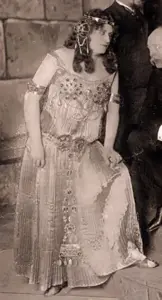
Strauss cast Marie Wittich, a well-known soprano, as his first Salome. He reportedly doubted the matronly Wittich’s ability to portray the lithesome Salome but decided her voice was more important than her appearance.
When Wittich came to understand exactly what “perversities” Strauss had in mind, she refused to have anything to do with the production, declaring, “I won’t do it; I’m a decent woman.” She also didn’t want to take on a role that Strauss described as “a sixteen-year-old princess with the voice of Isolde.” “One just does not write like that, Herr Strauss,” she is said to have told the composer. “Either one thing or the other.”
She eventually relented, with a ballerina taking her place for the erotic Dance of the Seven Veils. Wittich was undoubtedly glad to have participated, as she got thirty-eight curtain calls on opening night.
Salome Opera Faces Censorship
Strauss took a risk in presenting the opera, as German censors were quick to shut down performances deemed immoral. Salome had ample shock value—not least due to its association with Oscar Wilde, then infamous for his same-sex orientation. Homosexual relationships were illegal under German law, and the topic was especially sensitive due to rumors that such activity existed in court circles close to Kaiser Wilhelm II.
Some critics were swift to condemn the production. “We are no fans of censorship,” declared the Wiesbaden Rheinischer Kurier. “But if the sadists, masochists, lesbians, and homosexuals approach us demanding that we understand their crazy world of thought and sensibility as expressions of art, then we have to intervene in the name of the healthy.”

A Scandalous Triumph
Nevertheless, the Salome opera became both a critical and commercial triumph. It elevated Strauss into the top ranks of European composers and made him wealthy enough to build a lavish villa. In the two years following its premiere, at least fifty productions took place across Europe, with many more to follow around the world.
Staging Salome: The Singing Voice and the Dancing Body
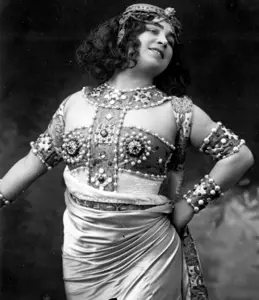
Subsequent stagings of the Salome opera often followed the original model of casting one performer to sing and another to dance. This was the case in Belgium, when soprano Claire Friché sang the title role while Mlle. J. Cesny performed the Dance of the Seven Veils. Many of Europe’s most celebrated sopranos took on the role, including Emmy Destinn, Anna Sutter, Thyra Larsen, Aline Sanden, Gertrude Kappel, Grete Forst, and Eva von der Osten.
Some, like Anna Sutter, met tragic ends. Sutter was murdered in 1910 by a jealous lover, prompting the comment, “She was a natural, full of unmediated, effervescent temperament; she lived the roles she played.”
The American Salomes and Moral Panic
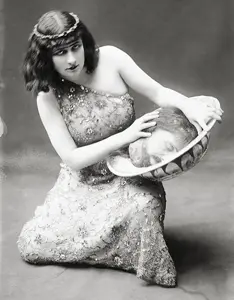
The opera crossed the Atlantic with controversy in tow. When the New York Metropolitan Opera staged the U.S. premiere in 1907 with Olive Fremstad in the title role, the daughter of financier J.P. Morgan reportedly pressed for the production to be shut down. Critic Henry Krehbiel, writing in the New-York Tribune, denounced its “moral stench.” The Met board complied, resolving that the performances were objectionable and detrimental to the best interests of the opera house. Salome did not return to its stage until 1934. Meanwhile, soprano Mary Garden found success performing the role at the Manhattan Opera House and across the country. Her 1910 performance in Chicago was met with horror: the Chicago Tribune reported that the audience “filed out of the theater with but slight evidence of approval or appreciation.”
Despite moral objections, the role of Salome continued to attract major talent. Marcella Craft, personally recruited by Strauss, became one of the most celebrated American interpreters of the part.
Over time, Salome became a mainstay of major opera companies, including the Metropolitan, which began staging the show during the 1930s. The Met staged a new production in April 2025, with “a psychologically perceptive Victorian-era setting rich in symbolism and subtle shades of darkness and light.”
Beyond Strauss: Other Operatic Visions of Salome
While Strauss’s version remains the best-known Salome opera, other composers also tackled the story. Jules Massenet’s Hérodiade (1881) featured a Salome portrayed as more spiritual than sensual. Antoine Mariotte’s Salomé (1908), also based on Wilde’s play, was staged less frequently and described as less sexually charged than Strauss’s work. The Swiss soprano Lucienne Bréval sang the title role at the Paris premiere of Mariotte’s Salomé at the Gaîté-Lyrique in April 1910, and returned to it at the Paris Opéra in 1919, making her the most durable Salome on the French stage.
This post is part of a broader exploration of Salomania and Salome’s rise as a cultural icon in the early 20th century.
→ Visit the main Salomania hub page to discover more.
For an illustrated history of how Wilde, Strauss, dancers, artists, and filmmakers reinvented Salome, see Sex, Art, and Salome.