Alfred Cheney Johnston: Why the Surprising Nude Photographs?
Alfred Cheney Johnston nude photographs turn up all over the internet today. Johnston is, of course, famous for photographing Ziegfeld Follies showgirls and silent movie actresses during the 1920s. Many of these women are clothed in his images, but many are also nude (or nearly so).
We don’t really know why he took so many nudes.
Photographs for Publicity and Profit
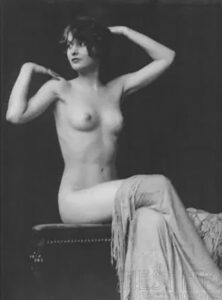
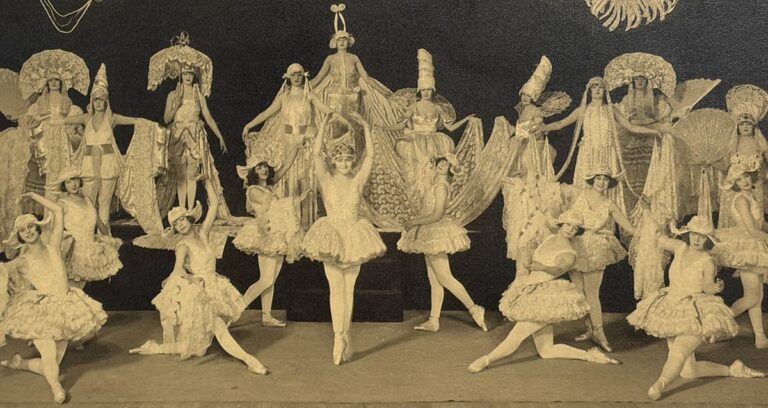
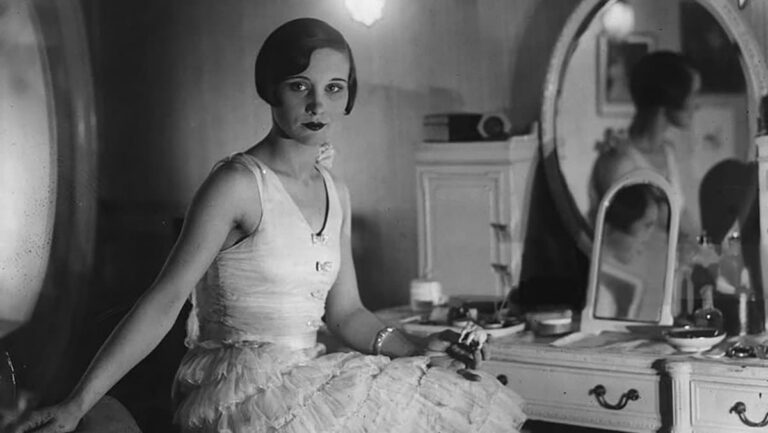
The photos of women with their clothes on are easy to understand. They were intended for general publicity, both for the Ziegfeld Follies shows and for the performers themselves. Florenz Ziegfeld Jr. originally hired Johnston to shoot photographs for lobby displays. There was also a thriving market for the images in popular magazines such as Photoplay, Vanity Fair, and Harper’s Bazaar.
At the time, these magazines published only photographs of clothed performers; nothing truly risqué was permitted. Johnston produced many hundreds of such pictures from 1917 through the 1930s (and made quite a lot of money doing so).
Alfred Cheney Johnston Nude Photographs Kept Private
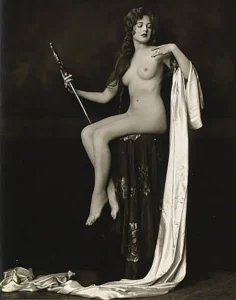
During that same period Johnston also took hundreds of nude photographs of women—some famous, others obscure.
The large majority of these photos were never publicly shown during Johnston’s lifetime (he died in 1971). He did publish one book of nude photographs in 1937, Enchanting Beauty, but it sold modestly and received scant notice.
All available evidence suggests that Johnston kept almost all of his nude photographs out of general circulation.
Nude Photographs, Posthumously Found
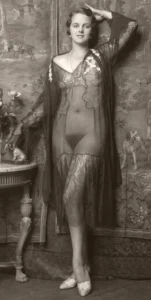
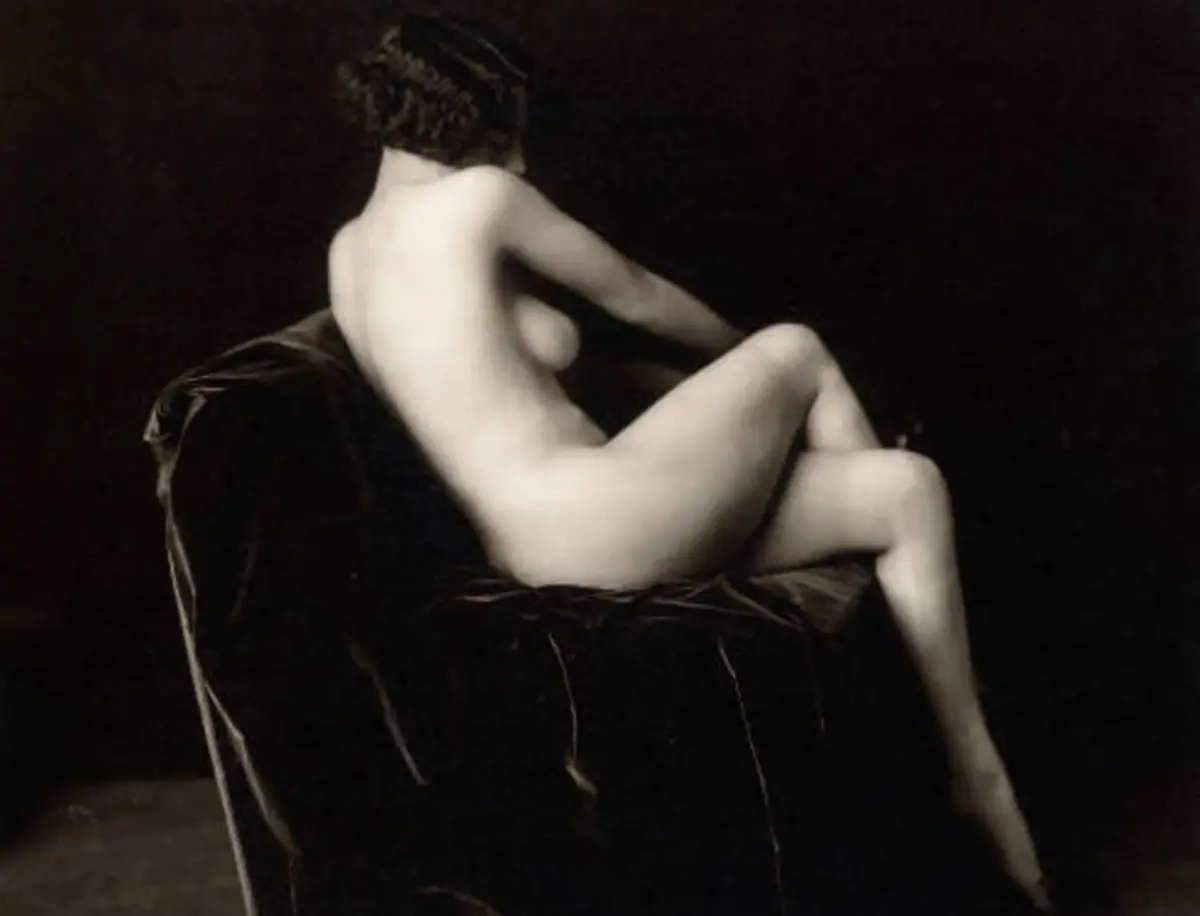
All that changed after his posthumous archive was discovered in a Connecticut barn. Uncovered were scores of nude photographs—paper prints and glass plate negatives—of young women.
The degree of undress varied from complete nudity to semi-nude drapery.
These photographs, once kept private, have proliferated online. In my opinion, they are comparatively restrained and tasteful by modern standards. They now circulate as images of vintage glamour and can be found on everything from made-to-order posters, mugs, and beach towels.
The Famous and the Obscure
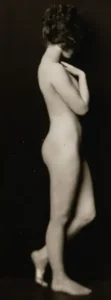
Most of the women remain unidentified, although a few were movie stars such as Barbara Stanwyck (who would later star in the noir classic Double Indemnity), and Norma Shearer (one historian called her “the first American film actress to make it chic and acceptable to be single and not a virgin on screen”).
Other daring photographs depicted Ziegfeld showgirls, including Dorothy Knapp, Jean Ackerman, and Hazel Forbes.
The most famous Ziegfeld Girls are not found (so far!) among the nudes: these include Marion Davies, Marilyn Miller, Mary Eaton, and Fanny Brice. Maybe it was modesty. Or maybe they just didn’t feel the need or desire to appear without clothing before Johnston’s camera.
Why Were the Nude Photos Taken?
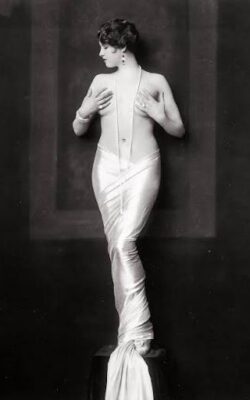
Johnston considered himself an artist, and one explanation for the nude photographs is that he was attempting to capture beauty with his camera. Other photographers of the era created what were called “figure studies” of unclothed women. It remains open to debate where the line falls between art for art’s sake and art created for the male gaze, but many photographers pursued similar work with an avowed aesthetic purpose.
Another possibility involves publicity and promotion. We don’t know the extent to which the photographs were circulated, but it is possible Johnston shared them with magazine editors and others in the theatrical world (nearly all men) to burnish his reputation. He was in the business of selling photographs of beautiful women, and the occasional nude sent gratis could have helped keep his name before influential people.
The women themselves also may have seen promotional value in the photographs. Show business is all about getting—and staying—noticed, and an aspiring actress or dancer may have wanted nude images of herself sent to people (again, nearly all men) who were in a position to advance her career. That the photograph had been taken by Johnston, already famous for his depictions of the Ziegfeld beauties, could only have enhanced its hoped-for impact on those casting stage and screen productions.
An unknown but ambitious young woman hoping to break into show business may have seen a nude photograph as a ticket to visibility and success. The agency exercised inside an arrangement of that type is complicated, but understandable.
The Mystery Remains Unresolved
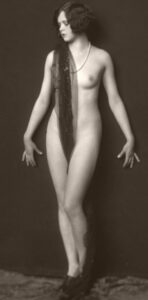
The temptation is to resolve the matter in one direction: to declare the nudes either purely high art or simply a casting-couch racket. But the more accurate answer is that they were both, and other things besides, depending on the day and the woman in front of the camera.
Johnston’s clothed portraits are famous for holding competing readings in tension: a glamorous, sexualized object and an assertive, self-possessed subject at the same time. His nudes may represent the purest expression of that same tension.
The nude women most certainly can be seen as objects. Some wear expressions of feigned modesty, as if they have just become aware of the viewer. Others are coyly draped in what might be intended as a tease. And even in today’s wide-open world, the image of a nude woman is difficult to separate from traditions of erotic display and visual consumption.
But still, most of the subjects seem to radiate confidence, as if they have no doubt about their beauty or their value as individuals. What is particularly striking is what might be described as their innocence: there is hardly any of the ironic knowingness or refracted self-awareness one sees in much of modern portrait photography. The women present themselves in a remarkably unencumbered manner—although admittedly that innocence may be as much ours to project as theirs to possess.
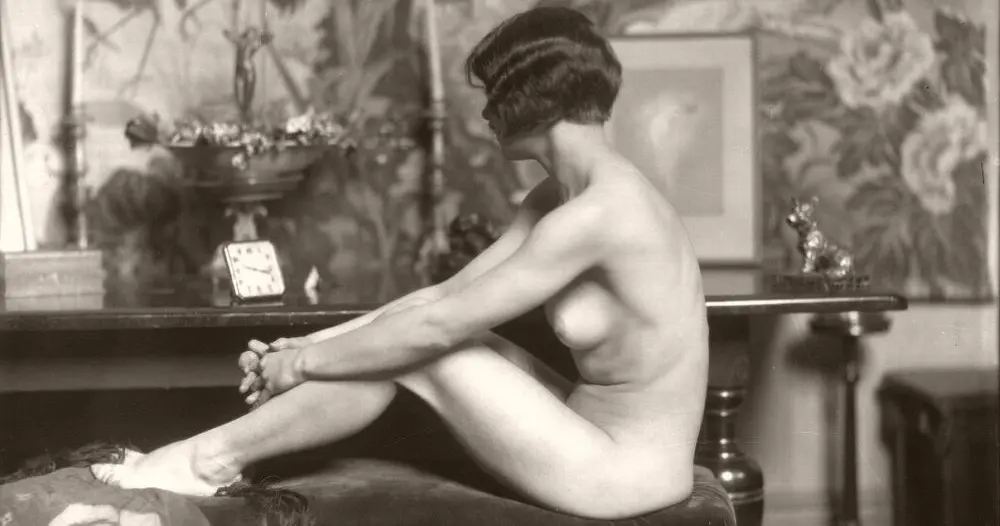
Icons of Vintage Beauty and Glamour
Johnston’s nudes capture a unique moment for women in America. Many were exploring new ways of living in society through what the historian Liz Conor calls “the appearing woman.” It was suddenly permissible for women to be seen—as Norma Shearer was—as modern, single, and unashamed.
We can read that boldness in the nudes: women embracing modern ways of being and asserting their individuality without seeming to try too hard. It is one reason, I think, that Johnston’s nudes have become so popular today. Women-run boudoir photography studios openly advertise their ability to recreate his style for female clients.
Beauty Without Shame, Sensuality Without Irony
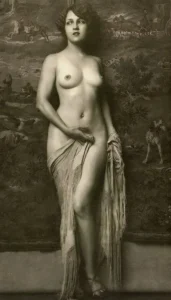
The popularity of these reinterpretations suggests that many people recognize images that celebrate beauty without obvious shame, confidence without overt aggression, and sensuality without the irony and personal branding that so often characterize modern depictions of women. That does not erase the context in which the photographs were made, but it does suggest they have become something rather more than historical artifacts.
Whatever Johnston’s intentions may have been—and they remain impossible to know with certainty—his photographs have acquired meanings that extend well beyond the world in which they were created. They have become part of a continuing conversation about beauty, agency, and the ways women choose to present themselves.
A Note on Attribution
As stated above, Johnston’s nudes were found largely unidentified after his death. Most are in private hands, so it’s difficult to know exactly how many exist. Quite a few have made it onto the internet, but a fair number of these are not conclusively authenticated as Johnston’s. I have reasonable confidence that the images shown here are his.
There are also plenty of internet images almost certainly falsely attributed to him. And a growing number that merely look somewhat like his are the product of AI, including many “colorized” works. Johnston did produce a few color photos near the end of his career, but the vast majority of color images connected with his name are artificially produced.
If you can identify a misattribution, I’d welcome the correction.
For more of Johnston’s work, browse the full gallery: Alfred Cheney Johnston Nude Studies.