
What Earthly Use Is a Show Girl?
In 1915, Florenz Ziegfeld decided to have a little fun with his fame as an indefatigable promoter by means of a syndicated newspaper story. Of course, the widespread coverage also served to keep his name in front of the masses, which is a twist on what the story aims to poke fun at.
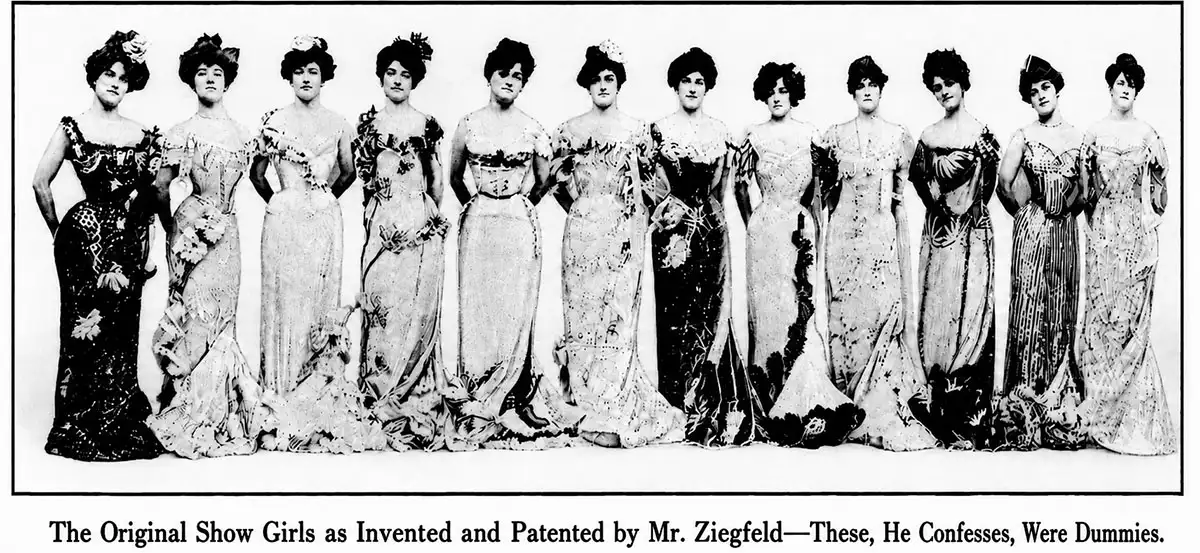
Ziegfeld Lends His Name to a Joke That Has Not Aged Well
On Sunday, March 21, 1915, a newspaper feature put a divorce-court question to three people. Ignatz Jacobson had sworn in his matrimonial suit that his wife, “a Show Girl,” could not sing, dance or act and “only fills space.” The paper printed her reply — she observed that a diamond, a dictionary and the Golden Rule also only fill space, and that she would be glad to take her position alongside them — then called in Florenz Ziegfeld, Jr. as the expert witness.
Ziegfeld agreed with Mr. Jacobson, claiming the Show Girl was “a bitter disappointment” and that he regretted inventing her.
The whole thing was meant as a joke. Ziegfeld, in fact, was getting ready to launch the Ziegfeld Follies of 1915, which would feature statuesque showgirls who would become famous for simply performing a haughty walk across the stage.
Six years later he would write ten Sunday installments singing the praises of his show girls in Behind the Scenes in Beauty Land.
Why This Was Funny in 1915
The joke depends on two things commonly known then but not now. First is that Ziegfeld’s claim that he “invented the showgirl” would have tweaked his widespread reputation for inflating his stars and his influence. Think about the jokes about Al Gore having “invented the internet.”
Second, the story and accompanying photographs play on common advertising themes of the era, such as “inventor, creator, patentee,” an “Improved 1915 Model,” a “Mouth that Is Designed to Speak a Few Words Coherently and Even Sing a Little.” The bit about Ziegfeld’s comments being “filed in the Library of Congress and a copy sent to the British Museum” echoes advertising testimonials whose claims were always being certified by some grand and distant institution.
Not So Funny Later On
In the context of a different era, the humor can be elusive. One serious publication seemingly took Ziegfeld at his word here, citing the article as proof that he “apologized for one invention for which he could not give any excuse—the Show Girl, who, he agreed with critics, was of no other use than as decorative art to set the stage.”
The Part That Isn’t a Joke
Readers can also infer hostility to women in his comments, particularly to those of a certain physical type. There is also something convenient in his sympathy for the chorus. He notes that they did the real work for $18 a week while the showgirls took double for “standing around and trying to look swell” — then apologizes for a pay scale he set for his Ziegfeld Follies performers.
Transcription Notes
Richmond Times-Dispatch · Sunday, March 21, 1915
What Earthly Use Is a Show Girl?
“My Wife Is a Show Girl; She Cannot Sing, Cannot Dance, Cannot Act—She Only Fills Space. What Earthly Use Is a Show Girl?” —By Mr. Ignatz Jacobson, Who Married a Show Girl
“I Invented the Show Girl. She Has Turned Out a Disappointment. It Is True That a Show Girl Is No Earthly Use. Let Me Explain.” —By Florenz Ziegfeld, Jr., the Father of the Show Girl Idea.
“Listen to Me. I’m a Show Girl. I’ll Tell You What a Show Girl Is Good For. Pay No Attention to My Husband.” —By Mrs. Jacobson, a Show Girl Who Wants a Divorce
Framing text (unsigned)
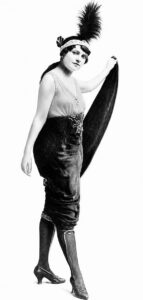
AMONG the court papers in the matrimonial squabble between Mr. Ignatz Jacobson, of New York, and his wife, who is a Show Girl with one of Mr. Florenz Ziegfeld’s stage productions, appears this interesting sworn statement:
“My wife is a Show Girl; she cannot sing, she cannot dance, she cannot act—she only fills space. What earthly use is a Show Girl?”
For the answer to this poser a statement was first sought from the young lady herself—the Show Girl wife of Mr. Jacobson. And that is printed below on this page.
Pursuing this entrancing line of investigation still further the question was carried to Mr. Ziegfeld himself, for he is the inventor, creator, patentee and father of the Show Girl idea. While historians may have some doubt as to who began the war, there is common agreement among the best living authorities that Ziegfeld began the Show Girls. The original manuscript of Mr. Ziegfeld’s utterances on this profound subject has been filed in the Library of Congress and a copy sent to the British Museum to be kept for the benefit of dramatic historians of the future. Read it below on this page.
One very remarkable discovery has been made by Mr. Ziegfeld—that big girls have small brains. Like big shaggy dogs, they can’t be taught cute tricks. After years of patient experiment Mr. Ziegfeld has found that short girls, small girls, girls whose brains are closer to the ground are the best material.
“I’m the Show Girl. Now Listen!”
By Mrs. Ignatz Jacobson.
I am a Show Girl. Now, listen. I will tell you something about Show Girls. Pay no attention to my husband.
He says I cannot sing. Of course, he means he does not like the way I sing. I know people who do not like grand opera and cannot appreciate Caruso. My husband belongs in that class.
He says I cannot dance. Well, I cannot dance with him because he does not know how.
And I cannot act! Well, I cannot act to suit him, and that is one of the reasons the divorce suit of Jacobson against Jacobson is before the courts.
But the main thing that interests me is his statement that “she only fills space.” Ah! What a profound thought! An exquisite diamond cannot sing, cannot dance, cannot act—it only fills space. The dictionary does not sing, nor dance, nor act—it fills space, although I have heard some of my friends object to the dictionary as tiresome reading because it changes the subject so often. The Golden Rule does not sing, nor act, nor dance, nor does it fill much space. I am willing to take my position alongside the brilliant diamond, the worthy dictionary and the Golden Rule, and rest my case at this point.
You ask me “What earthly use is a Show Girl.” Ask any of the men who have recently married them. Better yet, let Mr. Ziegfeld, the father of the Show Girl, answer this. I am so modest!
The Real Truth Revealed by the Inventor of Show Girls
By Florenz Ziegfeld, Jr.
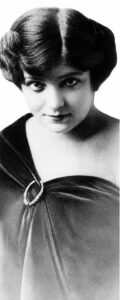
I INVENTED the Show Girl, and, therefore, like any other inventor, am qualified to discuss and analyze the child of my brain.
Some inventions are a blessing, such as the telephone, elevators and bread. Others, like the fountain pen, cigar lighters and patent leather shoes, do not contribute much to the general welfare and uplift. I confess that I shall have to place the Show Girl in the latter category. She is a bitter disappointment. She was a novelty for awhile. For a while the Show Girl was a hit. The tired business man came to my theatre to get his mind off his work, and after he had seen my bevy of bouncing, blonde and brunette beauties it was hard for him to get his mind back to his work again.
But he got onto them the same as I did, and why? For the very reason that Mr. Jacobson gives—they can’t act, can’t sing, can’t dance, but they can EAT.
When all was said and done and the novelty had worn off, those down front decided that they’d rather hear a pretty voice or see a little, vivacious, piquant, pretty minx aim at and HIT a chandelier with her tootsies than see a lot of Roman Senators walk in slowly along the back of the stage like twelve good men and true coming in with a verdict of guilty.
Inventors have their troubles. Bell, Morse and Fulton had nothing on me. So give me credit. You take a large girl whose chief accomplishment is dispensing “ham and” to the multitude, or taking things off the dumbwaiter, and try to invest her with what we call “stage presence” and you have a job that makes the laying of the Atlantic cable look like a day off. Most of them when they start in their new training do not know what to do with their arms. They act as though there ought to be dishes in them, and they walk as if they were answering the front doorbell, with all the grace of a daschund [sic].
So I had to work, plead, pray, implore, threaten at rehearsals, and even then I nearly gave up hope of making them appear artistic. But I stuck to it. I felt that the time had come for a novelty, and I was convinced that my new Show Girl was the innovation to fill the bill. My star at the time was Anna Held, petite and pretty. I wanted a good background for her. I was sure that if I could train a line of tall girls to act and wear clothes well it would serve as a pretty backdrop and make her all the more petite.
So I advertised:
“Wanted—Girls 5 feet 8 inches or more in height of smart appearance. Apply at office of Florenz Ziegfeld, Jr.”
The next day my office looked like an intelligence office. There were over 250 of them waiting for me. With my hopes running high I hurried into my private room and gave word for the procession to start. It was an astonishing experience for me. Half of them started to flash references on me; some wanted to know how many children we had and if we kept a dog; while six of them insisted at the start of the interview that they would expect to have Thursday and Sunday afternoons off and would have to “sleep in.” They apparently had not got the idea. If the fellow who wrote “I Love the Ladies” had dropped in about that time I would have asked, “Why?”
Well, anyhow, out of the 250 Amazons I selected eight. Now, these did not come from the Old Ladies’ Home in Brooklyn. I have been accused of getting my Show Girls there, but I never did. I have restrained myself. I have never had any inclination to break home ties, especially Old Ladies’ Home ties.
After looking over those 250 heavyweights I was tempted, but I didn’t yield. I picked out the most promising eight—an eight that would make the eyes of Billy Wray, the Harvard crew trainer, open in admiration. They were big, ungainly creatures, so big that I was constrained to be respectful to them, but I could picture them in handsome gowns, properly fitted, walking majestically across the stage, and I remained optimistic.
Many a time during rehearsals I was discouraged. I was at the point of driving the tall pelicans into the obscurity whence they came. “Let those ladies go back to their cooking and scrubbing,” I said to my stage manager, but countermanded the order. I persevered.
“Don’t try to sing,” I commanded, for when they opened their mouths they sounded like a bunch of pheasants.
“Don’t try to dance,” I ordered when I saw that that, too, was impossible.
“Don’t try to act. Just walk where you’re told and when you’re told. Make yourselves up to look as well as you can.”
When the dress rehearsals came I was almost in tears. “Try to carry your gown as though you had worn one once!” I shouted. That made them mad. Their heads shot up a yard or so in the air. The effect pleased me. “Keep your heads there!” I yelled. “If you lower them an inch I’ll fine you.”
The result was satisfying. The critics hailed a novelty. The public welcomed the big, near-gawky girls, that somehow had had some stateliness drummed into them, though it had cost months and tears and almost bloodshed to do it. I called them the Sadie Girls.
The Show Girl became an institution. Nobody expected her to dance nor sing nor act. If she looked well and wore her clothes well she served her decorative purpose. And she commanded a better salary than did the hard working girls of the chorus, who were ready to strike because of the innovation. And I didn’t blame them. For $18 a week they were doing real work. They were dancing and singing and acting. But because they lacked inches they earned half what the waving palms in the picture hats received for “standing around and trying to look swell,” as a rebel put it.
But the Show Girl whom I made the fashion dropped out. To tell the truth I dropped her. She has gone where she belongs, to dressmaking establishments, to wear handsome gowns and show dumpy women how they won’t look in them. The Show Girl has found her level.
I don’t deny that my conscience troubles me, not about the Show Girl’s end, but her beginning. I shouldn’t have done it, and I apologize. It was a wrong to the girls of the chorus, who are the backbone of a production.
During my experiment with the Show Girl I made an important scientific discovery. Big girls are not clever. It is the little, not the big, girls who can be taught to work.
The Show Girl can no longer merely fill space. In these days of snappy dancing and demand for chorus work the Show Girl finds herself backed “off the boards” by the chorus girl.
The Show Girl, like that other well-known bird, the dodo, is extinct. The new 1915 model is not a show girl—“she fills space,” of course, but she can also sing, dance and talk.
Transcription notes
- The bylines should be read with care. Hearst’s Sunday magazine sections were assembled to a house formula and carried celebrity bylines as a matter of practice, and the Hearst press was, according to one historian, the chief publicist for the Follies throughout their existence. All three voices on this page — husband, wife and producer — argue in the same mock-logical rhythm. How much of the prose is Ziegfeld’s own is unknown, and no source consulted here settles it.
- The feature was retitled by the papers that bought it. It runs under the syndicate’s own headline in Richmond and Birmingham; the Washington Post of the same Sunday ran it as “Ziegfeld Tells Why He Did It.”
Cite This Transcription
This transcription is deposited with Zenodo and carries a permanent DOI. If you need a citation that will outlast this website, cite the DOI rather than the page address.
The deposit holds HTML and PDF editions of the text as it stands here. The source text is in the public domain; this transcription and its editorial apparatus are released under CC BY 4.0.
Part of a collection. This transcription is one of a growing set of Jazz Age primary sources, transcribed in full — memoirs and articles from the silent-film and Ziegfeld world, each taken from the original printing and deposited with a DOI.