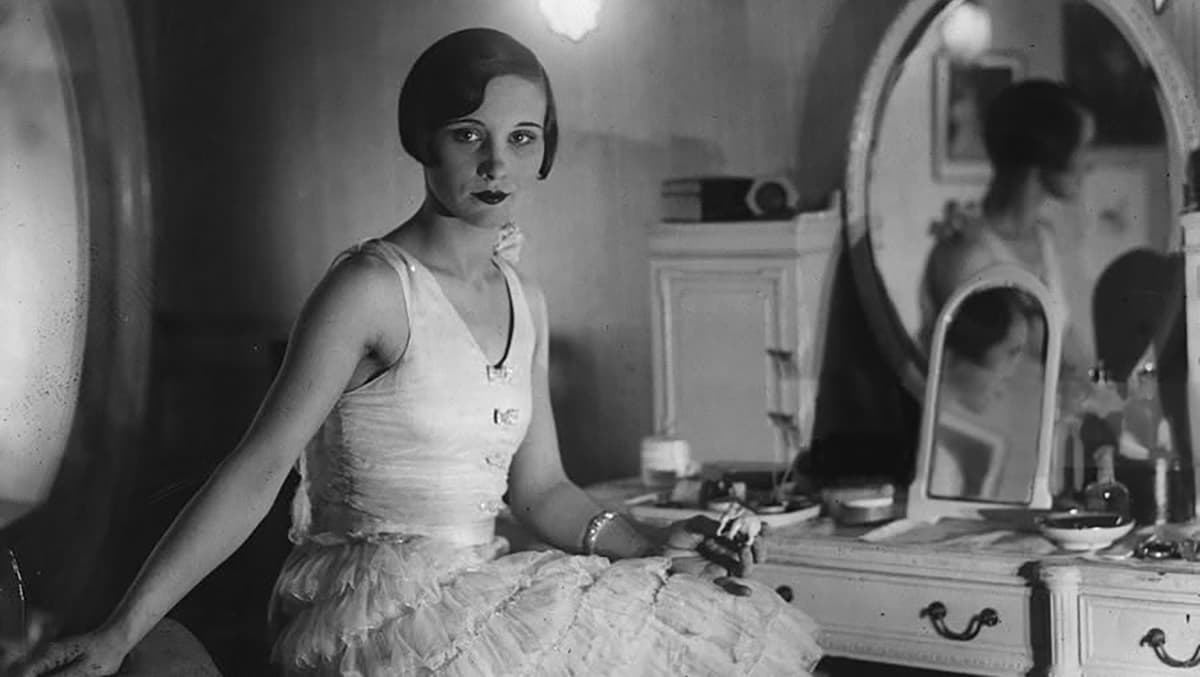
Edythe Baker: The 1920s Ragtime Piano Prodigy Who Romanced Royalty
Edythe Baker (1899-1971) was an American pianist, recording artist, singer and dancer who rose from a Kansas City music-store counter to international fame.
At 19 the trade press hailed her as “the foremost ragtime pianiste of vaudeville.” Within a year she had national following through player-piano roll recordings.
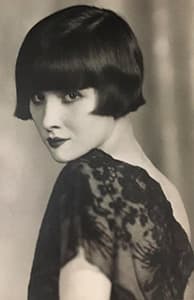 In 1920 Florenz Ziegfeld Jr. placed her in his hugely popular Midnight Frolic, a nightclub revue atop the New Amsterdam Theatre in Manhattan. Later in the decade she reinvented herself in London as a cabaret star, society favorite, and friend to royalty, marrying into a wealthy English banking family.
Edythe Baker belonged to the generation of American women whose expanding public visibility in the 1910s and 1920s opened new routes to self-invention. She took advantage of these multiple routes, from the stage, magazine photographs, musical recordings, to the whirl of London high society.
She moved through each of these worlds on the strength of a remarkable musical gift, great beauty, and a striking personal charm. Her career illuminates both the opportunities and the uncertainties of an era in which a woman could travel across boundaries of class, nationality, and celebrity.
Edythe Baker: Girl From Small-Town Kansas
She was born Edith Ann Baker in 1899 in Girard, Kansas, to a laborer, Asa Baker, and his wife, Gertrude Arnold. Her parents divorced by 1905, and by 1910 Edith was living with her mother and stepfather in a Kansas City boarding house.
The earliest documented trace of her career is disarmingly modest. In September 11, 1915, the The Music Trade Review reported that “Miss Edith Baker, the latest entrant into the piano business in Kansas City, is now employed with the Nowlin Music Co. and has become very expert in the handling of customers in the talking machine department as well as in the piano department,” adding that “Miss Baker is an accomplished musician.”
She was sixteen, still “Edith,” selling music and, already, in the eyes of the trade, a gifted player. It is a fitting origin: she learned her trade surrounded by the very recordings she would soon be making herself.

While she was likely familiar with the lively music scene in Kansas City, Edythe Baker described herself as a self-taught prodigy.
“I can neither read nor write music,” she told a London interviewer in 1933, “and I made my name as a pianist without a single music lesson. I play entirely by ear. When I was three years of age I discovered that I could play the piano, and by the time I was ten I had composed my first waltz” (Daily News, London, March 11, 1933).
Vaudeville and the Road to New York Stardom
Edythe Baker left Kansas City for the vaudeville circuit in 1919. In June she surfaced on a bill in Louisville, Kentucky, with “singer and conversationalist” Willie Smith; she was described as “a lovely petticoated Paderewski.”
By December, teamed with a female singer, she was earning warm notice in Washington, D.C., where one reviewer marveled that Edythe, as she was now known, “just rags it [the piano] silly” (Times Herald, Washington, D.C., December 2, 1919). “Ragging” meant syncopation, the trendy propulsive style that was about to break into full flower as jazz.
Edythe Baker also drew comment for her daring stage use of facial makeup and nail polish, daring acts of self-display that were themselves part of her modernity.
Her star was rapidly rising. Variety noted in October 1919 that the Aeolian company had signed her to a contract to record piano rolls: perforated paper scrolls that made a home piano re-play a performance automatically. Before radio and electrical recording these were enormously popular, putting skilled music into any middle-class parlor with a piano; but unlike a phonograph record, a roll stored only the notes and their timing, not the sound itself, so it never captured Edythe Baker’s own touch the way a disc would.

Over the next several years she recorded prolifically for the Mel-O-Dee, Universal, and Duo-Art roll labels and, later, for Aeolian-Vocalion and English Columbia discs; the pianist-scholar Artis Wodehouse counts some seventy-five recordings between 1919 and 1926. Among Edythe Baker’s roll recordings is a cover of “Jail House Blues,” recorded earlier on phonograph by Bessie Smith and Clarence Williams.
Harry Fox, a well-known vaudeville headliner and comedian, saw her and grabbed her. She became part of his act “Harry Fox, with five fascinating beauties, and Edythe Baker,” ran the billing in the February New York Clipper. Baker made a quick impression on stage; she was said to “almost stop the show” and that “she is a wizard with the ivories.”
A profile in the New York Herald of March 21, 1920 headlined “Pianist Wins Her Way in Vaudeville” reported that she “came from Kansas City, Mo., a few months ago alone and without a friend in New York, seeking a career as a concert pianist.” Whether she ever truly aspired to the classical repertoire is unknown; it was her “hot” playing that brought her to prominence.
Her style was a unique mix of “mid-West ragtime and nascent mid-West blues,” with flashy novelty-piano stylings. The playing had a tight construction and a strong sense of forward momentum, like the popular dance music of the era.
Ziegfeld and the Midnight Frolic
Edythe Baker got an even bigger break a couple of months later, when Ziegfeld signed her for his hugely popular, cabaret-style Midnight Frolic atop the New Amsterdam Theatre roof, where Irving Berlin is said to have written a special number for her.
Billboard called her “the hit of the show” on her first appearance “a marvel at classics, but syncopates the 88 notes on a Baby Grand like probably no one else can” (June 5, 1920). The same notice praised her songwriting: “Some of her latest compositions are ‘Blooie, Blooie’ and ‘I’ll Be True to the Girl of My Dreams,’ but the greatest composition of all is ‘Dreaming Blues.'”
The Kansas City Journal went further still. “Chic Edyth Baker, the jazz queen has appeared in New York city in the new Ziegfeld roof garden show and É created a near riot with her piano-playing offering” (July 4, 1920). Waxing purple, the story continued:
“This little pianistic prodigy is by far the best jazz pianist of her sex. She is a chic personality, is Edyth, pretty as a picture, gifted beyond the eighteen years or less that comprise the period of her earthly existence thus far, and with all the self-assurance of a seasoned veteran at the piano. Her touch on the keyboard is pixie-like, yet strong, her tonal qualities are as colorful and contain all the warmth of a Mediterranean sunset, while her syncopated rhythms are as varied as the moods attributed to her well-known sex.”

Having “continued to stop shows” at the Frolic, Baker set out in 1921 on a headliner vaudeville tour with the singer and comedian Clarence Nordstrom.
Describing the new act, the New York Dramatic Mirror hailed her as “the first girl who ever did anything with a piano solo,” despite the fact that “she can’t read a note.” Nor, it added, had she “been satisfied with merely getting music out of a piano that no one else can”: she now sang and danced too, and did “both in a manner that radiates that sweet personality of hers and always makes her adorable” (November 19, 1921).
Baker was one of the first pianists to “play against time” — letting the melody drift just behind the steady beat instead of landing squarely on it. This was the early Jazz Age, when the loose, syncopated feel of “hot” playing was just breaking out of ragtime. She wasn’t a jazz musician in the improvising sense, but a polished revue pianist who brought that new rhythmic looseness into popular songs. That subtle lag gave her playing an aching, sighing quality — the “heart-break” rhythm. It was a fresh sound then, and within a few years the popular-music world had caught up.
The gendered commentary (“adorable,” “pretty as a picture,” her talent measured against “her sex”) captured her command of what the historian Liz Conor calls the “appearing woman”: the modern female subject who claimed identity and agency through her own visibility, turning the very condition of being looked at into an instrument of self-authorship. Baker stood at the leading edge of that shift, a woman who converted the spectacle others made of her into a career she directed herself.
The Broadway Years

Between 1921 and 1926 Baker worked steadily on Broadway, usually as a featured “piano specialty” rather than a book lead. Her credits included The Blushing Bride (1922), The Dancing Girl (1923), Innocent Eyes (1924), and Al Jolson’s hit Big Boy (1925).
Between engagements she held cabaret residencies and kept recording piano rolls, cutting Rodgers and Hart’s “Manhattan” and Walter Donaldson’s “Yes Sir! That’s My Baby.”
Her Broadway career culminated, and then stalled, in 1926 with Hello, Lola, a musical in which she took the lead role.
It closed after 47 performances to poor notices. The New Yorker likened it to “a fourth company of a second-rate road show,” and of Baker’s performance sniffed that she seemed to move as though her “presence were required of her by the demands of an iron civilization with which she is not at all in sympathy.” The April 1926 edition of Screenland, while granting that she played piano nicely, declared that she “acts something terrible.”
Perhaps chastened by the flop, Baker left New York for London and the third act of her life.
London and One Dam Thing After Another
Her London break came at a fashionable party late in 1926. Spotted playing at a charity cabaret at the Cafe de Paris by the impresario C. B. Cochran, she was, in the press’s phrase, “immediately snapped up.” Cochran was taking a gamble: he had lately made a “much advertised resolution” to give up staging revues altogether.
The revue that made her a London name opened at the London Pavilion in May 1927. Titled One Dam Thing After Another it carried songs by Richard Rodgers and Lorenz Hart and featured Edythe Baker as a piano specialty. The London press received her warmly with admiring reviews of her playing, singing and, of all things, a fascination with her hair. “There is a finish about the way she does her hair that is a personal gift,” declared the Evening News. “Not many women have it.”
It was not an instant hit. Cochran is said to have tried, and failed, to keep the trend-setting Prince of Wales from attending the gala the night before the premiere, on the theory that a London audience would rather watch royalty than the stage and that, reportedly, is what happened: the house was fixated on the royal box and paid limited attention to what was happening on stage.
The reviews were encouraging enough to keep the show running, and Edythe Baker drew particular notice playing its signature song, “My Heart Stood Still,” at a big white piano amid a crowd of admirers. Her gramophone record of the tune a piano solo was, one later London writer claimed, “the first jazz pianoforte record,” and sold “as no similar record has ever sold” (Daily News, March 11, 1933). The same profile framed her, extravagantly, as a pioneer of “hot” music “long before Duke Ellington.” In his memoir Musical Stages (1975), Richard Rodgers remembered her fondly as a “brilliant American pianist.”
Marriage and High Society
Marriage followed stage success: she wed Gerard d’Erlanger, of a prominent English banking family, early in 1928. Word of the son’s marriage to “an American dancer” reportedly caused “a storm” in the family, with talk that he would be disinherited; that, apparently, never happened.

What did come to pass was Edythe Baker’s transformation into a fixture of London society. American papers ran rags-to-riches features on the girl from Girard, Kansas, who married into the aristocracy. And the setting of her London life did take on a novelist’s gloss. She was counted among the city’s reigning beauties, her changing hair color (red to platinum blonde) and her chic fashions the subject of running commentary.
She kept performing, but increasingly only at society functions; her recording career was over by 1933. There is a quiet irony in that arc. The same drive for self-invention that had carried her from a record counter to the revue stage now carried her out of performance altogether entering society was, in its way, her most audacious act of self-authorship, and the one that silenced the talent on which all the rest had been built.
Back home, the reception was mixed. She was a rags-to-riches heroine on one page and, on another, “that little Frou-Frou pianist of the Midnight Frolic” (Syracuse Journal, January 26, 1934).
A 1928 feature cast her as an opportunist who had clawed her way “from a small-time pianist at a Kansas City movie theatre up the dizzy, dangerous social ladder,” following a set of cynical rules (The Salt Lake Tribune, February 12, 1928): “Have a good address even if you have to go without food”; “Attend only the best night-clubs. Sleep two hours before you go, dress leisurely and arrive late, feeling refreshed. The other women will be bedraggled and tired; you, with your cool, soft beauty, will shine by contrast. Stay only a short time.”
Romance in High Places
Edythe Baker and her husband separated in 1934; American headlines put it a bit snidely: “Edythe Baker Quits High-Brow Briton; Couldn’t Get Along.” She nonetheless kept her place in London society, was often described as close to royalty within the “American Set” which included Wallis Simpson. She was linked romantically to both the future king Edward VIII and his younger brother, Prince George, the Duke of Kent (Daily Sentinel, Rome, N.Y., March 18, 1937).
A sensational story ran in the November 14, 1980, London Daily Mirror alleging that Winston Churchill had an affair with Edythe Baker during World War II. “It was a very physical relationship,” a “London friend” of the singer is quoted as saying. “But she faded discreetly into the background when other people were about.” The veracity of the story is suspect, however, as it claims Baker was “the real-life English version of Marlene Dietrich” and had her still “living quietly” in California nine years after her death.
Later Years and Death
Edythe Baker returned to the United States in the 1940s and settled in California, where she lived out of the spotlight. In 1961 she married Girard S. Brewer in Orange, California. She died there on August 15, 1971, and is buried at Pacific View Memorial Park in Corona del Mar, far from Piccadilly, and further still from the record counter where she began.
Legacy

She also occupies a niche place in the history of American popular music. For all her virtuosity, she is classified as a “novelty piano player” with a style that grew out of ragtime and ran parallel to jazz, prizing dazzling, precisely worked-out syncopation over improvisation and deep blues feeling.
Perhaps the larger reason for her obscurity, though, is that she ended her professional career in her mid-twenties, at the height of her success, with marriage and London society proving more alluring than the studio and the stage. Instead of developing her musical style she settled for a stretch of elevated social success.
Edythe Baker remains important as an example of an unlikely musical genius who overcame remarkable odds to reach the heights of fame. That she did so as a woman rising from modest Midwestern beginnings to command the pianos of London’s most fashionable rooms made her ascent all the more improbable, and all the more emblematic of her moment. In the 1920s, when the woman was newly appearing in public life as performer, professional, and self-made figure, few careers illustrate the possibilities of that new visibility and mobility more vividly than hers.
Edythe Baker Recordings
Some of Baker’s playing survives and is freely accessible. Most of it takes the form of piano rolls mechanical captures of her performances, reproduced today on player pianos with a smaller number of disc recordings that preserve her actual sound. The authoritative reissue is the Smithsonian Folkways collection The Piano Roll Artistry of Edythe Baker and Other Women, offers a number of her songs online.
Further Reading
- Edythe Baker (1899-1971) Piano Rollography, by Artis Wodehouse
- A Salute to Topic Theory The Edythe Baker Rollography 1919-1926, by Artis Wodehouse
- Edythe (Edith) Ann Baker d’Erlanger Brewer, by Bill Edwards