Louise Brooks: A Life in Pictures
“There is no Garbo! There is no Dietrich! There is only Louise Brooks!”
Henri Langlois, co-founder of the Cinémathèque Française, 1955
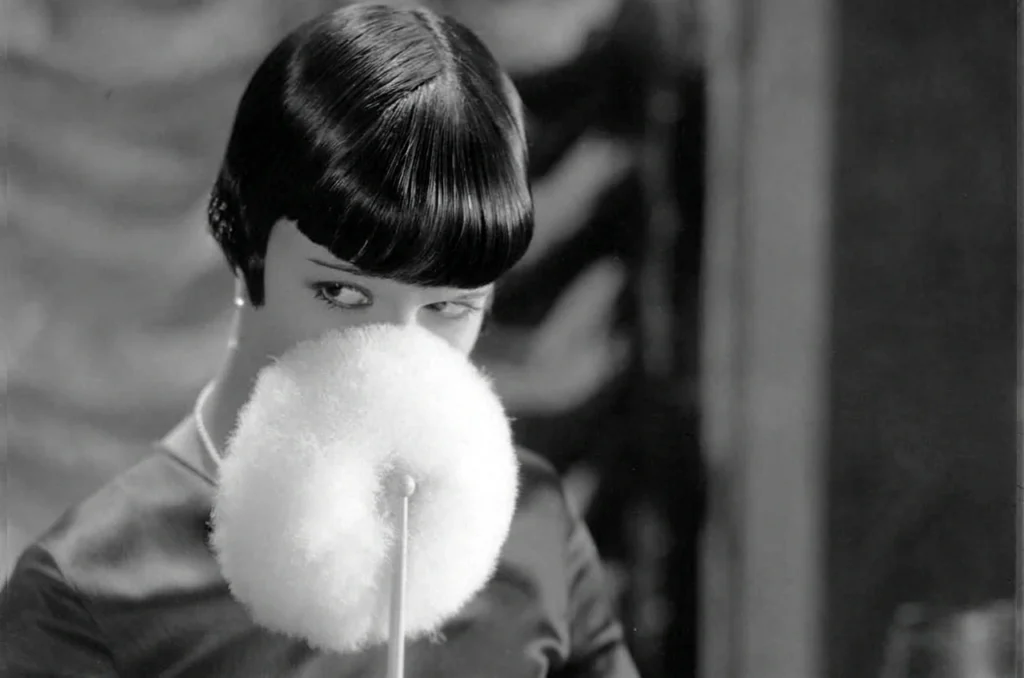
Louise Brooks: A Life in Pictures gathers more than a hundred Louise Brooks photographs—studio portraits, film stills, lobby cards, posters and magazine covers—and runs them in order, from a Kansas teenager to the woman whose face became shorthand for an entire decade. It is a picture book rather than a biography, because with Brooks the pictures are a big part of the story.
| Format | Large-format paperback, 8.5 × 11 inches; also Kindle |
|---|---|
| Pages | 122 (paperback) · 120 (Kindle) |
| Images | More than 100, many in color |
| Filmography | Complete — all 24 titles, 1925–1938 |
| Publisher | High Kicker Books |
| Published | November 17, 2024 |
| ISBN-13 | 979-8-9916325-1-5 (paperback) · 979-8-9916325-2-2 (Kindle) |
| Price | $15.99 paperback · $5.99 Kindle (free with Kindle Unlimited) |
Buy the paperback on Amazon Read on Kindle
What This Book Is — and What It Isn’t
It is a visual introduction: a large, well-reproduced run of images covering Brooks’s performing life, arranged chronologically, with an introduction tracing her career and a complete filmography. It suits readers meeting Brooks for the first time, anyone who wants her face at a size worth looking at, and gift buyers shopping for a classic-film fan.
It isn’t a full-length scholarly biography — for that, Barry Paris’s Louise Brooks remains the standard — and it doesn’t claim to be a collection of unpublished discoveries. Dedicated collectors will recognize many of these images. What the book offers them is scale, sequence and color, not novelty.
From Kansas to the Ziegfeld Follies
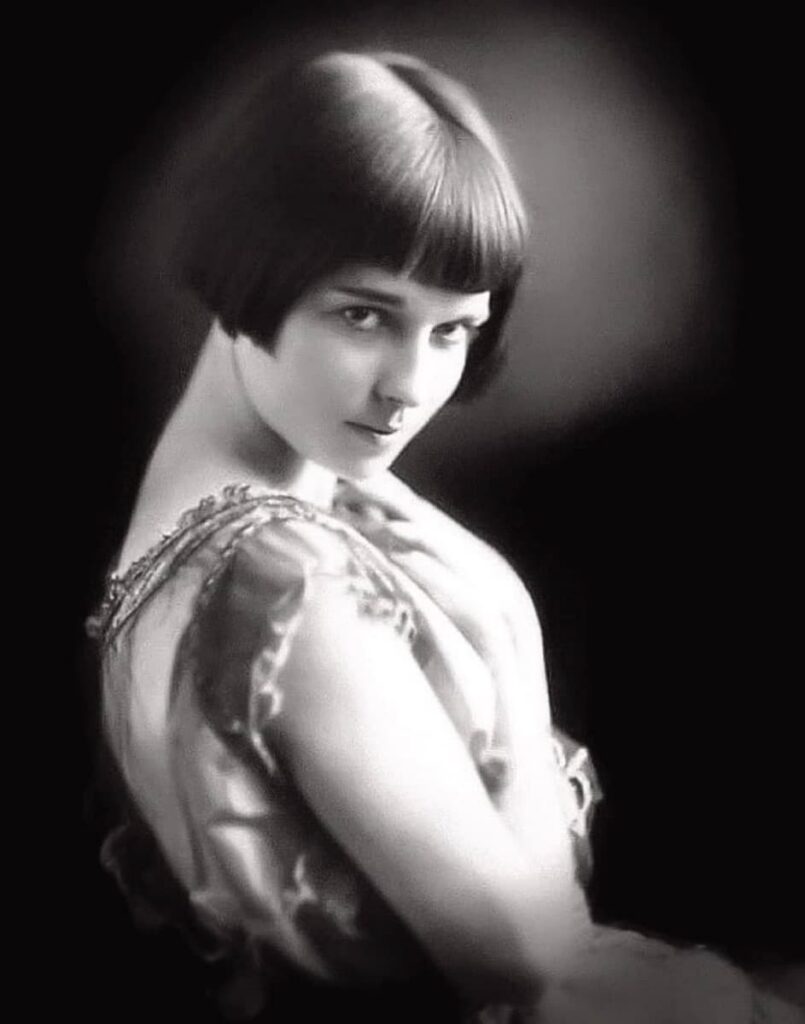
Brooks was born in 1906 in Cherryvale, Kansas. Her father was a hardworking lawyer; her mother was a strong-willed educator who warned her husband-to-be that any children she bore would largely have to fend for themselves. Young Louise showed early promise as a dancer, and as a young teenager moved to New York City to study with the Denishawn company under Ruth St. Denis and Ted Shawn.
Impressed with her talent, the company hired her. Brooks performed with the young Martha Graham, who became a lifelong friend. “I learned to act while watching Martha Graham dance,” she later said. Brooks did not like the discipline required to dance with Denishawn, and she was fired for “lacking a sense of vocation.”
That attitude—resisting external expectations and falling out of favor as a consequence—came up again and again in her career and led many to conclude she was difficult.
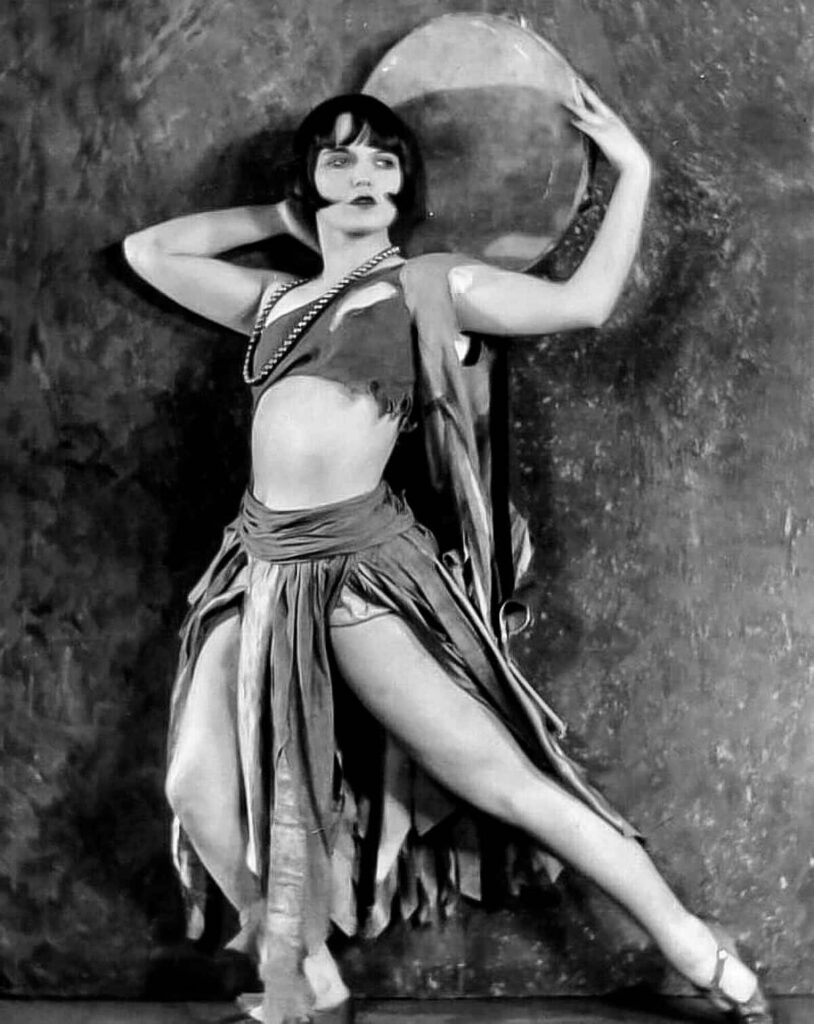
After Denishawn, she landed in the chorus of George White’s Scandals, and then was cast in the Ziegfeld Follies revue, both in 1924 and 1925.
Her own account of those years, in the first chapter of Lulu in Hollywood, credits a soda jerk, a waiter and a salesgirl for overcoming her plain-living Kansas ways and with turning her into a confident New Yorker. By her own account she went from teenager awe-struck by the big city to a sophisticated woman who could easily mingle with the rich and famous.
I have written elsewhere about what that chapter says and what it carefully leaves out.
Louise Brooks, Actress: Her Film Career
Louise Brooks made twenty-four films in thirteen years. She started at Paramount in 1925, did her best work in Germany in 1929, and was finished in pictures by 1938, at thirty-one.
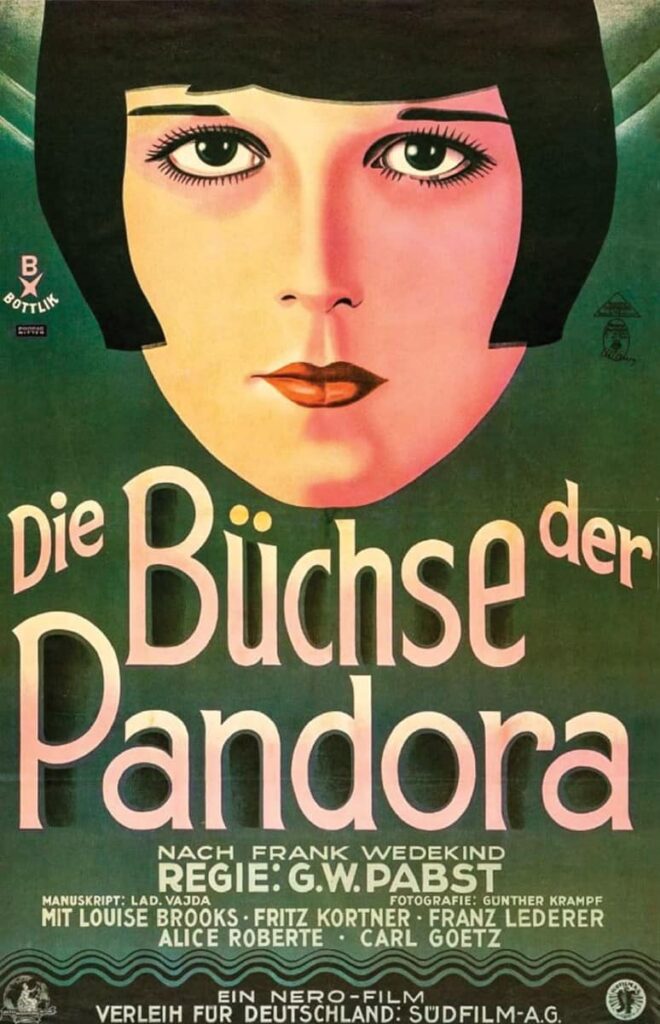
Paramount signed her in 1925 on the strength of her stage work with the Ziegfeld Follies. Her first film, The Street of Forgotten Men, gave her a bit part as a gangster’s moll and was shot at the studio’s Astoria plant on Long Island — she was still a New York actress. She moved to California in 1927. Across four years she appeared in more than a dozen pictures, most of them comedies. She attracted attention but never became a major Hollywood star.
Two 1928 films showed what she could do: Howard Hawks’s A Girl in Every Port and William Wellman’s Beggars of Life. G. W. Pabst saw them in Berlin while searching for someone to play Lulu.
Late in 1928 Brooks broke with Paramount over money, refused to return for retakes on The Canary Murder Case, and sailed for Berlin. The film she made there, Die Büchse der Pandora (Pandora’s Box), became her most famous and is regarded by many as one of the finest silent films ever made.
The film follows Lulu, a captivating Berlin showgirl whose affair with a wealthy man spirals into scandal and tragedy. After accidentally killing her husband during a struggle, she flees justice and eventually descends into poverty and is murdered by a Jack the Ripper-like character.
Brooks made Lulu unforgettable through her startling naturalism: her direct gaze, physical grace, and spontaneous reactions make the character appear simultaneously innocent, sensual, selfish, and emotionally transparent. That combination of moral ambiguity and unaffected screen presence makes the performance remarkably modern.
She stayed in Europe for two more pictures: Pabst’s Diary of a Lost Girl (1929) and, in France, Prix de Beauté (1930).
Back to Hollywood, A Long Decline, and A Revival
Hollywood did not forgive the walkout. Brooks returned in 1931 and found the good parts closed to her; she turned down a role in The Public Enemy and spent her remaining screen years in small parts and B westerns. Her final appearance was in Overland Stage Raiders (1938), opposite a young John Wayne. In the years that followed, she was variously supported by wealthy lovers, worked as a salesgirl, and ultimately became a near-recluse. During the 1950s, film historians and archivists rediscovered her work, and she took to writing about her career. Her incisive essays appeared in film journals and were collected in Lulu in Hollywood (1982), establishing her reputation as a gifted writer as well as a major silent-film actress. Brooks died of a heart attack in Rochester in 1985 at age seventy-eight.
About the Louise Brooks Photographs in this Book
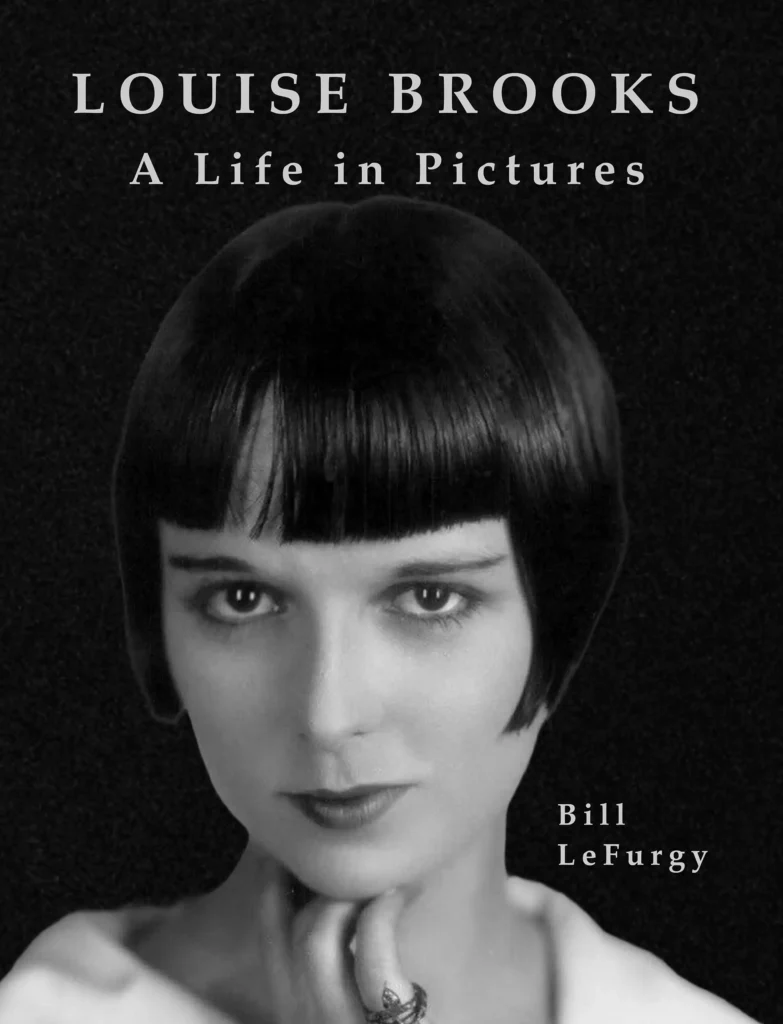 The book runs 122 pages at 8.5 by 11 inches, with over a hundred images, many of them in color. The images cover the full arc of her performing career, from a teen-aged dancer to acting opposite John Wayne. Most run one to a page, so nothing is crowded or cropped to fit. The earliest dates from 1922, before she had a stage career of any kind, and the latest from her final film in 1938.
An introduction traces her life story, including her remarkable turn late in life as a writer and re-discovered icon of silent film.
A complete filmography lists all twenty-four titles from 1925 to 1938.
Louise Brooks: A Life in Pictures is available from Amazon in paperback and for Kindle.
How It Compares to Other Louise Brooks Books
Four books cover most of what a reader might want, and they do different jobs:
- Lulu in Hollywood — Brooks’s own essays. The best writing about her is hers. Start here if you want her voice.
- Louise Brooks, by Barry Paris — the full biography, exhaustively researched. The reference work.
- Louise Brooks: Lulu Forever, by Peter Cowie — the large-format art book, beautifully printed and priced accordingly.
- Louise Brooks: A Life in Pictures — this one. The affordable pictorial: more images than the biographies carry, at a fraction of the art-book price, with the filmography in the back.
Two differences are worth naming. The biographies are standard trade-sized books, and their photographs sit in small plate sections; here every image runs full-page at 8.5 × 11 inches. And the posters, lobby cards and magazine covers are reproduced in color, as they were designed.
They complement one another more than they compete. Readers commonly pair this book with Lulu in Hollywood.
Questions About the Book
Is it a biography?
No. It is a picture book with an introductory essay and a complete filmography. The narrative runs a few pages; the photographs run more than a hundred.
How many images are in color?
Many — chiefly the posters, lobby cards and magazine covers, which were designed in color. The studio portraits are reproduced as the black-and-white photographs they are.
What’s different about the Kindle edition?
The same images and text, paginated for screens at 120 pages rather than 122. On a tablet the reproduction is excellent; on an e-ink reader the photographs lose a good deal. The paperback is the better object if the pictures are the point.
Is this a premium art book?
No. It is printed on demand, which is what makes a large-format color book possible at $15.99 instead of fifty dollars or more. The stock is good but not the heavy coated paper of a Rizzoli or Abbeville title, and the pages are printed digitally rather than offset. Amazon’s “Read Sample” preview shows the interior pages, so you can judge the printing before you buy. If you want museum-grade reproduction, Peter Cowie’s Louise Brooks: Lulu Forever is the book — it costs considerably more and is worth it for what it is. If you want a hundred large pictures for the price of a paperback, this is that.
Are the Ziegfeld Follies photographs included?
Yes — including work by Alfred Cheney Johnston, who photographed Brooks during her Follies years.
Please also check out the Ziegfeld Girls and the Birth of Hollywood Glamour, which follows fifty-three women who made the same jump from the Broadway stage to a movie set that Brooks did. More about my work is on the biography page.