
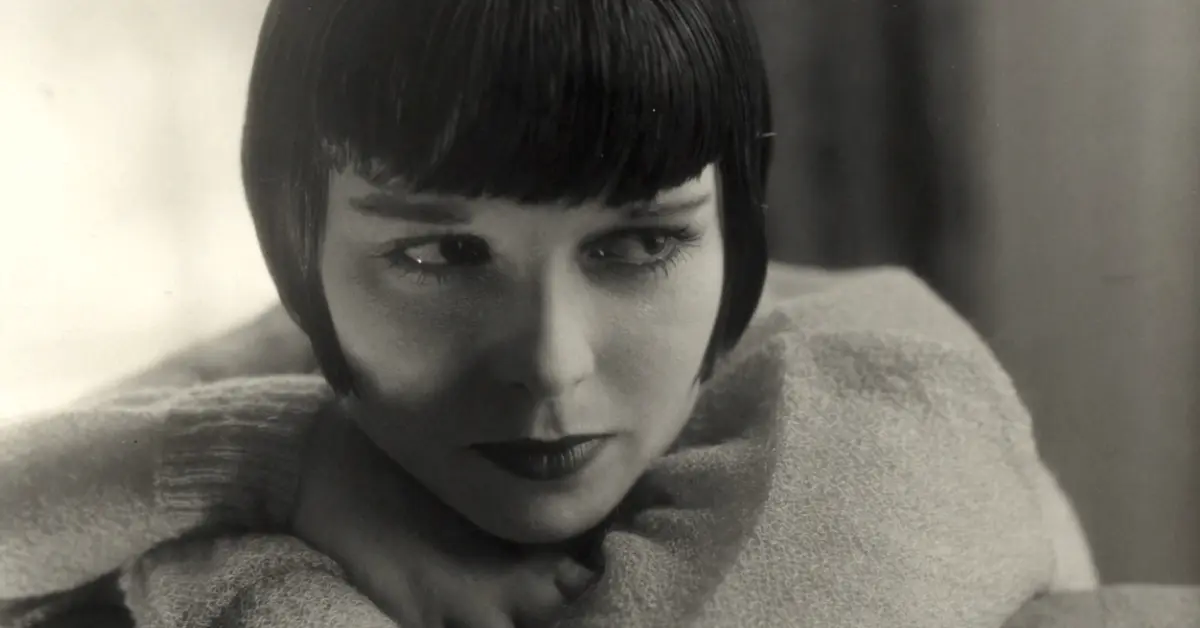
Young Louise Brooks Arrives in New York: Awkwardness Beneath the Bold Beauty
Louise Brooks arrived in New York in 1922, a fifteen-year-old from Kansas with a chaperone to study dance with the Denishawn company. Within three years she transformed herself into the Jazz Age icon that persists in popular memory.

Rereading Louise Brooks’s writing of her early years in New York City, published as Chapter One in Lulu in Hollywood, I’m struck by the unique blend of detail, candor, and lack of pretension or even a trace of sentiment.
She credits her success in the city to a soda jerk who tamed her accent, a waiter who refined her table manners, and a salesgirl who selected her clothes. What she leaves unsaid is obvious between the lines: when she stepped off the train she was already striking, quick-witted, and impossible to ignore.
What makes Brooks’s account so compelling is the disconnect between how remarkable she was and how she describes herself—not as an icon in the making but as a young woman fumbling her way through an unfamiliar world. Her writing strips away mystique and resists self-mythologizing.
Why Did Louise Brooks Go to New York so Young?
Louise Brooks arrived in New York to study with Denishawn dance school, led by the innovator Ted Shawn and his wife, Ruth St. Denis.
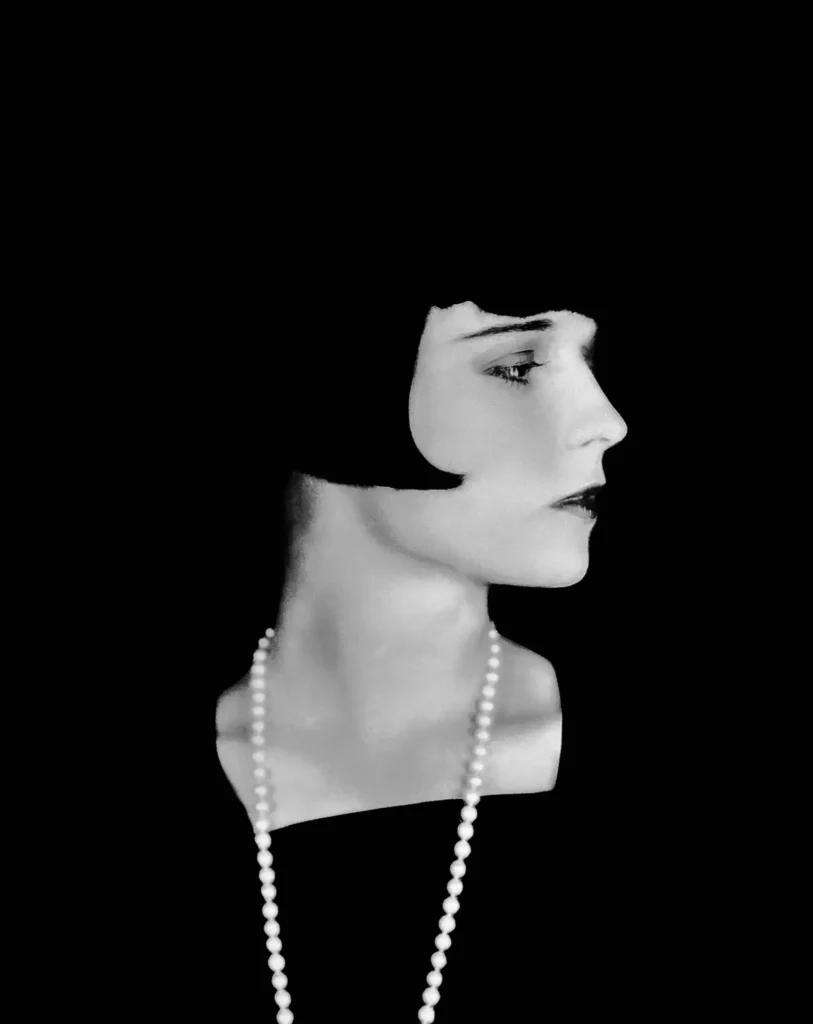
It is not an exaggeration to say the city itself became her real classroom, and that she found its lessons sharper and more intoxicating. The restless small-town girl with jet-black hair and a striking presence had no intention of remaining a Midwestern ingénue.
If anything, the transformation from Kansas country girl to New York sophisticate was less an evolution than an inevitability.
In Lulu, Brooks painted herself as naïve, but naïveté was never her defining trait. She was bold—often to the point of offense—and her beauty, which no one could overlook, gave her an immediate advantage in a city that thrived on audacity and allure.
It was not just her looks that made Louise Brooks an undeniable force. She was a talented dancer, who made her Broadway debut with Denishawn shortly after her return to New York in September 1922, according to The Wichita Eagle of 22 September 1922.
She also had a rebellious streak that set her apart. She may have lacked refinement, but she was determined to shed her Kansas ways. Her education in style and sophistication came not from books or finishing schools but through figures like actress and socialite Barbara Bennett, who introduced her to a world of fashion, wealthy admirers, and an elite social circle where money and appearances mattered more than anything.
Who Was Louise Brooks’s Chaperone?
Louise Brooks’s chaperone was Alice E. Mills, her home-town dance instructor. Brooks’s father had objected to sending a young girl to New York alone; Mills provided an acceptable solution. Mills also wanted to study at Denishawn, and in the summer of 1922 they shared a rented room near Riverside Drive.
Brooks gives her a very brief mention in Lulu. She calls her “a stocky, bespectacled housewife of thirty-six,” and says she tolerated her provincialism because they both loved the theatre. Both went home in August, and Brooks was back in New York in September; there is no mention of Mills (or any other chaperone) in connection with the return visit.
Where Did Louise Brooks’s Bob Haircut Come From?
Brooks’s bob began in Kansas and was refined in New York.
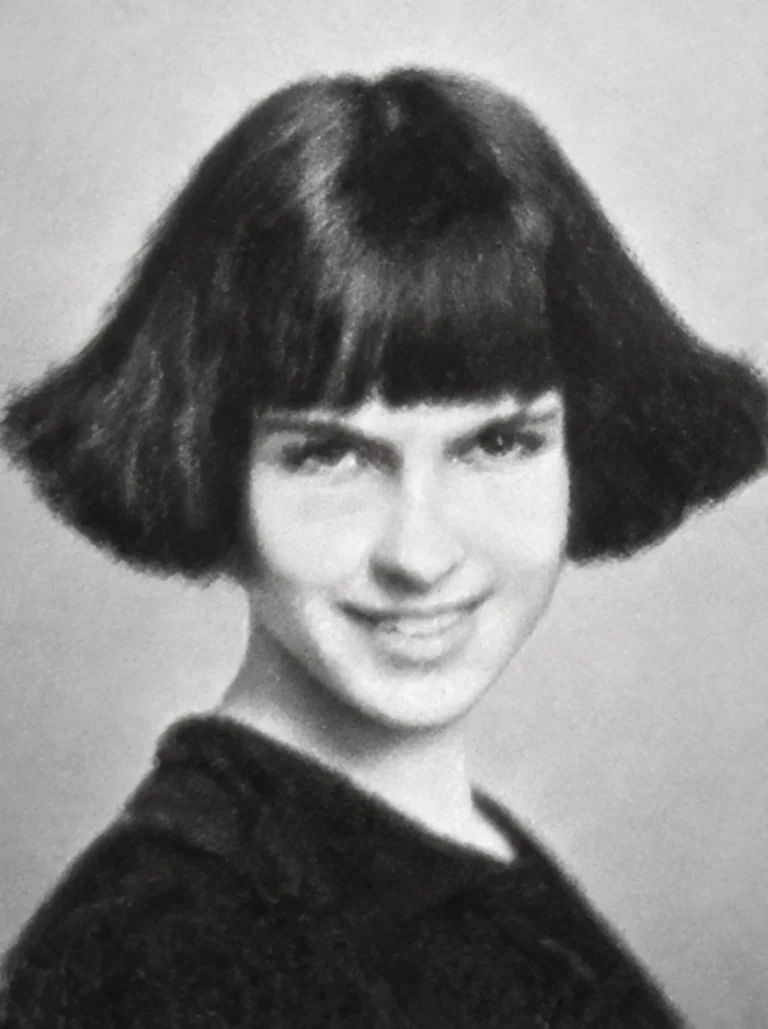
When she was a child dancer in Kansas, her mother, “in the interests of improving my stage appearance,” had a barber chop off her long black braids and shape what remained into “a straight Dutch bob with bangs.”
Photographs in the Wichita Eagle and her 1922 high school yearbook show she arrived in New York already wearing a bob.
The famous version came in the fall of 1923, while Brooks was in New York rehearsing for a Denishawn tour.
Barbara Bennett took her to “the smart hairdressing shop of Saveli, where Saveli himself attended to my hair. He shortened my bangs to a line above my eyebrows, shaped the sides in points at my cheekbones, and shingled the back of my head.” (The hairstylist Sydney Guilaroff claimed decades later that he gave her the cut; Brooks named Saveli.)
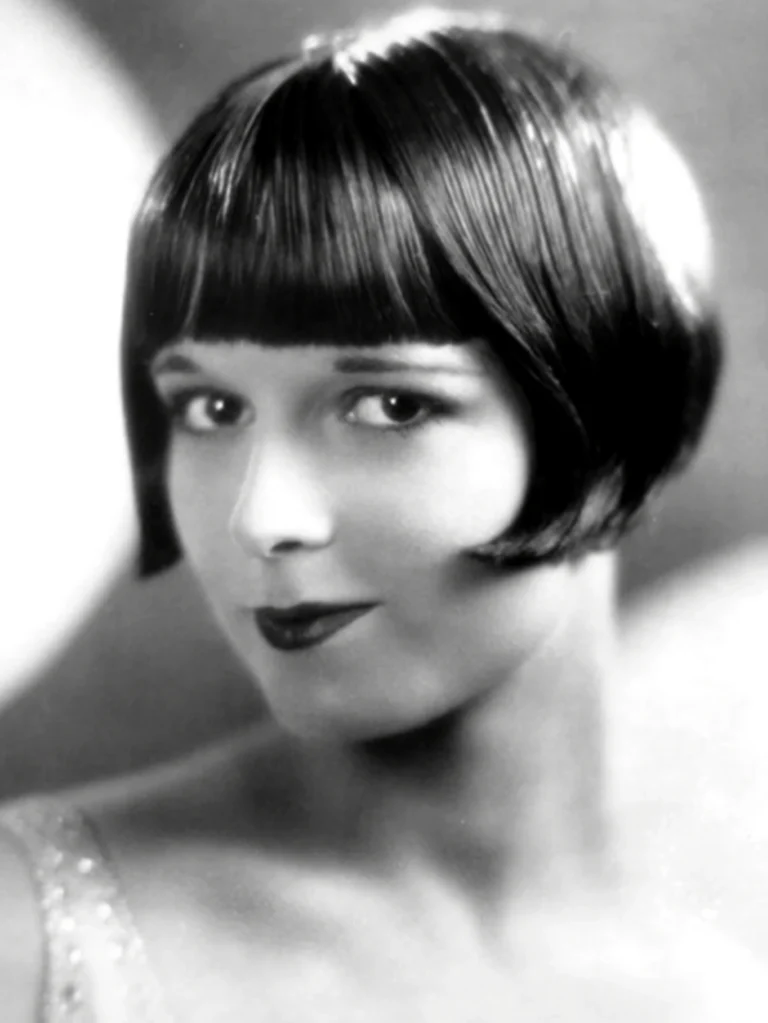
Bobbed hair was everywhere by the mid-1920s, but by 1927 Paramount was promoting “the Louise Brooks” as a style of its own.
Colleen Moore’s bob in Flaming Youth (1923) did more to make the cut popular during the Jazz Age, as Peter Wollen pointed out in Sight and Sound in 1994. But it was Brooks’s version — short, sleek against the head, with the sides cut to points at the cheekbones — that later decades came to associate with flappers generally, and with Brooks herself.
When G. W. Pabst tested her with curls for Pandora’s Box (1929), he dropped the idea and kept her “shiny black helmet,” except for one curled sequence on the gambling ship.
How Did Louise Brooks Become Famous in New York?
Despite her quick acceptance into the Denishawn dance company, her tenure there was brief. She was fired in 1924 by Ruth St. Denis who cited her lack of commitment. “I am dismissing you from the company because you want life handed to you on a silver salver,” is what St. Denis allegedly told Brooks.
She quickly moved on, and by 1924, she was dancing on Broadway as part of George White’s Scandals, a popular musical revue.
That led to bigger things, and in 1925 she was cast in the Ziegfeld Follies revue, then the biggest show on Broadway. In short order, Brooks came to the attention of Walter Wanger, a producer at Paramount Pictures, and she was signed to a five-year contract with the studio.
What Did Hollywood Make of Louise Brooks?
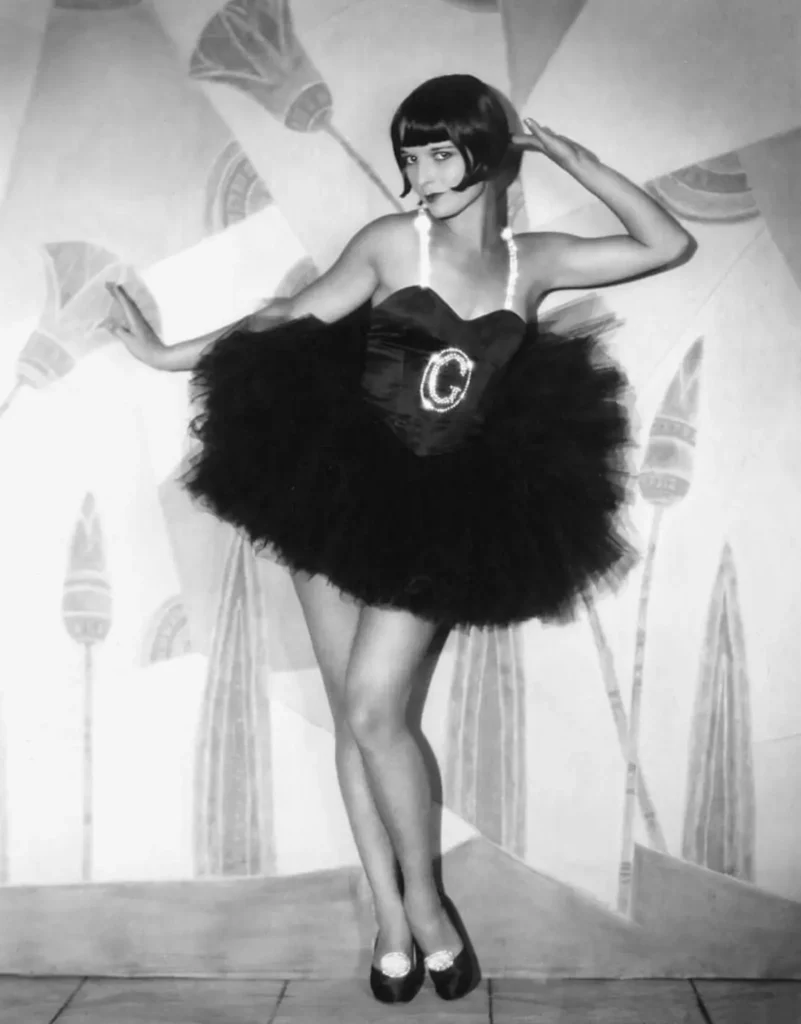
Signs of trouble in Hollywood popped up quickly. A 1926 Photoplay interview, meant to promote her as a rising film star, became an early showcase of her stubborn individuality.
She described the interviewer as hostile and astonished that the young actress wasn’t more impressed by her sudden film success. “She looked upon me as a stupid ‘chorus girl’ who didn’t appreciate her astonishing good luck,” writes Brooks. “I looked upon her as artistically retarded not to know that ten years of professional dancing was the best possible preparation for ‘moving’ pictures.”
Ironically, the interview itself reads as glowing. It referred to Brooks as “so very Manhattan. Very young. Exquisitely hard-boiled. Her black eyes and sleek black hair are as brilliant as Chinese lacquer. Her skin is white as a camellia. Her legs are lyric.” She has “a pair of eyes as wise as Solomon’s beloved.”
Brooks was already something rare at the time: a performer who exuded both glamour and jaded detachment. “Most of these movie people,” she told the interviewer, “they slaay me. But I admire Gloria Swanson. I admire her career. She’s gone ahead and got just what she wanted. I like that.”
She was nineteen years old.
How Did New York Shape Louise Brooks?
Brooks’s early years in New York did more than refine her style and introduce her to high society; they reinforced two basic truths about her.
First, she was compellingly beautiful and unusually talented. Her looks are obvious from the photographs, but her talent as a performer may have been even greater. She arrived as a small-town dance pupil who within weeks was accepted into one of the most important modern dance companies in America. She then moved easily into the biggest show on Broadway before promptly getting a movie contract.
The second basic truth about Brooks was her headstrong and determined manner. Not many young teenagers, then or now, could grab independence and thrive in New York City.
Yet her bold opinions also had the potential to cause trouble, both for herself and others. She regarded her adult dance teacher and chaperone with a mix of indifference and contempt. Instead of cherishing a place in the Denishawn company, she got fired. After landing a glowing interview in a big-time movie magazine her reaction was to call the interviewer, in her words, “artistically retarded.”
She was a paradox—a woman who became an icon despite not conforming to the expectations of stardom. Her refusal to play by Hollywood’s rules left her all but unemployable by twenty-five. Yet it is, in part, this defiance that helped secure her legend.
Brooks remained singular, an enigma whose allure only grew with time.
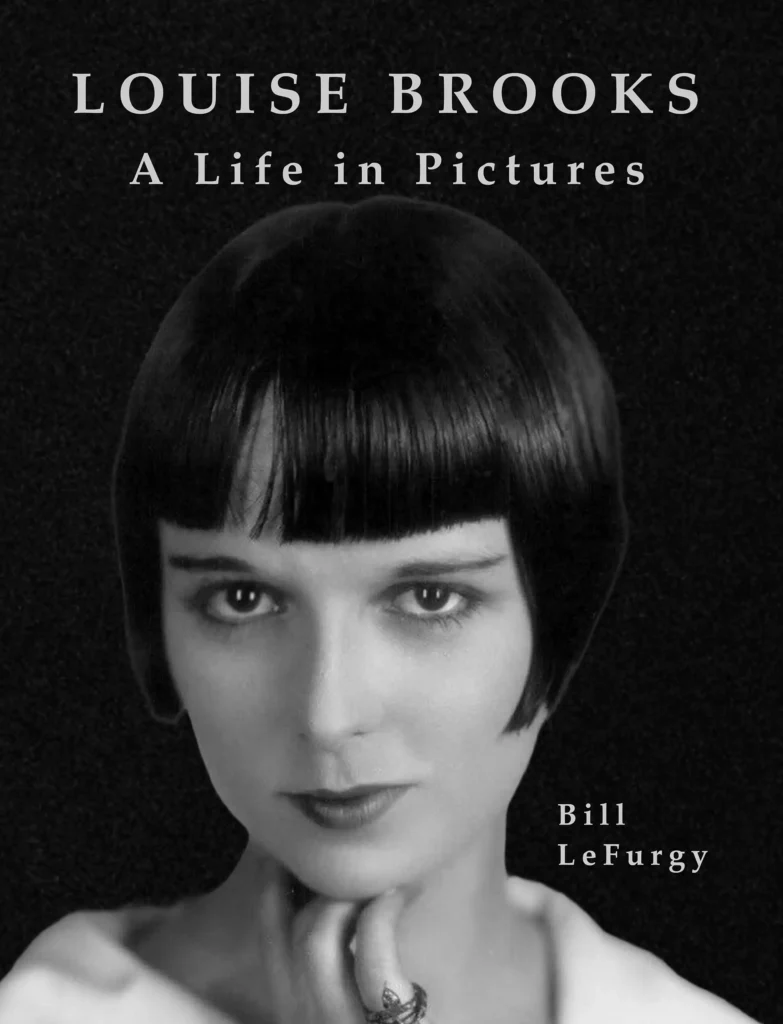
Want more Louise Brooks? Check out my book of photographs, Louise Brooks: A Life in Pictures. For how Hollywood helped turn the flapper from a schoolgirl into the adult screen figure Brooks came to embody, see The First Flapper Was a Schoolgirl—Until Hollywood Grew Her Up. For a contemporary view, see G. Stanley Hall and the Flapper, with the full text of Flapper Americana Novissima.
Brooks is one of fifty-three performers profiled in Ziegfeld Girls and the Birth of Hollywood Glamour, a photographic tribute to the Follies women who became film stars.