Ziegfeld Girls and the Birth of Hollywood Glamour
Ziegfeld Girls and the Birth of Hollywood Glamour collects portraits of fifty-three women who stepped off the Broadway stage and onto a movie set.
From 1907 to 1931, Florenz Ziegfeld Jr. ran the most famous revue in America under the slogan “Glorifying the American Girl.” Hollywood was watching, and one by one the studios took his showgirls west.
How Ziegfeld Taught Hollywood to Sell Beauty
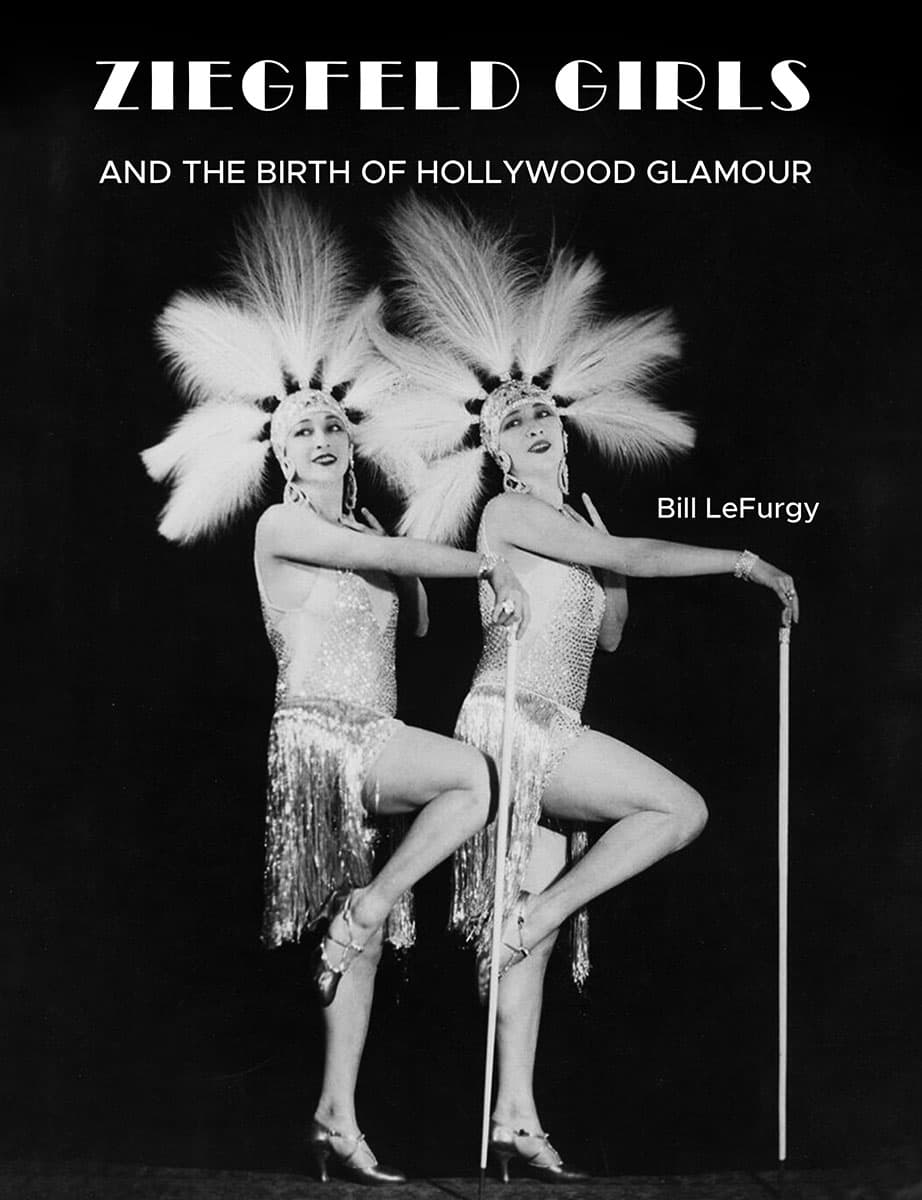 Ziegfeld got his start as a carnival barker, and he never really stopped being one. He staged the discovery of his performers as news, gave himself the byline “Acknowledged Arbiter of American Beauty,” and wrote newspaper articles with titles like “Selecting the Super-Beauty.” The press printed all of it. Rival revues — the Passing Show, George White’s Scandals, Earl Carroll’s Vanities — copied the formula and sometimes poached the performers, but none of them managed the same aura.
The machinery mattered more than the showmanship. Ziegfeld’s official photographer, Alfred Cheney Johnston, developed a house style — soft light, languid poses, a great deal of bare skin — that ran in papers and magazines nationwide and turned his subjects into symbols of idealized femininity. The studios copied the method wholesale.
By the middle of the 1920s the glamour portrait was the film industry’s central marketing tool, and the star system had borrowed its visual grammar from a Broadway revue. When Hollywood built its goddesses, it was working from Ziegfeld’s blueprint.
Fifty-Three Careers, From Triumph to Ruin
Some of the names are still famous. Barbara Stanwyck went from the 1924 Follies to six decades of stardom. Louise Brooks made Pandora’s Box and then walked away from the business entirely. Marion Davies had William Randolph Hearst behind her and blamed him, later, for typecasting her as a “doll-sweetheart.” Ruby Keeler danced her way to 42nd Street.
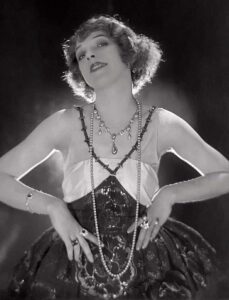
Most are barely remembered, and their stories are the reason the book exists. Justine Johnstone left the screen to become a medical researcher at Columbia. Lina Basquette quit Hollywood and became a champion Great Dane breeder. Rubye DeRemer, whom Ziegfeld billed as “the most beautiful blonde since Venus,” published a newspaper article in 1919 titled “Beauty Often a Handicap.”
Martha Mansfield died at twenty-four of burns when her costume caught fire on a film set. Olive Thomas was dead in a Paris hotel by 1920. Mary Nolan changed her name twice and spent her last years in poverty. Doris Eaton, who joined the Follies at fourteen, outlived them all and saw 2010.
The book makes no case for any of them as an overlooked genius. Some could act; some could only stand very still and be beautiful, and the pictures do not pretend otherwise. What the fifty-three share is an accident of timing—a camera was pointed at them during the few years when a particular way of looking at women was being invented, and the results went out to every newsstand in the country.
A short biography is provided for each performer: where she came from, which shows and films she made, and how the career ended.
About Ziegfeld Girls and the Birth of Hollywood Glamour
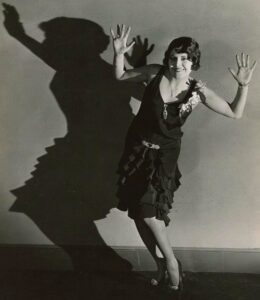
This is a picture book, not a reference work. The captions are deliberately brief because the photographs are the point — a visual history of the Jazz Age for readers drawn to silent film, Broadway revues, flappers, Art Deco style, and Old Hollywood glamour.
The book runs 115 pages, with one full-page photograph and one facing caption for every performer, and opens with an introduction on how the Follies and the studios came to share a house style. A list of suggested further reading on Ziegfeld and the Follies closes the volume. Readers who like this one may also want to read Sex, Art, and Salome, which tells the story of the Salomania dance craze that gripped America early in the twentieth century. Louise Brooks: A Life in Pictures follows one Follies alumna from the chorus line to Pandora’s Box.
Ziegfeld Girls and the Birth of Hollywood Glamour is available from Amazon in paperback and for Kindle.