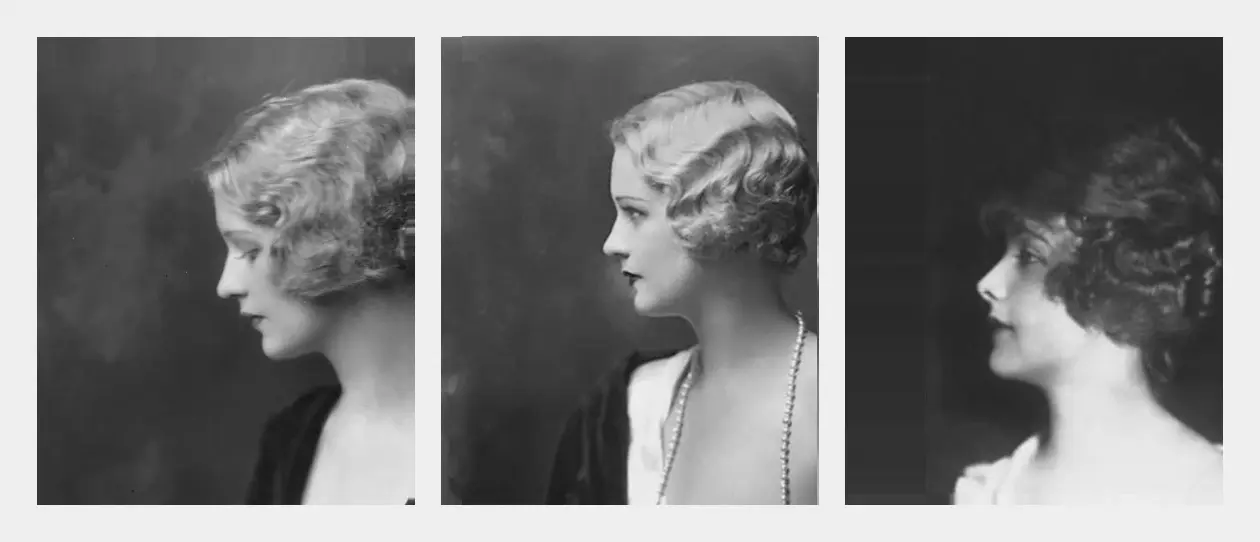
Alfred Cheney Johnston Photograph: Marie Stevens, not Marilyn Miller
Alfred Cheney Johnston’s photographs often travel the internet without authentic provenance. A print is scanned, the scan is pinned and reposted, and somewhere along the way a name is attached to it, but the name might well be wrong. Once a wrong caption is in circulation it is nearly impossible to recall. This page is my attempt to put the evidence on record for one Johnston photograph.
Identifying Johnston Sitters
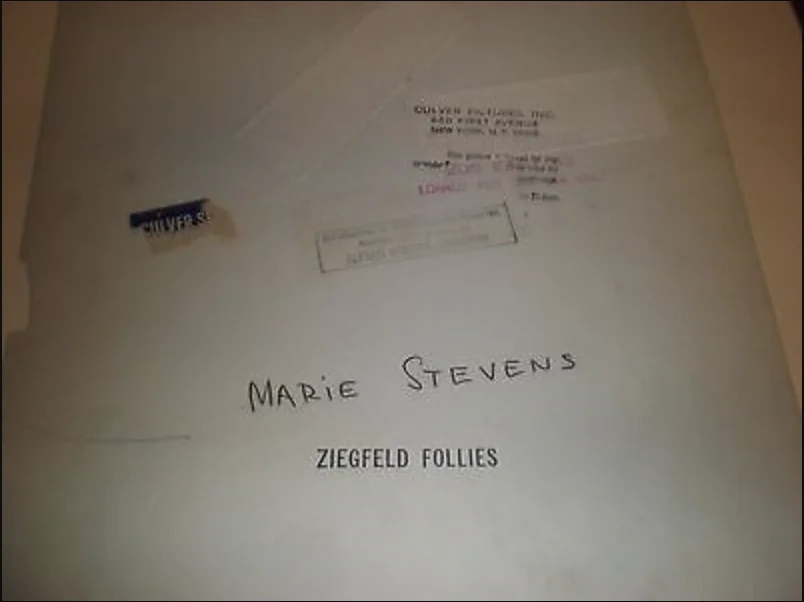
Johnston seldom wrote a sitter’s name on his photographic prints, so identification often depends on what survives in connection with the image. The best evidence is contemporary markings on the back (verso) of the prints. Johnston himself reliably stamped the verso to identify himself as the creator. Publications and theatrical press agents receiving the photographs were known to write the names of sitters and other details on the verso.
A large batch of Johnston’s prints from his estate were sold at auction in 2011; the auction records do identify some, but not all, of the sitters in the prints. In addition, a variety of museums and other cultural heritage organizations hold Johnston prints, some of which are identified.
But many of Johnston’s photographs are not well identified. These and others circulate on the internet identified as “a Ziegfeld girl,” or, in some cases, under wrong names.
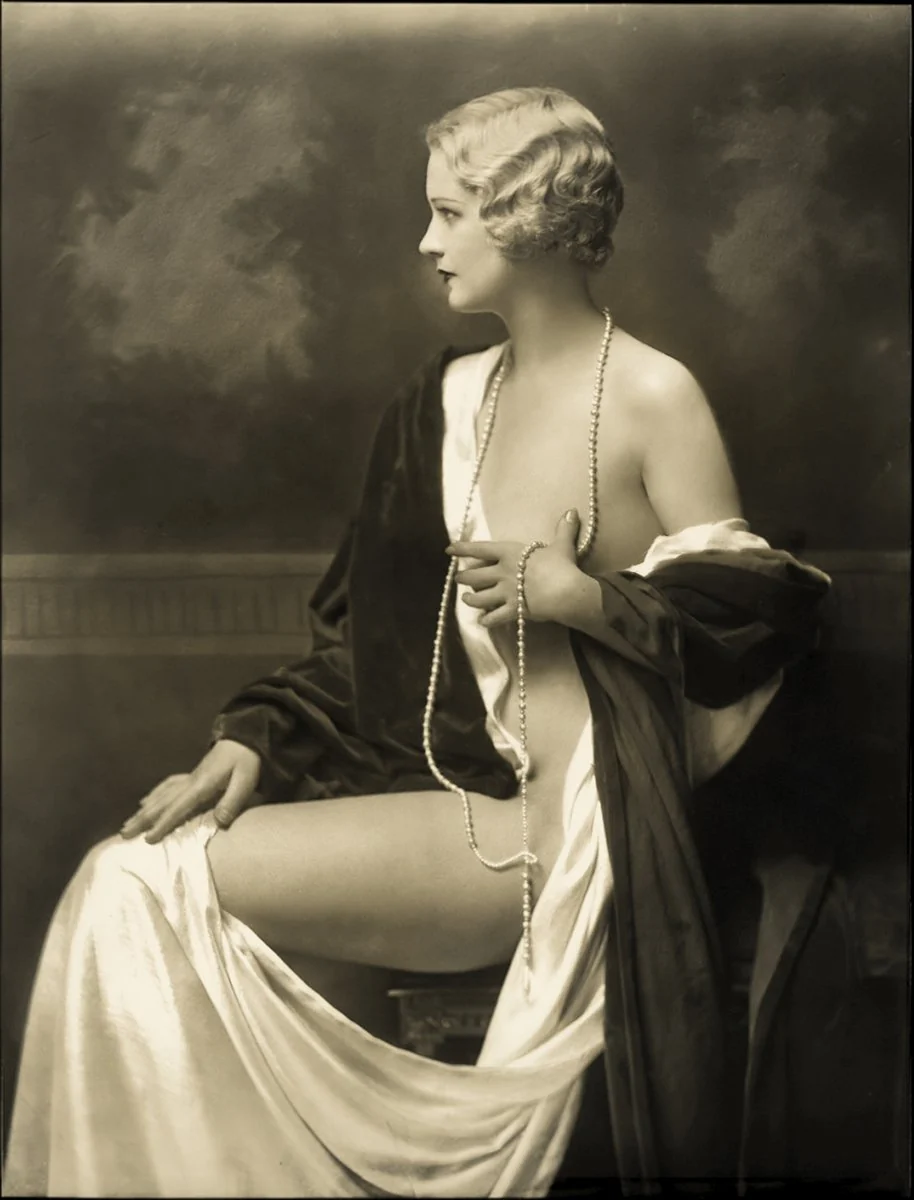
Seated Study in Pearls and Velvet, ca. 1930: Marie Stevens, not Marilyn Miller
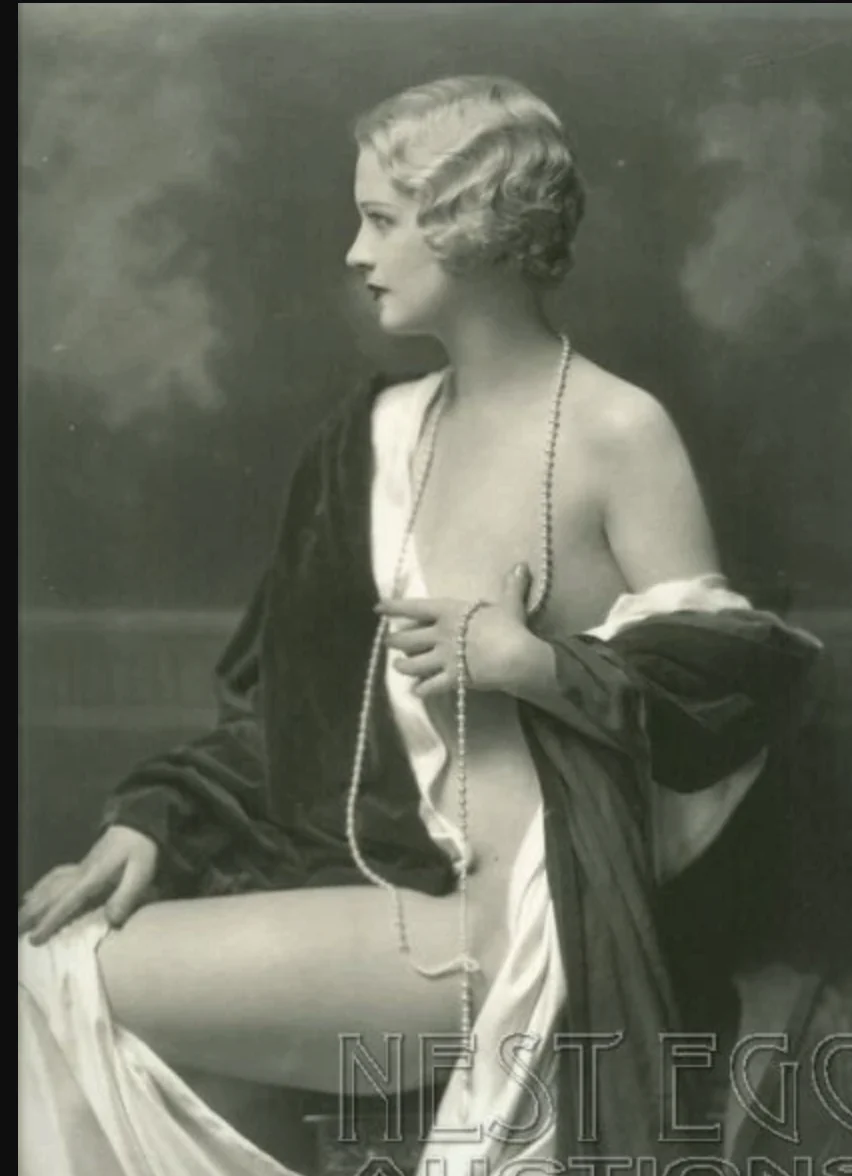
The photograph below is an example of misidentification: it circulates with the identity of “Marilyn Miller,” sometimes with the date of 1919.
This is not Marilyn Miller. It is more than likely Marie Stevens.
Evidence for Why it is Not Marilyn Miller
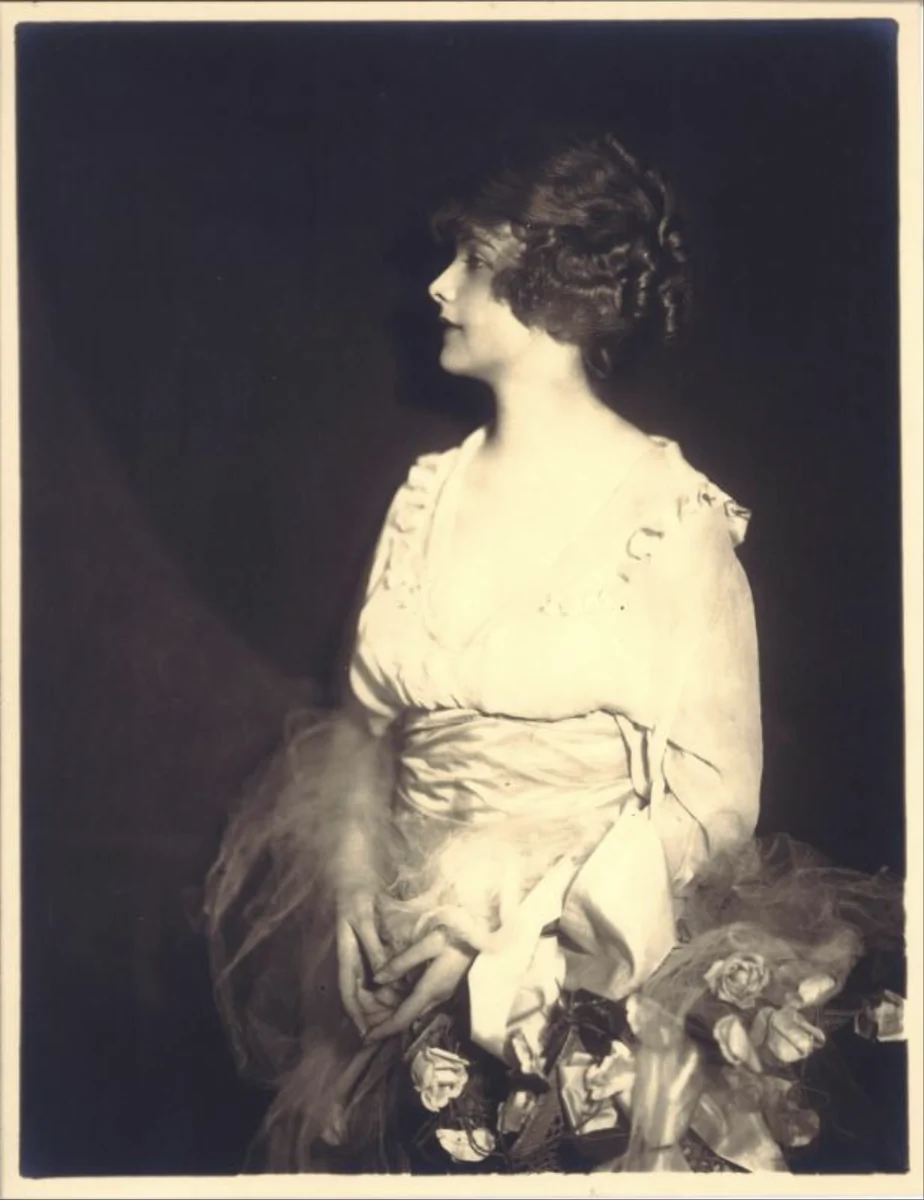
Johnston likely first photographed Marilyn Miller in 1918, the year she joined the Ziegfeld Follies, and the dated publications agree with one another: in Puck (August 1918), The Green Book Magazine (September 1918) and Theatre Magazine (January 1921) she wears her hair long, in loose curls.
The sitter in the photograph under discussion wears a close-cropped platinum marcel wave, a style of the late 1920s and early 1930s, not of 1919.
The face does not match either. Miller had a round face, wide-set eyes and a short, slightly upturned nose; the woman in the pearls has a long straight nose with a high bridge, a firm chin and a longer jaw.
A Johnston profile of Miller in the Middlebury College Museum of Art makes the comparison direct: the nose turns up, the chin is softer, the hair is dark and worn up.
Evidence for Why it is Marie Stevens
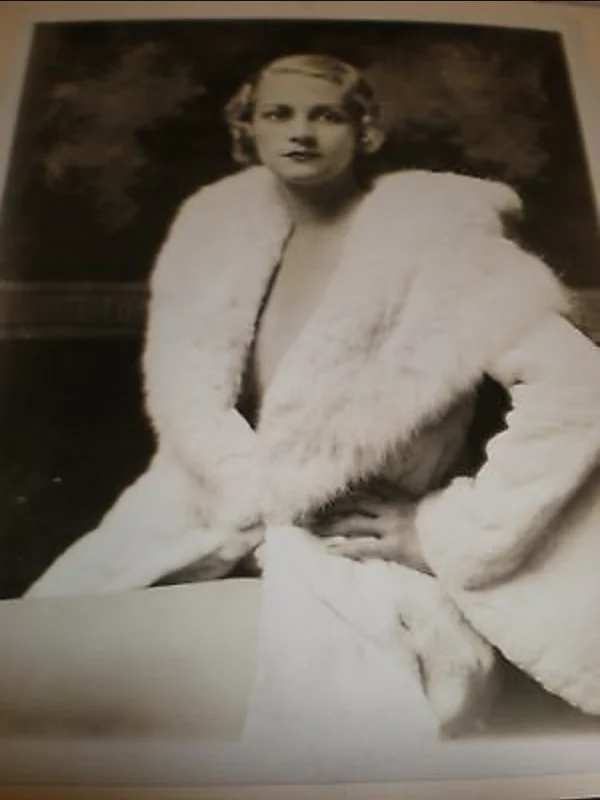
When Johnston died in 1971 his personal photo archive passed to a neighbor, and it stayed in that family until it was put up for auction in 2011 as “The Alfred Cheney Johnston Collection.” The photograph to the right was in the sale, catalogued as “Alfred Cheney Johnston: Marie Stevens photo” and described as “identified en verso, with ACJ stamp” (the lot carries no date).
This photograph matches the print in question; it is from the photographer’s own files, with Stevens’s name on the back.
Another period print of Marie Stevens, independent of that sale, matches the photograph in question in nose, lips, chin, ear, and hairline.
The two Marie Stevens photographs match point for point: the platinum marcel, set in the same waves, with the dark velvet. I think the two were made at the same sitting; at the least they were made close in time to each other.
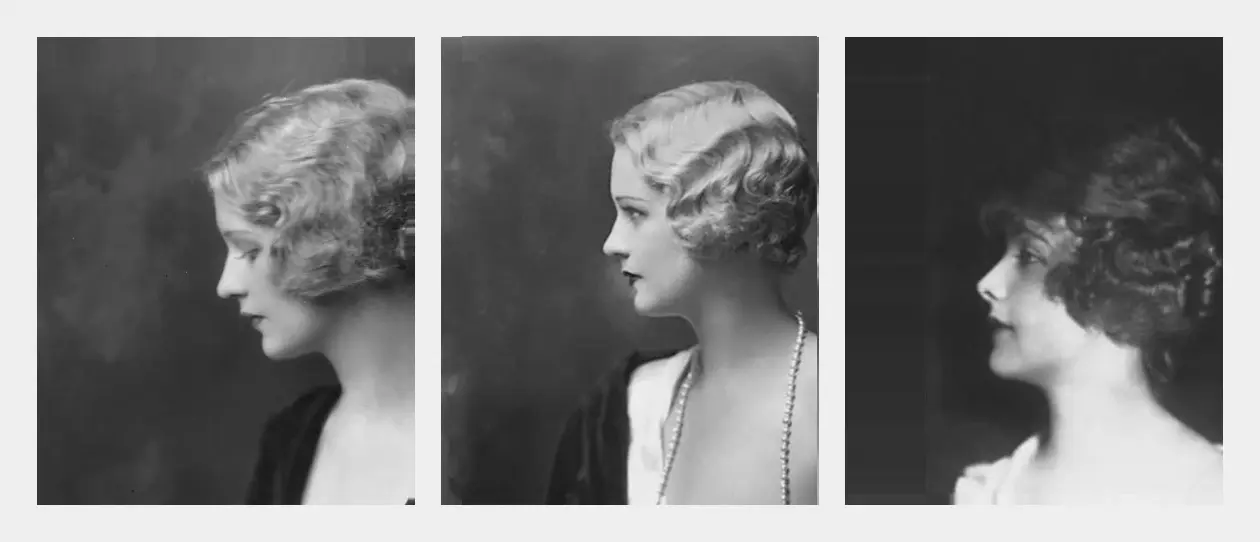
Marilyn Miller was a Big Star; Marie Stevens Was Not
Marilyn Miller was one of the biggest stars of Broadway during the 1920s and early 1930s, appearing in the Ziegfeld Follies and other Ziegfeld musical productions, and starred in the huge 1920 hit Sally. She was renowned for her dancing, which featured both spontaneity and technical polish. She also was a popular singer with hit songs such as “Look for the Silver Lining.”
Nationally famous, Miller’s picture was frequently published in magazines and newspapers. She appeared in feature stories as well in advertisements for various products.
Marie Stevens had a much lower profile. She came to Broadway in the Ziegfeld Follies of 1931. She was also in the Ziegfeld production of Hot-Cha! (1932), starring Lupe Velez, and the Ziegfeld Follies of 1934. She died in 1981, and the photograph in question is posted on the Find a Grave entry of Marie Stevens Collier.
What is the Confidence Level that the Photograph is Marie Stevens?
I would put the confidence level at ninety-five percent. The near identical auction photo from Johnston’s estate, along with clear evidence that sitter is not Marilyn Miller, is enough to push confidence to near certainty. But, since Alfred Cheney Johnston was not in the consistent habit of identifying the sitters on his photographic prints, there is a very small chance the sitter is someone else.
Lacking other evidence, however, I am sure the sitter is indeed Marie Stevens.
Related reading
Alfred Cheney Johnston: the photographer who glorified the Ziegfeld Girl · Johnston’s nude studies · Ziegfeld Girls · Ziegfeld Follies history · Jazz Age primary sources, transcribed in full
Further reading: Misattributions like this one are part of what my peer-reviewed Alfred Cheney Johnston article in Afterimage describes as the digital afterlives of his photographs.