

Lupe Velez: The Mexican Spitfire
Lupe Velez (1908–1944) was a Mexican actress, singer and dancer who began on the Mexico City revue stage in the mid-1920s. She rose to Hollywood fame in 1927. In the 1940s RKO starred her in eight “Mexican Spitfire” comedies.
She was also an accomplished Broadway stage performer who starred in Florenz Ziegfeld’s last new production, Hot-Cha!, in 1932.
Where Did Lupe Velez Come From?
Velez was born María Guadalupe Villalobos Velez on July 18, 1908, in San Luis Potosí, Mexico, a daughter of Jacobo Villalobos Reyes, an army colonel, and Josefina Velez, an amateur singer. At fourteen she was sent to the Our Lady of the Lake convent school in San Antonio, Texas, where she learned English.
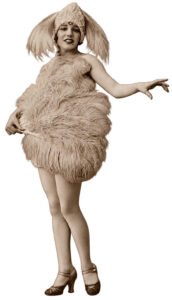
The most careful account of Velez’s early years is in Eve Golden’s 2023 biography, Strictly Dynamite, which I follow here. Her stage career began in the Mexico City revue theatres, the teatro de revista, which presented versions of the Broadway revue: sketches, songs, and provocative costumes.
In 1925, after a spell selling shoes in a Mexico City department store, she won a solo spot in the Teatro Lírico revue Rataplán Mexicano.
She sang American pop songs she had picked up at school in Texas, among them “Charley, My Boy,” strummed a ukulele and danced the shimmy—the same dance that was making Hilda Ferguson a Ziegfeld star in New York at the same moment. She also did impressions, starting with the reigning revue star María Conesa, “La Gatita Blanca.”
From the Lírico she moved on to the city’s other revue houses, including the Principal and the Regis, and into another hit, ¡No lo tapes! When she came back to the Lírico in October 1925, the house billed her as “La maga del jazz,” the sorceress of jazz.
On October 30, 1925, she made the newspapers for something outside the theatre.
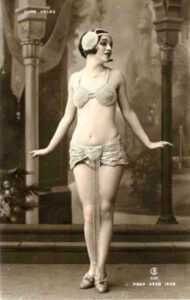
Under the headline “Lupe Vélez, Convertida en Delicioso Sherlock Holmes,” El Demócrata reported that she had chased a street heckler along the Avenida Madero in her car, caught him, and marched him to the police station, where she swore out a complaint against Celia Padilla, the star of the rival Teatro Principal, for paying him to shout insults at her.
She arrived in Hollywood early in 1927 to find that a promised film role had gone to someone else. She worked instead in The Hollywood Music Box Revue, where she did a comedy act with Fanny Brice.
Hal Roach then put her in a Laurel and Hardy short, Sailors, Beware! (1927), and Douglas Fairbanks cast her opposite himself in The Gaucho (1927). Photoplay called her “just a Mexican wild kitten” who “plays with so much ease and spontaneity that it’s hard to believe she is a novice before the camera.”
The Gaucho brought Velez glowing reviews, including this one in the Boston Globe: “The madcap Mexican girl, in her vibrant passionate role, not only sweeps Doug along to new love-making heights but comes near to stealing some of his stuff.”
But another review, in The Tulsa Tribune, proved to be prophetic. It declared that “Miss Velez screens beautifully and she has a fiery spark of life that will put her across every time,” but went on: “she possesses such a distinct personality that her scope will be somewhat limited.”
How Did Lupe Velez Become Known as the “Mexican Spitfire”?
She was called that informally from the start of her Hollywood career. The earliest use I have found is Louella Parsons’s syndicated column of January 6, 1928, which called her “the little Mexican spitfire” two months after The Gaucho opened (she played an Argentine in it). By the end of that year, as Golden puts it, the press legend of “Whoopee Lupe, the Mexican Spitfire” was taking shape, well before the studios typecast her.
Her early films cast her as one kind of foreigner after another.
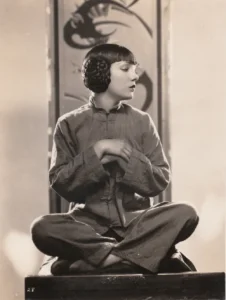
She was a Greek in Stand and Deliver (1928), a French street singer in Lady of the Pavements (1929), a French-Canadian in a Rin Tin Tin picture (Tiger Rose, 1929, her first all-talking film), a Chinese girl opposite Edward G. Robinson (East Is West, 1930), a Russian in Resurrection (1931), and a Native American in The Squaw Man (1931). She did play an unambiguously Mexican part in Wolf Song (1929) with Gary Cooper.
The bottom line is that throughout her film career, Velez was typecast as an ethnic caricature—the “wild peasant,” the fiery Latina, or some other variation on the racialized outsider.
In 1933, there was a chance she could transcend the stereotype when she signed a new contract with MGM. Some thought she might be a new Greta Garbo, an exotic and mysterious beauty. But that never came to pass and by mid-1934 her career as a serious actress was on the wane.
Part of the reason is that she never lost her thick accent, and fan magazines and newspapers delighted in rendering her speech in a ridiculous dialect for comic effect. For example, Movie Mirror in 1933 quoted her as follows:
“I am what you call ‘wash up weeth men.’ I am tired of reading in the papers that ‘Lupe was weeth thees man or weeth that man’ so from now on Lupe weel be weeth NO man! Lupe weel eat alone, weel see peectures alone, weel BE alone, from now on unteel I meet heem—the right man—and then I shall call ALL the papers mySELF and say to them, ‘Lupe ees een loove weeth So-and-So!’”
She returned to Mexico in late 1937 to make La Zandunga (1938). Golden calls her performance quieter, softer and lower-pitched than in her English-language films; she sings a ballad, “Espejito,” in tears. The film broke records in Spanish-language theatres in the United States.
RKO brought her back to Hollywood for a B picture, The Girl from Mexico (1939). It “was built for laugh purposes,” Motion Picture Daily wrote: “everything in it, all of which is elementary comedy and much of which is slapstick, is farce that tickles the funny bone.” A Toronto trade paper headed its notice “Lupe Velez’ Come-back Clicks” and reported that she had “lost none of her old ‘oomph,’ nor comeliness, and she sings and dances as well as ever.”
The sequel, Mexican Spitfire, took the nickname out of the fan magazines and ran with it. In December 1939, a month before the picture opened, Motion Picture Herald reported that the studio “has decided to make three more pictures with Lupe Velez and Leon Errol, using the same characterizations as in ‘Mexican Spitfire,’ as a result of audience reaction at sneak previews.”
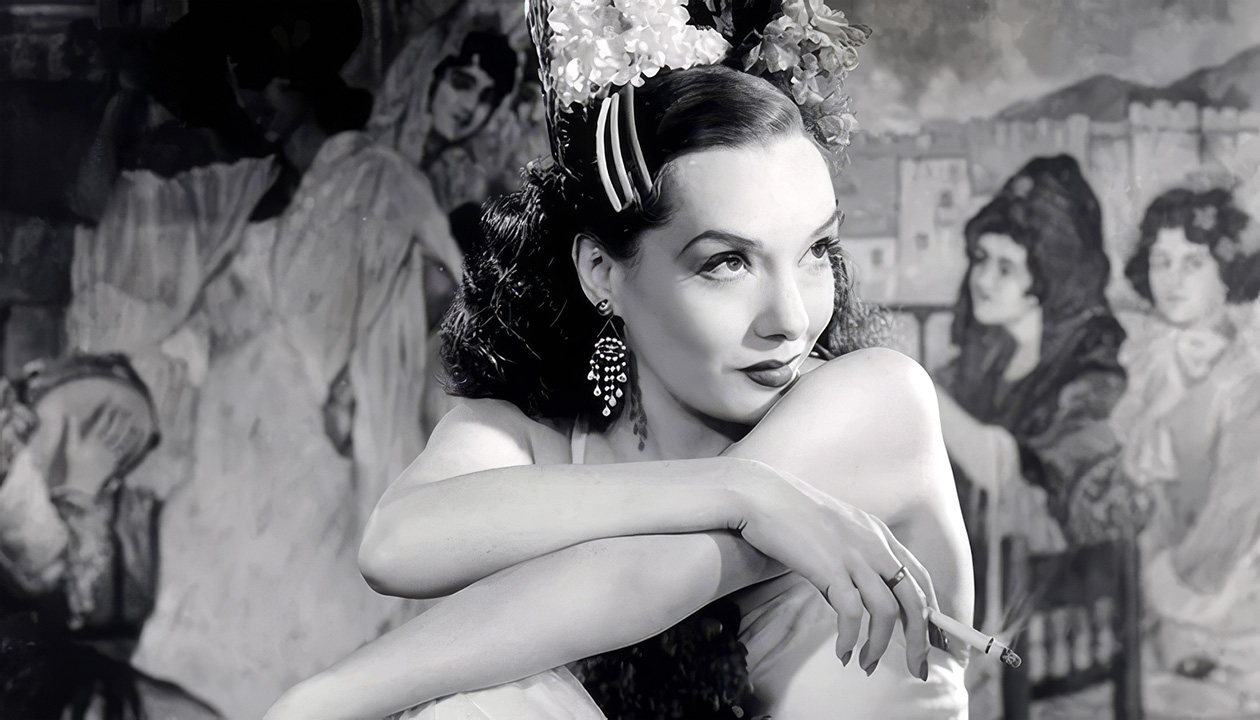
The series ran to eight pictures in four years, with mixed reviews. In April 1941 Velez told Modern Screen what had happened to the spitfire: “It’s that I’m not a kid any longer. I’m a grown-up woman, and I behave as such. I do not deny my age. I tell it. I am twenty-nine.” She was thirty-two.
She made her last film in Mexico: Nana, supposedly “so torrid it’s being booked as only for adults.”
As she neared the end of her career, her reputation for wildness remained intact. The January 1943 issue of Hollywood opened a profile of her this way: “Lupe Velez’ fiery temper is notorious. Hollywood agrees she gets away with murder.”
On the set of Ladies’ Day (1943), the article went on, an unnamed actress complained: “That Lupe, she always wants her own way. Always fighting, always in a temper about something.” When the studio would not let her have her own hairdresser, she curled her hair herself so wildly that the director refused to photograph her, and she got her hairdresser back.
How Did She Get on Broadway?
After The Hollywood Music Box Revue, her stage work in the United States took the form of personal appearances in movie theatres between showings of her films.
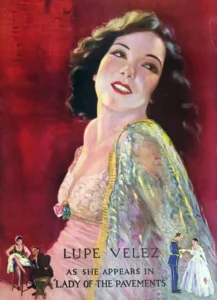
In March 1929, while promoting Lady of the Pavements, she appeared at the Rialto in Times Square. Exhibitors Herald-World described the scene:
Lupe Velez, quietly billed as the Mexican cyclone, has been packing them into the Rialto Theatre. Four and five deep they stand to see this fascinating newcomer in the film world. Lupe is a robust comedienne, a gal with a lot of zip and uh-huh, who provides something new for the film fanatics to talk about. She appears in person, rants and tumbles and teases and is far more amusing than that sounds.
Publicity for the Rialto engagement billed her as “the first actress whose voice will be heard in the same theatre, via talking pictures, in which she is appearing herself and singing the same songs.” United Artists promoted her as its first star heard on screen: she sings Irving Berlin’s “Where Is the Song of Songs for Me?” in the film’s one sound sequence.
Why Did Ziegfeld Put Lupe Velez in Hot-Cha!?
In 1932 Florenz Ziegfeld put together a musical comedy, originally titled Laid in Mexico, built around Bert Lahr as a New York speakeasy waiter who flees to Mexico and is passed off as a bullfighter. The show also included a Mexican girl, Conchita, as a romantic lead.

Ziegfeld originally wanted Velez for the show. But Hollywood paid more. Harry Cohn of Columbia Pictures tested her, and Paramount signed her for The Broken Wing, which she started shooting in January 1932.
The Ziegfeld show, by then called Hot-Cha!, opened its tryout at the National Theatre in Washington in mid-February 1932, with a little-known performer, Revva Reyes, as Conchita. Ziegfeld decided it was not ready for Broadway and was determined to get Velez for the lead.
After some wrangling with her Hollywood bosses, Velez joined the show in Pittsburgh on March 2, less than a week before it opened on Broadway.
Hot-Cha! was the last new production for the legendary Ziegfeld, who died on July 22, 1932, about five weeks after the show closed.
How Was She Received on Broadway?
Hot-Cha! opened at the Ziegfeld Theatre, Sixth Avenue at 54th Street, on Tuesday, March 8, 1932.
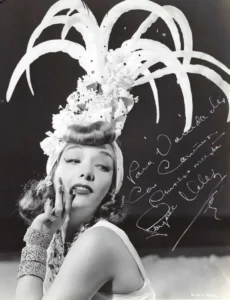
The reviews, in Variety’s summary, “were not so good.” Robert Benchley in The New Yorker found the show tiresome and said that expensive scenery could not keep it from ending on a “particularly sickening thud.”
The exception, in nearly every notice, was Velez. Variety, for example, wrote that she was “imbued with a flashing personality” and “stood out like a beacon.” Ed Sullivan reported that she threw up in a bucket backstage before her first entrance and then won over a cold house: “It was one of the grandest performances I ever saw.”
Despite the show’s poor reviews, it boosted her career; the movie studios began bidding even more. She went back to Hollywood for Kongo (1932) at MGM and The Half-Naked Truth (1932) at RKO, which cast her as a carnival dancer passed off on New York as a Turkish princess. In the latter, her peppy personality was on full display: loud, fast and funny.
Velez returned to Broadway in 1933 in Strike Me Pink, a hit revue with Jimmy Durante.
Who Were Lupe Velez’s Husbands and Lovers?
She married once, to the swimmer and screen Tarzan Johnny Weissmuller, from 1933 to 1939. Around that marriage ran a string of very public romances, with Gary Cooper, John Gilbert, Guinn “Big Boy” Williams, Erich Maria Remarque and Arturo de Córdova among them, and she conducted them in the gossip columns.
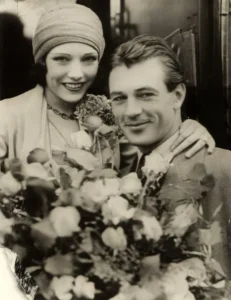
“Marriage announcements to Lupe have become a publicity stunt,” Louella Parsons wrote in 1932.
Gary Cooper was a major romance. They fell for each other making Wolf Song on location in the autumn of 1928 and they were Hollywood’s hottest couple for more than two and a half years.
The romance was apparently very physical: director Delmer Daves remembered that “she would scratch him and bite him and do strange things but he laughed,” and Cooper was known to turn up on the set covered in scratches. Cooper’s parents thought Velez entirely unsuitable, and the couple broke up in 1931. The often-repeated story that she fired a pistol at him as his train pulled out comes from later Cooper biographies, not from the contemporary sources.
She had relationships with the actor John Gilbert and Howard Hughes before Weissmuller. She and Weissmuller met in New York in April 1932, while she was in Hot-Cha! and he was promoting Tarzan the Ape Man, and while he was still married to the singer Bobbe Arnst.
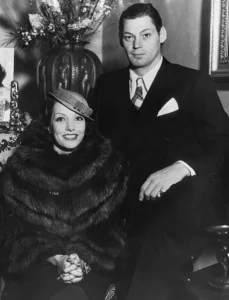
They married in Las Vegas in 1933 two days after his divorce became final. The relationship was tumultuous and, on occasion, violent.
She filed for divorce twice and withdrew the complaints each time. She filed for the last time in 1938. “This time it is not for publicity,” she said. “I have tried hard, but we just can’t get along. I love him and he loves me, but we are both much happier when we are apart.” The divorce became final in August 1939.
Velez then had relationships with Guinn “Big Boy” Williams, the cowboy character actor, and later the novelist Erich Maria Remarque. The last was Harald Ramond, a twenty-six-year-old Austrian bit player she met in 1943. By the autumn of 1944 she was pregnant by him. They announced their engagement at Thanksgiving; by December 9 it was off, Ramond having offered, by his own account, to marry her only “to give the baby a name.” What followed is told under her death, below.
How Did Lupe Velez Die?
She died by her own hand at her home in Beverly Hills early on Thursday, December 14, 1944, at thirty-six, of an overdose of Seconal, a barbiturate sleeping drug. She was four months pregnant.
The Associated Press reported two notes “tucked into the satin pillow case” of her bed, one addressed to Ramond: “May God forgive you and forgive me, too, but I prefer to take my own life away and our baby’s before I bring him with shame or killing him.” The coroner opened an inquest and dropped it two days later, satisfied that she had written the notes and intended what she did.
I have written about her death alongside fourteen other cases in 15 Silent Film Actresses Who Died Young, and I will not repeat the medical detail here. The one thing to add belongs in the questions below.
A Chronology of Her Stage Engagements
| Date | Venue | What | Source |
|---|---|---|---|
| 1925–1926 | Teatro Regis, Teatro Principal and Teatro Lírico, Mexico City | Revue (teatro de revista): debut at the Lírico in Rataplán Mexicano; ¡No lo tapes! (1925) | Golden, Strictly Dynamite (2023), 7–8; Variety, Oct 1936 |
| Jun and Oct 1925 | Teatro Lírico, Mexico City | “Primera tiple cómica” in the rataplán revues (¡A desnudarse tocan!, Los efectos del Ra-ta-plán, ¡Ay, Cocol!); billed as “La maga del jazz” on her return, Fri 23 Oct 1925 | El Demócrata, 10–16 Jun and 20–21 Oct 1925 |
| Feb–Apr 1927 | Music Box Theatre, Hollywood | The Hollywood Music Box Revue, with Fanny Brice; her “Mexican Valentine” number from 14 Feb | Golden, Strictly Dynamite, 12–13 |
| Fri 22 Feb – c. 7 Mar 1929 | United Artists Theatre, Chicago | Personal appearance with Lady of the Pavements, three a day; held over a second week | Exhibitors Herald-World, Mar 1929 (Chicago reports) |
| From Sat 9 Mar 1929 | Rialto Theatre, Times Square, New York | Personal appearance with Lady of the Pavements; “the Mexican cyclone” | Exhibitors Herald-World, 23 Mar 1929, p. 22 |
| Wed 2 Mar (matinee) – Sat 5 Mar 1932 | Nixon Theatre, Pittsburgh | Joins Hot-Cha! as Conchita, replacing Revva Reyes | Pittsburgh Post-Gazette, 24 Feb 1932; Pittsburgh Press, 2–3 Mar 1932; New York Times, 3 Mar 1932 |
| Tue 8 Mar – Sat 18 Jun 1932 | Ziegfeld Theatre, New York | Hot-Cha!, 119 performances | Playbill Vault; Variety, 15 Mar and 21 Jun 1932 |
| Sat 4 Mar – Sat 10 Jun 1933 | Majestic Theatre, New York | Strike Me Pink, revue, with Jimmy Durante and Hope Williams | IBDB; Variety, 7 Mar 1933 |
| From Sat 12 Sep 1936 | Manchester | Transatlantic Rhythm, two-week break-in | Variety, 16 Sep 1936 |
| From Thu 1 Oct 1936 | Adelphi Theatre, London | Transatlantic Rhythm, revue, with Lou Holtz, Ruth Etting, Buck and Bubbles | Variety, 7 Oct 1936 |
| Fri 15 – Thu 21 Jan 1937 | Loew’s Capitol, Washington | Stage act with Johnny Weissmuller, Inaugural Week: her introduction and impressions, his songs and Tarzan yell; with Frank Gaby, Borrah Minevitch’s Harmonica Rascals and the Elida dancers | Washington Daily News, 15–16 Jan 1937; Washington Times, 16 Jan 1937; Variety, 20 Jan 1937 |
| Fri 5 – Thu 11 Feb 1937 | Loew’s Century, Baltimore | Same act, headlining the house’s first stage bill in five months; lost money, and Loew’s dropped stage shows at the Century a fortnight later | Variety, 10 and 17 Feb 1937 |
| Mar–spring 1938 | New Haven, Boston, Washington, Philadelphia, Chicago, Indianapolis | You Never Know tryout tour | Variety, Mar and 28 Sep 1938 |
| Wed 21 Sep – Sat 10 Dec 1938 | Winter Garden, New York | You Never Know, as Maria, 78 performances | IBDB; Variety, 28 Sep 1938 |
For a complete list of her films, see the Lupe Velez filmography.
Common Questions About Lupe Velez
What Was Lupe Velez’s Real Name?
María Guadalupe Villalobos Velez. She performed briefly under her father’s name, Villalobos, in Mexico City, and took her mother’s surname when he objected to a daughter on the revue stage. “Lupe” is the ordinary short form of Guadalupe. Her father was a colonel in the army of Porfirio Díaz; he did not die in the Revolution, as is sometimes claimed.
Was Lupe Velez a Ziegfeld Girl?
No. The Ziegfeld Girls were the showgirls and chorus dancers of the Follies; she never appeared in a Follies edition, and Alfred Cheney Johnston, the Follies’ photographer, never photographed her so far as I can find. She was a featured star in Ziegfeld’s book musical Hot-Cha! (1932), the last new musical he produced before his death that July.
Did Gary Cooper Date Lupe Velez?
Yes. They met making Wolf Song (1929) and were a couple, on and off and very publicly, for more than two and a half years, until the summer of 1931. The rest is under “Who Were Lupe Velez’s Husbands and Lovers?” above.
What Were Her Best Movies?
For the silent star, The Gaucho (1927) with Fairbanks and Lady of the Pavements (1929) for Griffith. For the comedienne, I would start with The Half-Naked Truth (1932), opposite Lee Tracy, made straight after Hot-Cha!, then the two Durante pictures of 1934, Palooka and Strictly Dynamite, and Mexican Spitfire (1940) with Leon Errol, the first of the series proper. Kongo (1932) is the curiosity. La Zandunga (1938) and Nana (1944), which Golden thinks holds her best dramatic performance, are the Mexican films to find.
Who Was Lupe Velez Married To?
Once, to Johnny Weissmuller, the Olympic swimmer and screen Tarzan. They met in New York in the spring of 1932, while she was in Hot-Cha!; they married in Las Vegas on October 8, 1933, and denied it for three weeks; she sued for divorce in 1934 and 1935 and withdrew both suits, and the third succeeded: a decree in August 1938, final a year later. She had no children. At her death she was engaged, then unengaged, to the actor Harald Ramond, and pregnant with a child she said was his.
How did Lupe Velez Shape Hollywood’s Image of Latinas?
Lupe Velez helped set the image cinema used for Latinas for decades: hot-tempered, sexy, comic, and foreign. The Mexican Spitfire films made that figure a reliable money-maker, and the type outlived her. The cultural critic William A. Nericcio puts it this way:
After Vélez, one came to expect a certain type of Latina in film. Perhaps more than any other figure save Dolores del Río and Carmen Miranda, Vélez and her handlers helped concretize an image of Latina “exoticness,” sensuality, and silliness that dogs those who have inherited her mantle in film and, most important, those Latinas and Latinos not in film, whose lives unfold in the powerful shadow of Hollywood’s convincing confabulations.
While Velez fed the stereotype, she also complicated it. How much of the spitfire was an act, built and sold on purpose? She was a highly skilled performer, known for merciless impersonations of other stars, including Marlene Dietrich and Dolores del Rio. In the end, her best impersonation may have been of the Hollywood star Lupe Velez.
Where Is Lupe Velez Buried?
In Mexico City, in the Panteón Civil de Dolores. Her business manager, Bo Roos, arranged a viewing at Forest Lawn’s Church of the Recessional and a private family service at the Cunningham and O’Connor chapel; then her body went home to Mexico, where Cantinflas, speaking for the Mexican actors’ union, had asked for it.
Was Lupe Velez Really Found With Her Head in a Toilet?
No contemporary evidence says so. The story comes from Kenneth Anger’s Hollywood Babylon, first published in Paris in 1959 and kept alive by jokes on Frasier and The Simpsons, and nothing in the 1944 reporting supports it: the Associated Press described the notes in the pillowcase of her bed, and the coroner recorded a drug overdose. Her most recent biographer, Eve Golden, points out that an adult cannot drown in a toilet. She also reports the one dissenting account: the daughter of Bo Roos, Velez’s business manager, wrote decades later that her father told her Lupe died on the bathroom floor beside the toilet, and that he had asked the Beverly Hills police chief to help keep a lid on the story. Golden’s verdict is the right one: Lupe probably died in her bed, may have died on her bathroom floor, and almost certainly did not drown in her toilet.
Related: Ziegfeld Follies history, on the revue and the man who produced it; Nyota Inyoka and the Ziegfeld Follies, another performer Ziegfeld reached for and the story of what happened; 15 Silent Film Actresses Who Died Young, where her death is examined alongside the others; and, in Ziegfeld’s own words, Ziegfeld on Beauty, his 1923 newspaper series, and Behind the Scenes in Beauty Land.