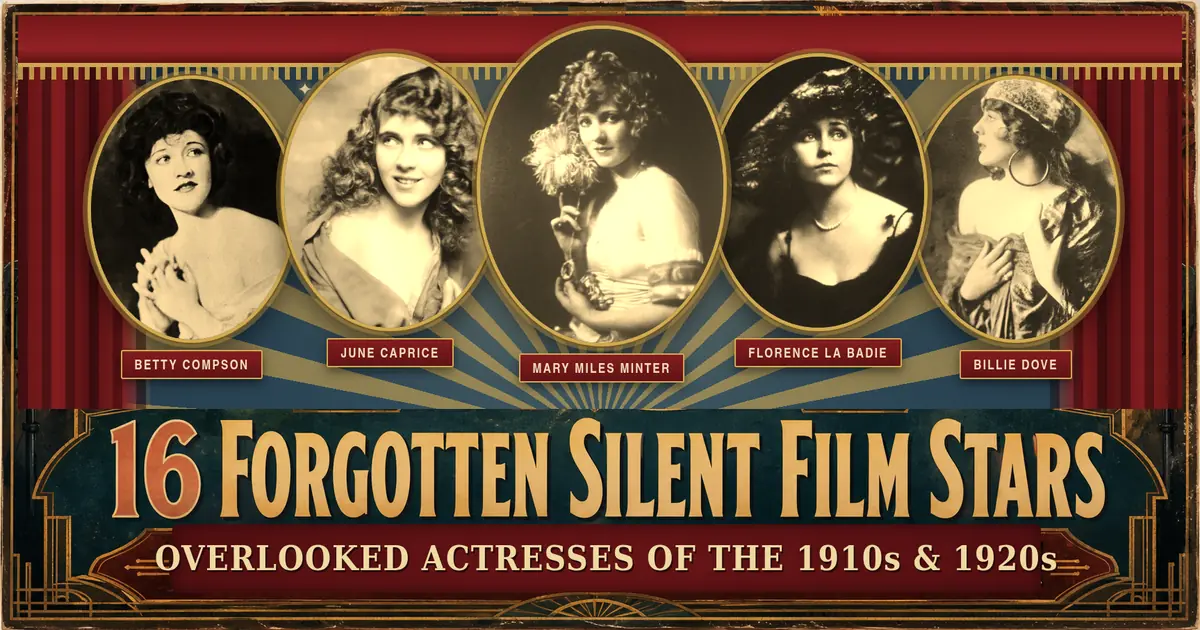
16 Forgotten Silent Film Stars: Famous Women America Left Behind
American movies grew from novelty to massive popularity very quickly. Studios began making longer, feature-length pictures around 1912, and soon they were turning out hundreds of features a year. A contemporary estimate put 1915 movie attendance at roughly 2.9 billion admissions — about eight million a day. All those pictures needed pretty faces, and thousands of young women were eager to appear on the screen.
Many came by way of Broadway, and the major source was the Ziegfeld Follies revue, along with its racier nightclub sibling, the Ziegfeld Midnight Frolic. Both served as an unofficial casting office for the film studios, which raided the shows relentlessly, much to the consternation of Florenz Ziegfeld Jr.
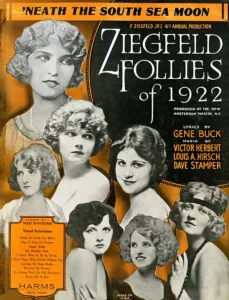
Olive Thomas, Mae Murray, Billie Dove, Gilda Gray, and dozens of other Ziegfeld Girls made the jump from the stage to the screen. Some became major stars. Others managed a few seasons and faded. Then came what happened to many a silent film star when the talkies arrived: careers ended abruptly.
All sixteen portraits below are by Alfred Cheney Johnston, often called the court photographer of the Ziegfeld Follies.
At the height of Jazz Age Hollywood, the silent film stars of the 1920s were among the best-known people in the United States. Fan magazines such as Photoplay (its circulation passed 200,000 by 1918 and kept climbing through the 1920s) fed a national appetite for gossip, and daily newspapers closely followed their weddings, divorces, and scandals.
So how did such famous women slip so completely from memory?
First, the talkies and their stars captured the public imagination in a way the silents never fully had, and sound films had a long afterlife on television, replayed for decades to new generations. Second, silent pictures came to be dismissed as relics: jerky, mute, over-acted curiosities from a primitive past. Third (and least appreciated) most of the films themselves no longer exist. This is lost Hollywood history in the most literal sense: a 2013 Library of Congress study found that about 70 percent of American silent features are completely lost, and only 14 percent survive complete in their original 35mm form. Most silent stars quite literally disappeared.
So which silent film actresses have been forgotten by history? Here is a quick overview of sixteen overlooked stars, including some of the most tragic figures of early Hollywood.
Renée Adorée
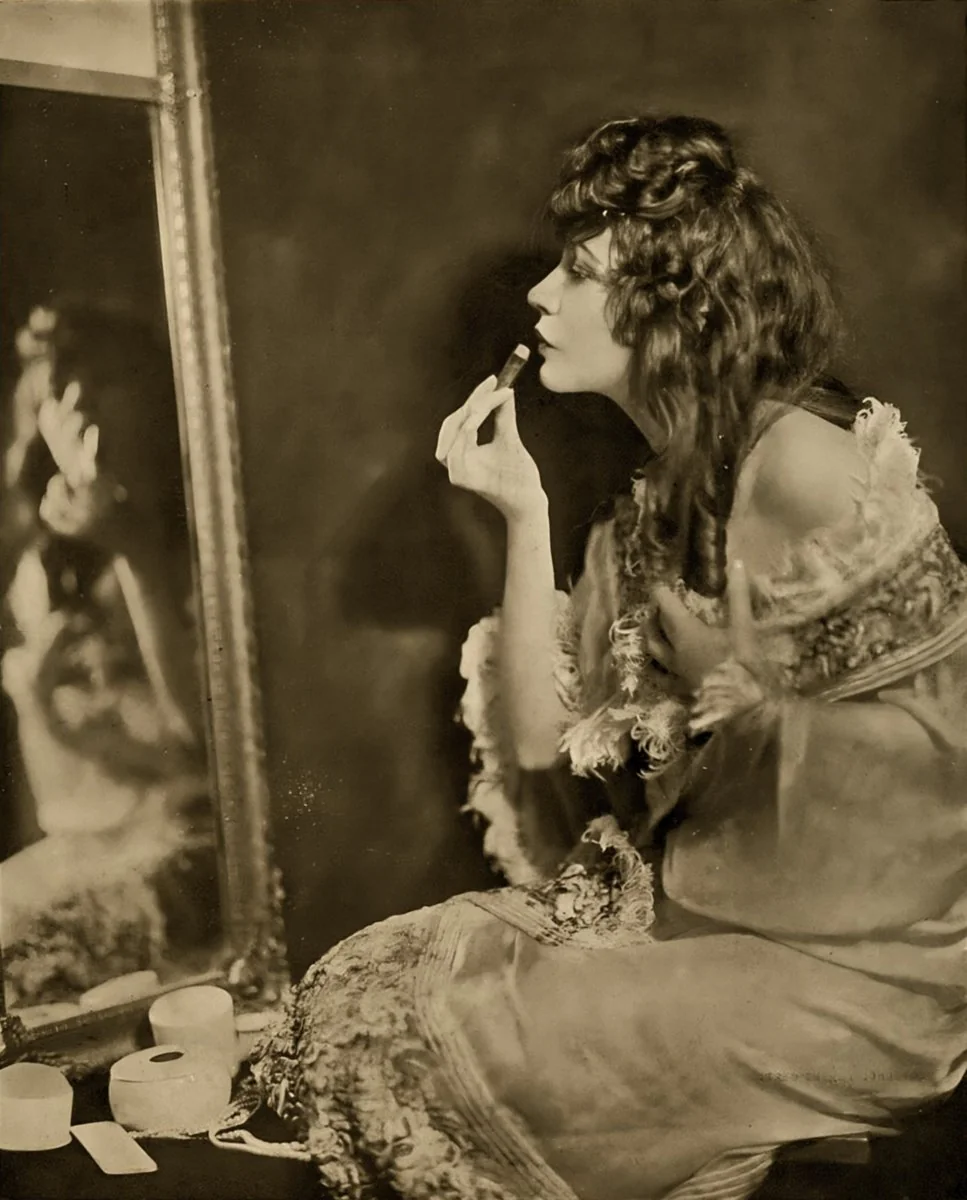
For decades, studio publicity identified Adorée as Jeanne de la Fonte, born in Lille, France. Recent archival research instead identifies her as Emilia Louisa Victoria Reeves, born in Hamburg on September 30, 1897, to a British father and Belgian mother who were touring circus artists; she trained from childhood as an acrobat, toe dancer, and bareback rider.
A 1930 Photoplay story places her as a young dancer in Paris, where she claimed to share a bill with Sarah Bernhardt and watched the aging legend’s act nightly in tears.
After joining the chorus of the Folies-Bergère, she reached Hollywood and, in 1925, screen fame: Melisande in King Vidor’s The Big Parade, MGM’s most profitable silent-era release, opposite John Gilbert. She made nine films with Gilbert and four with Ramón Novarro, and handled the talkies well enough in Redemption and Call of the Flesh (both 1930).
Diagnosed with tuberculosis in 1930, she spent two years in an Arizona sanatorium, returned to Los Angeles planning a comeback, and died in October 1933, days past her thirty-fifth birthday.
Madge Bellamy
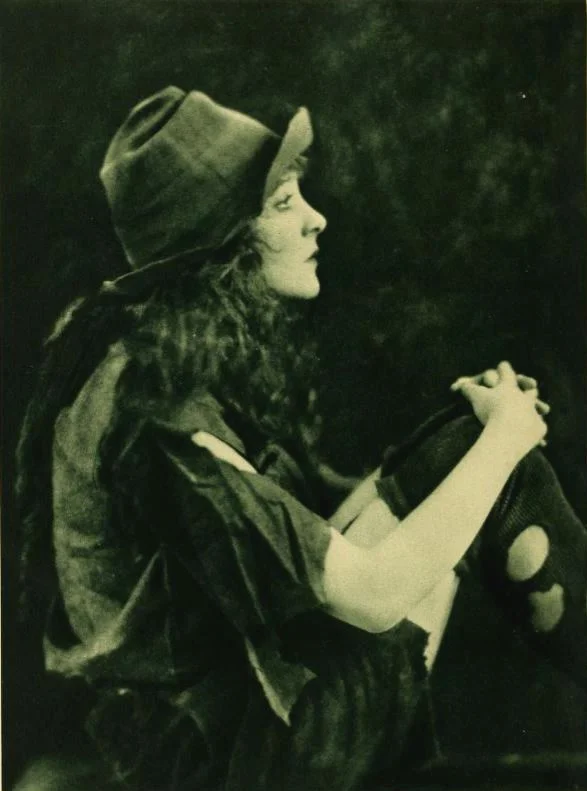
Born Margaret Derden Philpott in Hillsboro, Texas, on June 30 (most sources give 1899, though 1903 also appeared in studio-era accounts), Madge Bellamy danced on stage from age nine, reached Broadway in 1917, and later replaced Helen Hayes in Dear Brutus.
In Hollywood she became one of the loveliest leading ladies of the 1920s, appearing in Lorna Doone (1922) and John Ford’s epic The Iron Horse (1924).
Motion Picture Classic called hers “the most sensitive face on the screen” in 1921, but she was later dogged by a “beautiful but dumb” reputation that Picture-Play felt obliged to rebut in 1926 with a defense bluntly titled “She Is Not Dumb!” The magazine reported that one New York critic “would like to slay Madge Bellamy on sight.”
Reviews of the part-talkie Mother Knows Best (1928) were generally favorable, although some critics called her voice weak; she walked out on Fox in 1929 over a role she didn’t want, and her stardom never recovered. Today she survives mainly as the zombie master’s obsession in the Poverty Row cult classic White Zombie (1932) with Bela Lugosi.
In 1943 she fired three shots at a millionaire ex-lover outside a San Francisco club. “I had had the little gun so long I thought it was just a toy,” she explained. She died in 1990, at ninety.
June Caprice
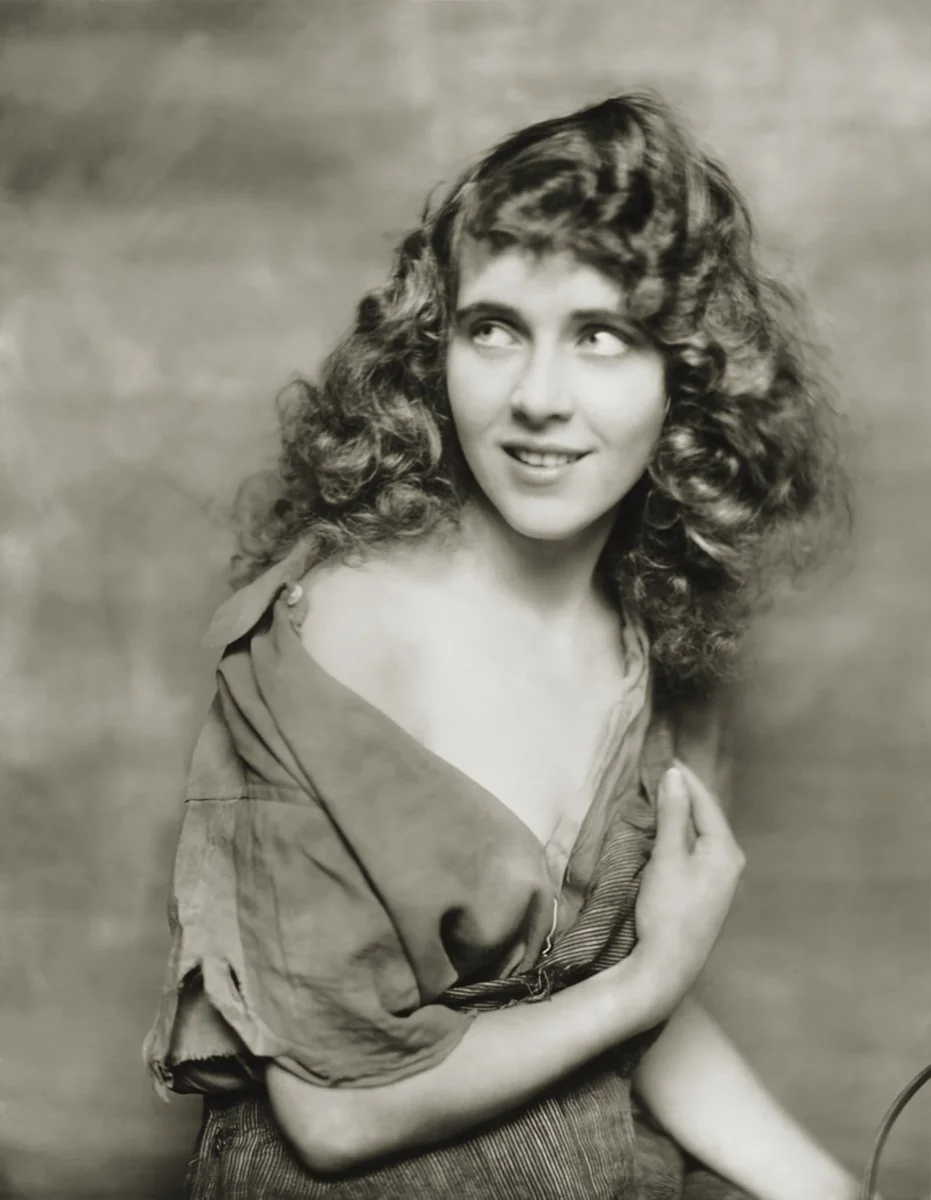
June Caprice was a star built from scratch. Born Helen Elizabeth Lawson in Arlington, Massachusetts, on November 19, 1895 (studio publicity later gave 1899), she was a Boston schoolgirl when William Fox found her and decided to manufacture his own Mary Pickford.
Picture-Play laid out the scheme in a remarkable 1917 feature called “A Tailor-Made Star,” quoting Fox’s order to his publicity men: “I’m going to make a tailor-made star… She’s going to be the star of the first picture she ever acts in.”
She was, in Caprice of the Mountains (1916), and for five years she played winsome curly-haired innocents in pictures like A Modern Cinderella and the aviation serial The Sky Ranger (1921), her last.
She married Harry Millarde, her Fox director, retired in 1921, and is believed to have modeled for Coca-Cola calendars. Widowed in 1931, she was suffering from cancer when she died of a heart attack in Los Angeles in 1936, ten days short of forty-one. Her daughter became a 1940s pin-up under the name Toni Seven.
Betty Compson
Betty Compson’s Hollywood origin story started with music. She was born Eleanor Luicime Compson in a mining camp in Beaver, Utah, on March 19, 1897. “There was very little comedy in Beaver, Utah, the day I was born,” she said to Photoplay in 1919.
Comedy film producer Al Christie recalled later that he found his new leading lady by ducking into a Main Street theater, where “a cute little trick with long curls was playing a violin.”
The Miracle Man (1919), opposite Lon Chaney, made her a dramatic star and won her a five-year Paramount contract; she later produced her own pictures, made Woman to Woman in England with a young Alfred Hitchcock on the crew. In Court-Martial (1928), she also became the first actress known to portray outlaw Belle Starr on film. She did her finest work late in the silent era in Josef von Sternberg’s The Docks of New York (1928) and The Barker (1928), which earned her an Academy Award nomination.
She was the rare silent star who worked steadily into the 1940s. Married three times (she said director James Cruze dissipated much of her fortune), she spent her later years running a cosmetics line and a personalized-ashtray business. She died in 1974.
Billie Dove
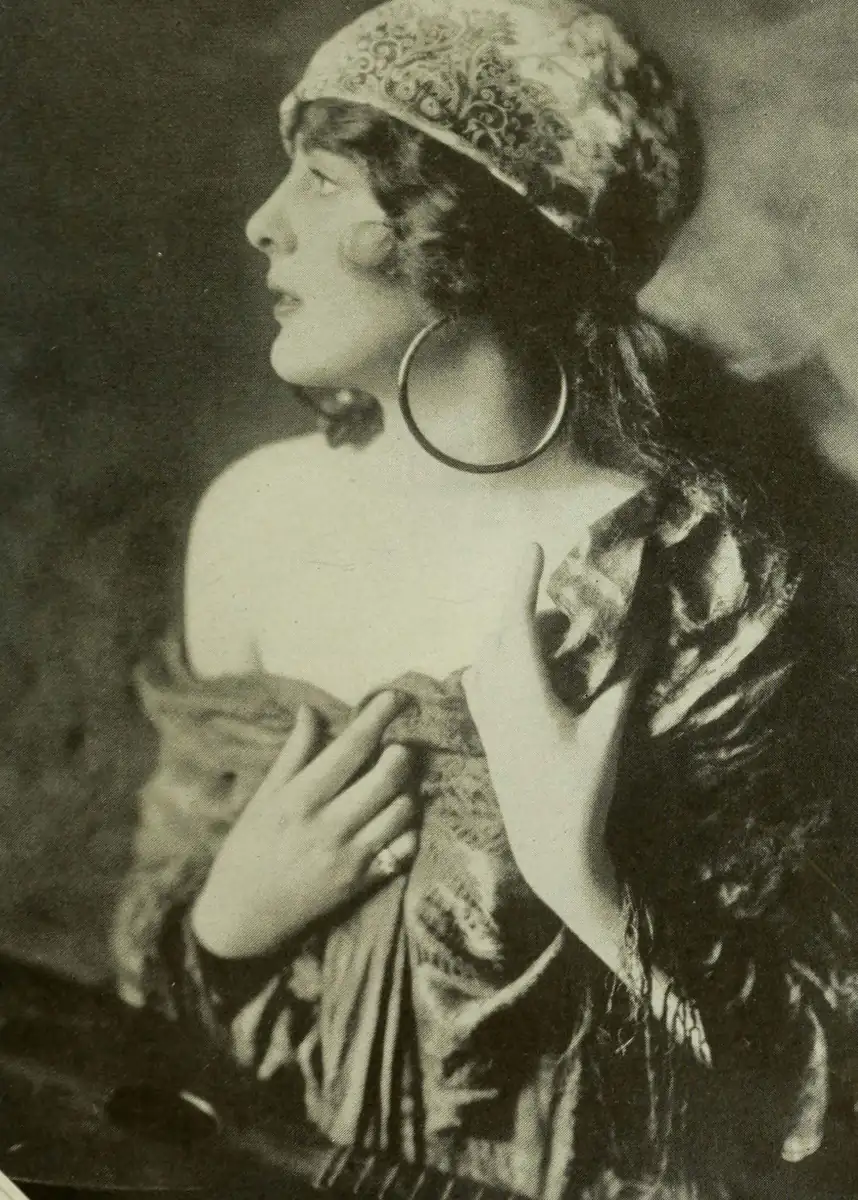
Billie Dove was, by contemporary vote and artist consensus, the most beautiful woman in silent pictures. Photoplay quoted an artist ranking her the star who “comes nearest of all to being a classical beauty.”
Born Bertha Eugenie Bohny to Swiss immigrants in New York City on May 14, 1903, she modeled for illustrators as a teenager and joined the Ziegfeld Follies while still in her teens.
Hollywood made her The American Beauty (the title of her 1927 film); and she was Douglas Fairbanks’s Technicolor princess in The Black Pirate (1926). A top-tier star of the late 1920s, she reportedly made about the same money as Clara Bow. She made several talkies, and made a cameo in 1963 for Diamond Head.
Howard Hughes produced two vehicles for her during their three-year romance (she broke off the engagement), and after Blondie of the Follies (1932) she retired by choice, at twenty-nine. Looking back in 1994, she explained simply that she had attained what she wanted and was ready for an ordinary life. She spent the next six decades painting, writing poetry, flying planes, and raising a family on her husband’s ranch, and died in 1997 at ninety-four.
Her most durable legacy may be secondhand: a Baltimore teenager named Eleanora Fagan admired her so much she borrowed the name — and became Billie Holiday.
Gilda Gray
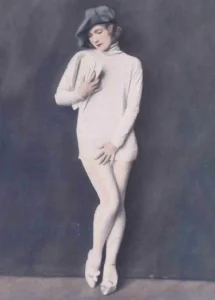
Gilda Gray went from a Milwaukee saloon to the top of show business success. Born Marianna Michalska near Żnin, Poland, on October 25, 1895 (she said Kraków, 1901), she was singing in Polish-neighborhood saloons as a teenage bride when Sophie Tucker helped rename her Gilda Gray.
New York cabaret fame led to the Ziegfeld Follies of 1922, where her shaking dance called the shimmy became a national craze. Like fellow Follies dancer Hilda Ferguson, she rode the shimmy to fame, though Gray got far richer from it.
Her Paramount vehicle Aloma of the South Seas (1926) grossed a reported three million dollars. Picture-Play revealed that the “Tibetan” dances in her film The Devil Dancer (1927) were actually created by a Hollywood choreographer.
The 1929 crash took her fortune, estimated in seven figures; a heart attack in 1931 and bankruptcy in 1941 followed. Reviewing the British-made Piccadilly in 1929, The New York Times said Gray seemed to have been “rediscovered as an actress” after years of being filed away as merely an exponent of the shimmy. She spent the war years raising funds for Polish refugees.
She died nearly broke in Hollywood in 1959; the Motion Picture Relief Fund paid for her funeral.
Corinne Griffith
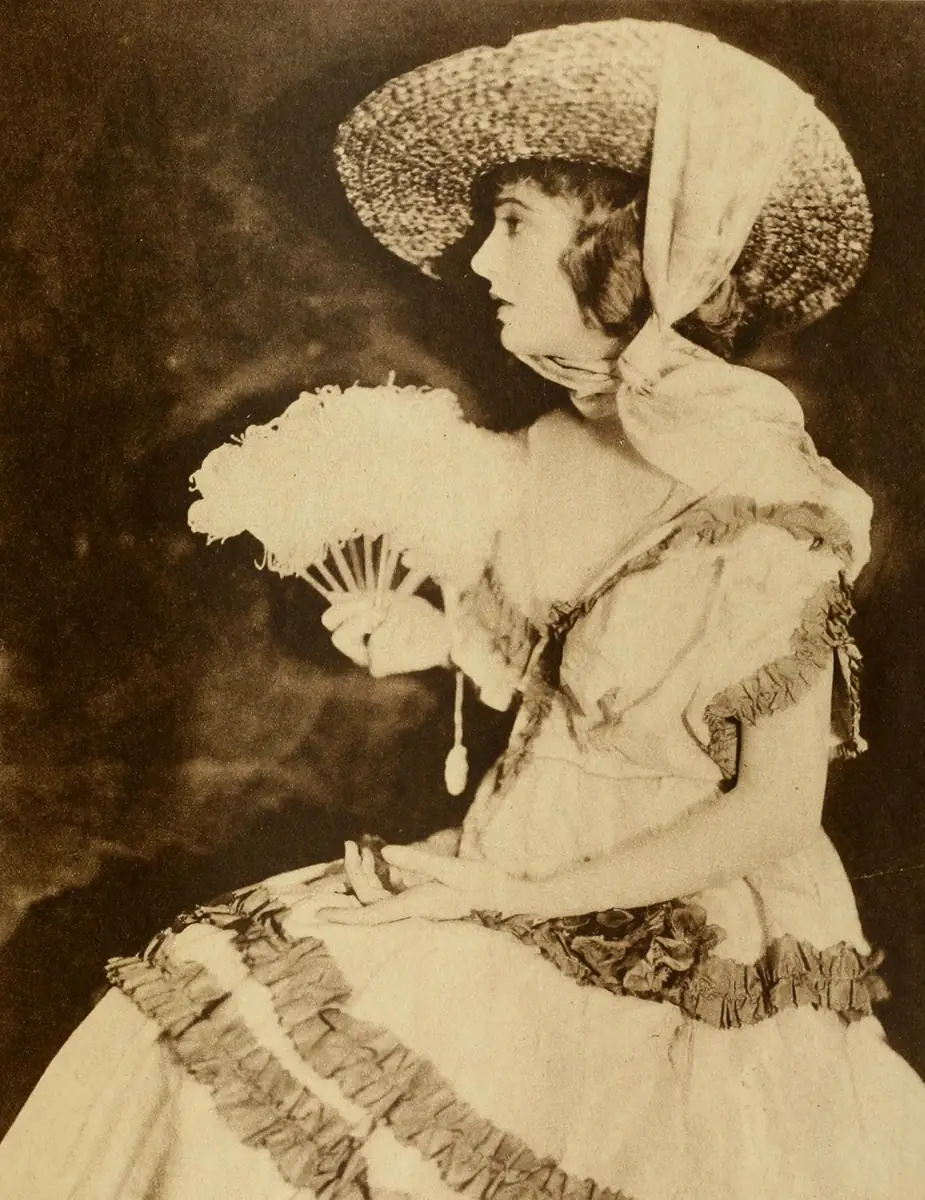
They called Corinne Griffith “The Orchid Lady of the Screen,” and for a stretch of the 1920s she was among the most beautiful and highest-paid women in films.
Born Corinne Mae Griffin in Texas on November 21, 1894, she entered films through a beauty contest and a $15-a-week Vitagraph contract in 1916. Her peak came with Black Oxen (1923), Lilies of the Field (1924, which she produced herself), and The Divine Lady (1929), which brought an Academy Award nomination.
Critics savaged her nasal voice in talkies, and she quit after 1932—only to out-earn nearly all of Hollywood in her second act. Beverly Hills real estate made her one of the richest women in America (her estate was valued around $150 million), and she wrote more than ten books. A 1979 newspaper obituary recalled that in 1950 she owned all four corners of Beverly Drive and Wilshire Boulevard and rejected a $2.5 million offer for the property.
The strangest coda came in 1966, when she testified under oath that she was not Corinne Griffith at all but a younger sister who had secretly replaced the “real” Corinne decades earlier. Friends refuted it; she never recanted.
She died in 1979.
Alice Joyce
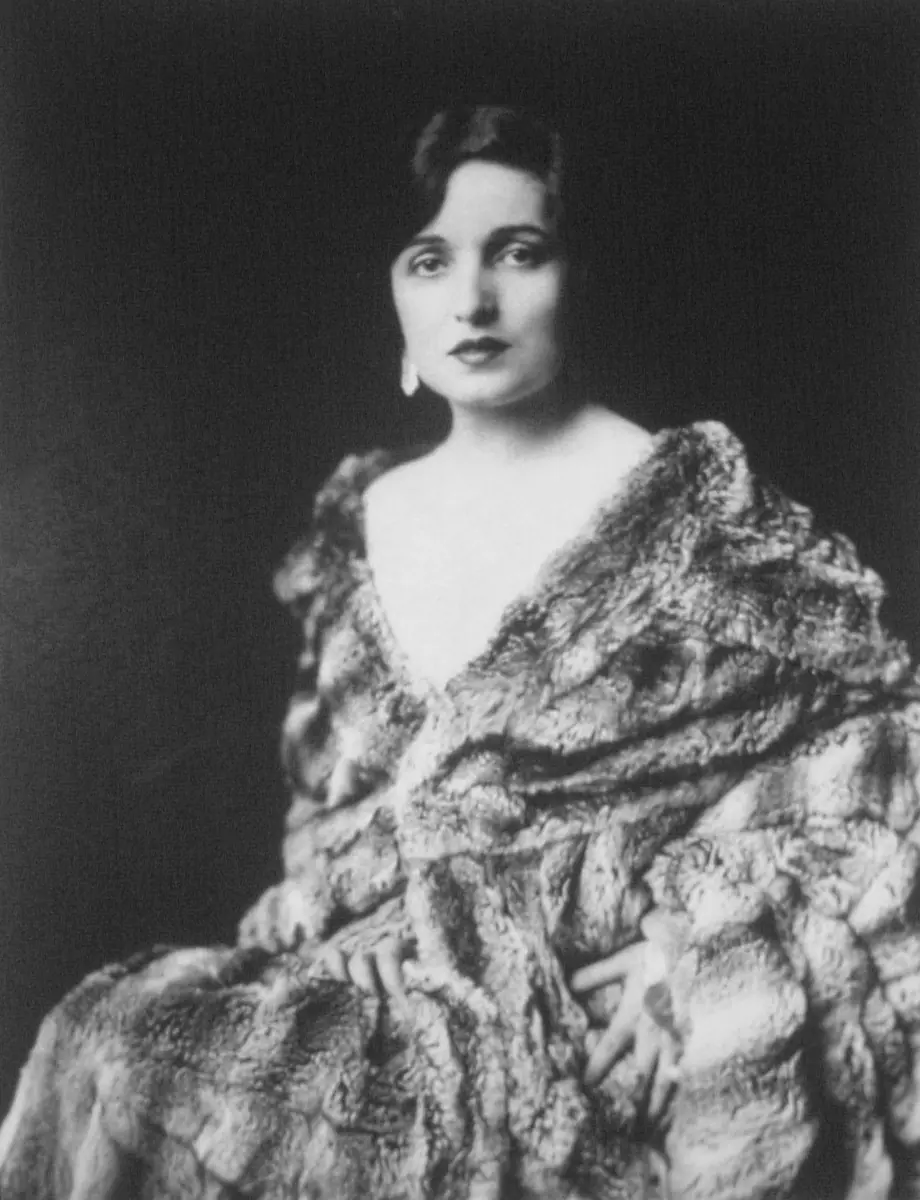
Alice Joyce was a movie star before Hollywood existed. Born in Kansas City, Missouri, on October 1, 1890, she worked as a telephone operator at thirteen, became one of the top artists’ models in New York and joined the Kalem film company around 1910, when movies were still one reel long.
By 1914 the studio was releasing a regular “Alice Joyce Series”; her serene dignity earned her the nickname “The Madonna of the Screen.”
Photoplay in 1921 credited her with real growth: “In the early days when photoplays were only moving pictures she had only beauty to commend her.”
In 1922 the same magazine twice declared she had “retired from the screen for good” as a hotel heir’s wife. But within a year she was back, and her best decade followed: The Green Goddess (1923), Stella Dallas (1925), Beau Geste (1926), and Dancing Mothers (1926), playing Clara Bow’s mother. She made a handful of talkies, remade The Green Goddess in 1930, and retired for good this time.
She died in 1955, one of the last links to the movies’ very first generation of stars.
Florence La Badie
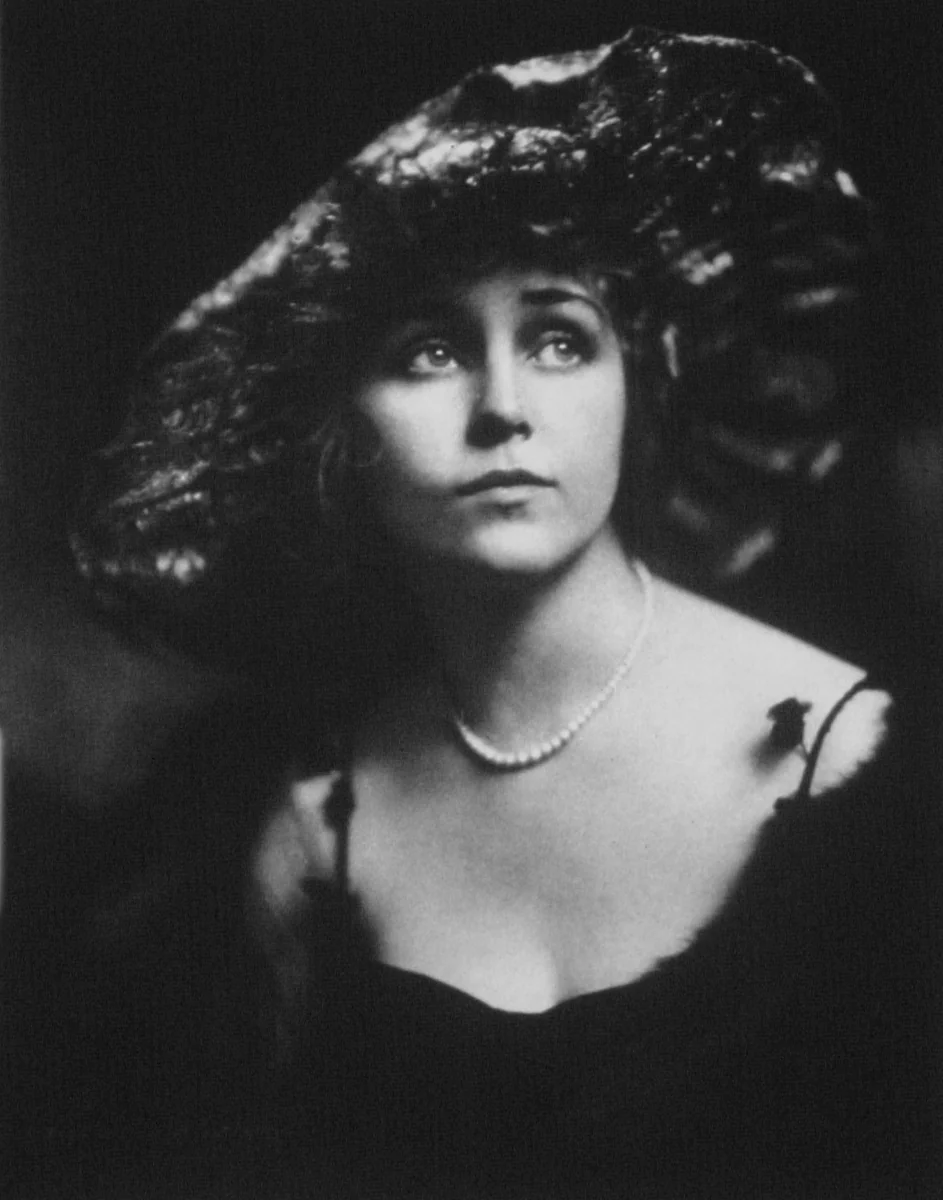
Florence La Badie was reputedly the first major American film star to die at the peak of her career, which may be exactly why almost no one knows her name.
Born Florence Russ in New York City on April 27, 1888, and adopted at three by a Montreal family, she was an illustrator’s model and touring stage actress when her friend Mary Pickford brought her to the Biograph studio in 1909.
At the Thanhouser studio in New Rochelle from 1911, she became its biggest star, appearing in roughly 166 of its pictures and doing her own stunts; the fan magazines called her “Fearless Flo.” Her serial The Million Dollar Mystery (1914) was one of the great hits of the decade.
On August 28, 1917, her car’s brakes failed on a hill near Ossining, New York; thrown from the overturning car, she died of sepsis six weeks later, at twenty-nine. Her last film, The Man Without a Country, had opened on September 9, less than two weeks after the crash. Photoplay‘s garbled obituary blamed “a nervous breakdown” and never mentioned the crash.
Her Brooklyn grave lay unmarked until 2014, when the studio founder’s grandson finally bought her a headstone.
Martha Mansfield
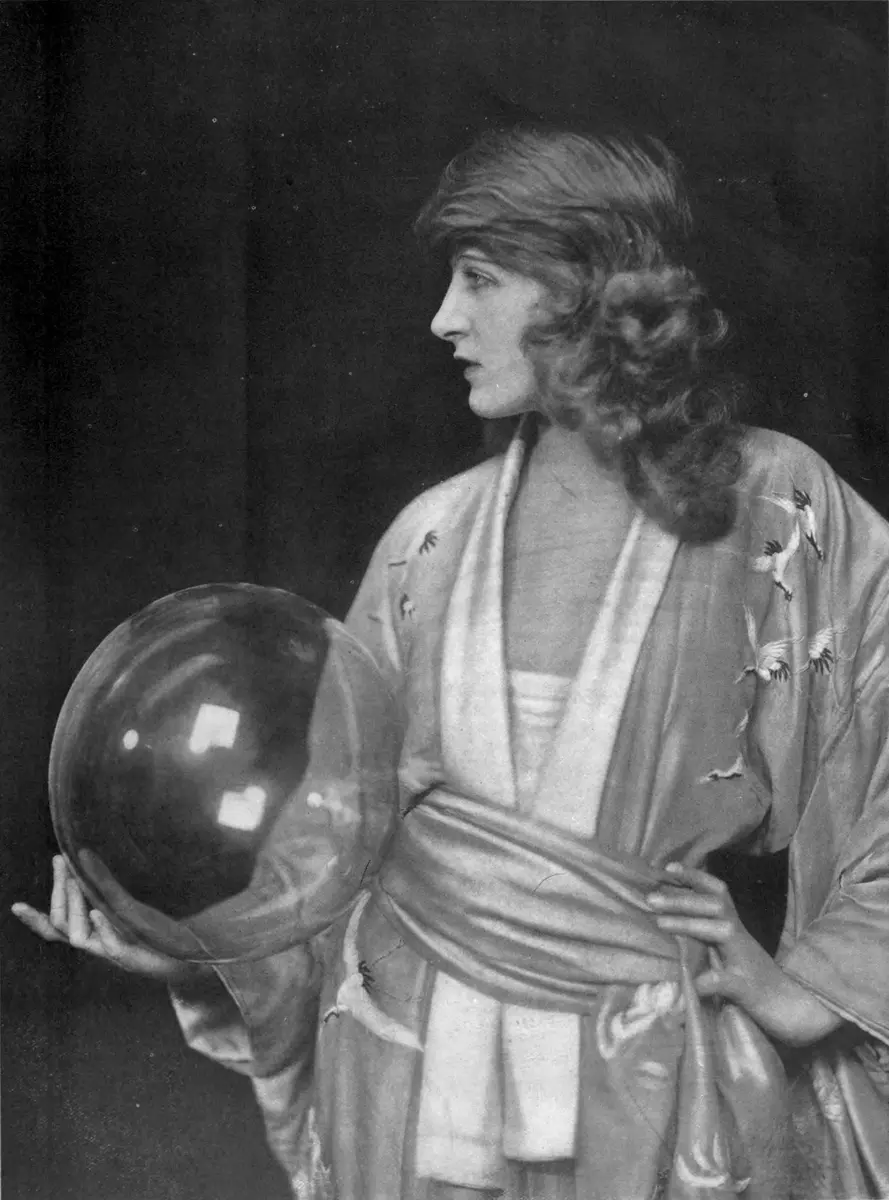
Martha Mansfield’s death shocked the country at the time, although her life has been almost entirely forgotten since.
Born Martha Ehrlich in New York City on July 14, 1899, she was on Broadway in Little Women at fourteen and became one of the most photographed models of her era; Alfred Cheney Johnston alone made more than three hundred photographs of her.
She danced in the Ziegfeld Follies of 1918 and the 1919 edition of the Midnight Frolic, then landed the role every actress in New York wanted: Millicent, John Barrymore’s fiancée, in Dr. Jekyll and Mr. Hyde (1920). By 1923 she was a rising Fox leading lady: The Silent Command that year put her opposite Bela Lugosi in his first American film.
That November, on location in San Antonio for the Civil War drama The Warrens of Virginia, a match — apparently tossed from outside the car where she was resting — ignited her hoop-skirted crinoline costume. She died the next day, at twenty-four.
Photoplay’s editorial mourned that “a careless fool threw a lighted match on her lacy gown, which became a furnace in a few seconds.”
Mary Miles Minter
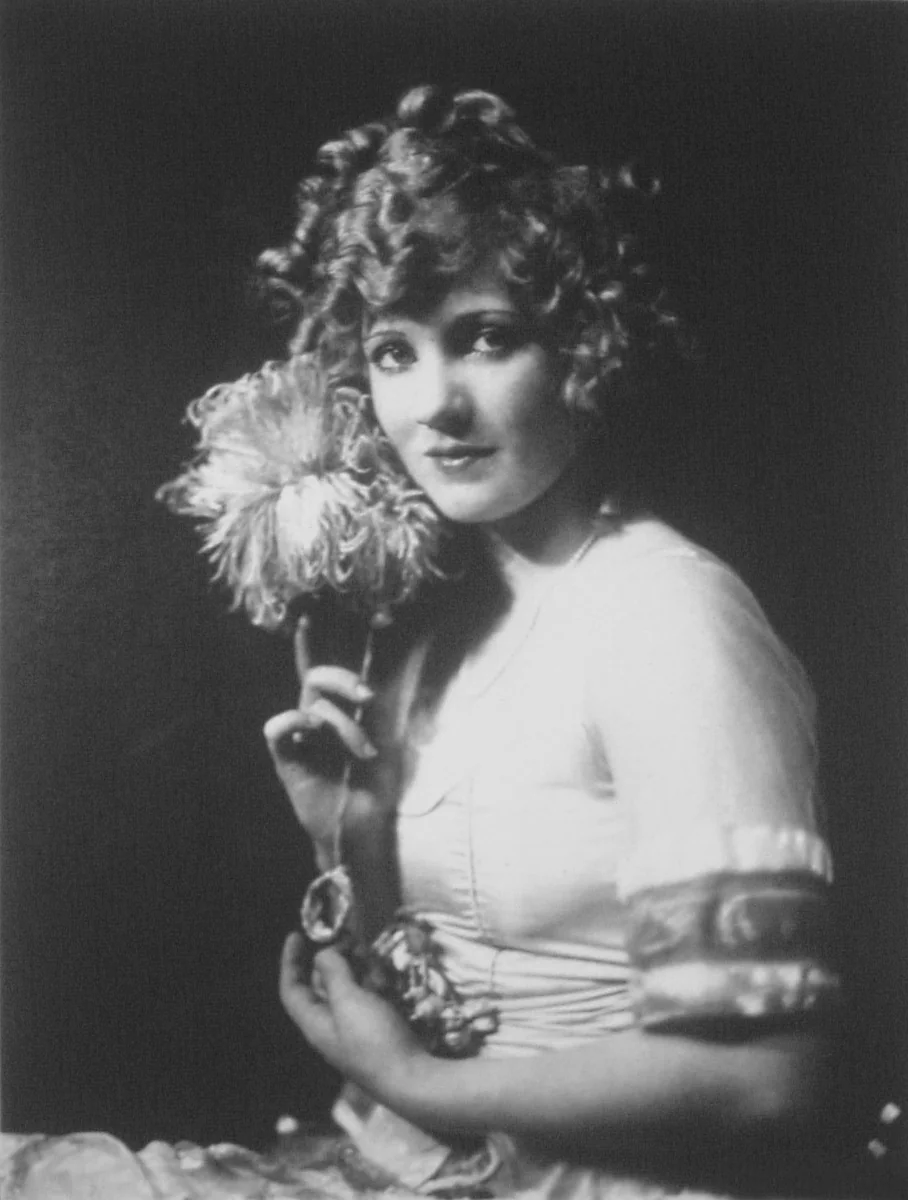
Born Juliet Reilly in Shreveport, Louisiana, on April 25, 1902, she was a child stage actress whose mother gave her a deceased cousin’s name in 1912 to evade New York’s child-labor laws.
By her late teens, Minter was Paramount’s golden-curled successor to Mary Pickford, starring in Anne of Green Gables (1919) under director William Desmond Taylor; Photoplay later reported that she scored a million-dollar contract.
Taylor was found shot dead in his bungalow on February 1, 1922. Minter’s adoring letters to him surfaced in the press; public suspicion settled on her mother, although nothing was ever proved and the murder went unsolved. The scandal, together with softening box office, finished her: Paramount let her contract lapse in 1923, when she was twenty-one.
In later years, Minter took to calling Taylor her “mate” and proclaimed her undying love. She also sued her mother over her childhood earnings and grew wealthy from Santa Monica real estate.
Minter lived reclusively until her death in 1984. In August 1923, during a public quarrel with her mother over her film earnings, she gave three conflicting accounts of the relationship to three Los Angeles newspapers; all three are transcribed in full here. I have written separately about why she chose that moment to talk about Taylor.
Mae Murray
Mae Murray had one of the great Hollywood nicknames: “the girl with the bee-stung lips.”
She was born Marie Adrienne Koenig on May 10, 1885, and rose through New York cabaret and the Ziegfeld Follies to become, at her peak, one of the highest-paid women in Hollywood. Her big break came literally overnight: Irving Berlin pulled her off the floor of the Sans Souci cabaret to substitute for an ailing Irene Castle in Watch Your Step.
Her defining role was the merry widow herself in Erich von Stroheim’s The Merry Widow (1925), waltzing with John Gilbert; she claimed her salary reached $25,000 a week. She married four times—once, she said, at gunpoint, to playboy Jay O’Brien, and most disastrously to “Prince” David Mdivani, who presided over the disappearance of her fortune.
Talkies, temperament, and the Mdivani marriage ended her career almost simultaneously. In 1942, broke, she sold her memoirs to Hearst’s American Weekly, an eight-part serial that covers her story from a pink Moorish palace above the Pacific to nights spent sleeping on a Central Park bench. The serial is a remarkable first-person record of a silent-era celebrity confronting poverty.
She died in 1965. I have transcribed all eight installments: Mae Murray’s 1942 memoir.
Mary Nolan
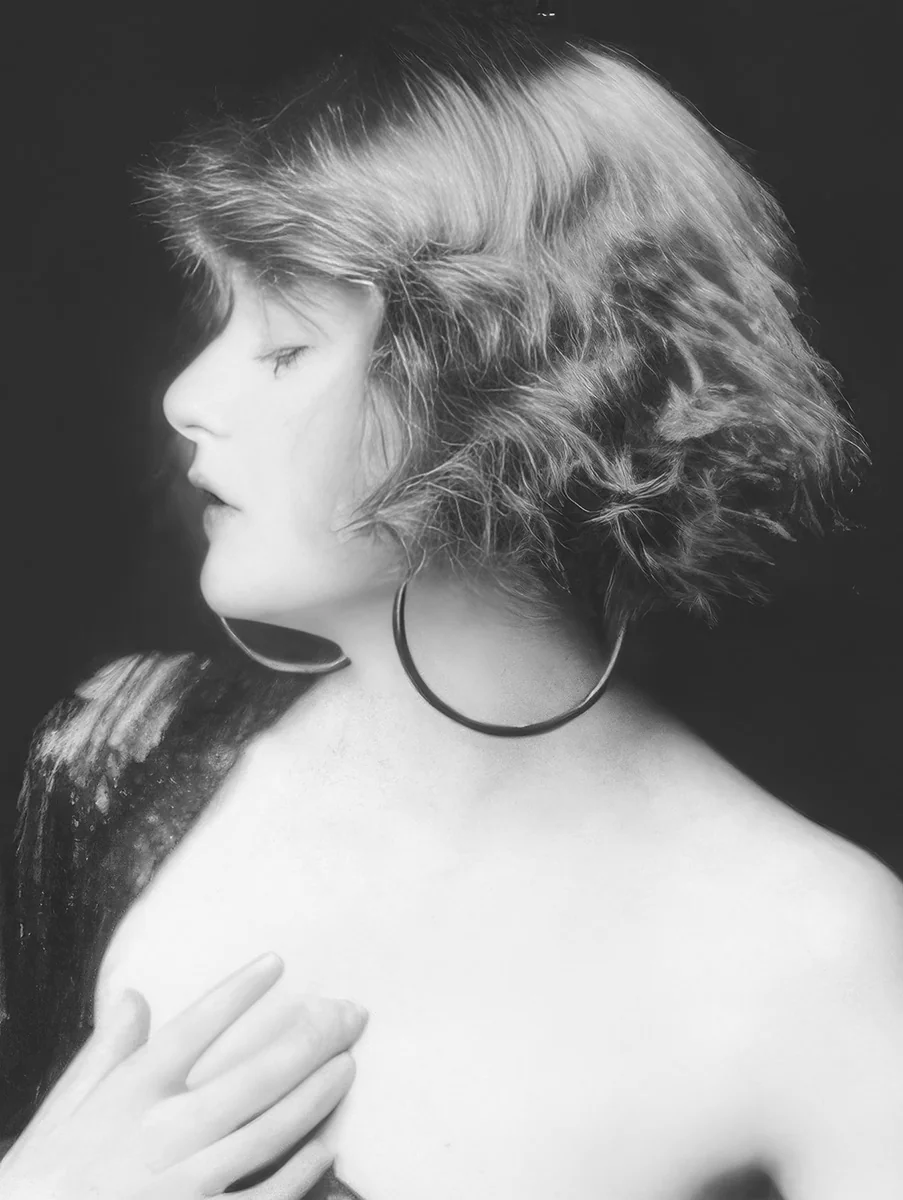
Mary Nolan lived several lives under several names, none of them happy.
Born Mariam Imogene Robertson in Kentucky in 1902, she was orphaned young. After going to New York as a teenager, she modeled for James Montgomery Flagg, and became “Bubbles” Wilson of the Ziegfeld Follies of 1923 and 1924. Known for her remarkable beauty, she was one of the most photographed women in America.
A brutally public affair with married comedian Frank Tinney, whom she accused of beating her savagely, was a national scandal and led to her firing from the Follies.
She rebuilt herself twice: as Imogene Robertson, star of seventeen German silent films during the mid 1920s, and then as Universal’s Mary Nolan, playing opposite Lon Chaney in Tod Browning’s West of Zanzibar (1928).
An affair with MGM fixer Eddie Mannix ended, by her account, in a beating that hospitalized her for months and led to a morphine addiction that shadowed the rest of her life. In 1941 she sold her confessions to The American Weekly as “The Real Life Follies of Bubbles Wilson.”
She died of a barbiturate overdose in 1948, aged forty-five. I’ve told her full story in Mary Nolan: Tragic Ziegfeld Beauty, and transcribed her complete 1941 memoir.
Olive Thomas
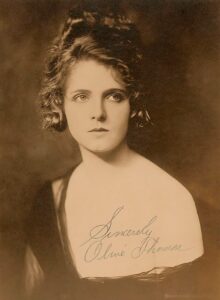
Olive Thomas packed a model’s career, sudden Broadway stardom, a star film career, a celebrity marriage, and a founding Hollywood scandal into her short life.
Born Olive Duffy in Charleroi, Pennsylvania, on October 20, 1894, she was a teenage bride escaping a mill town when she won Howard Chandler Christy’s “Most Beautiful Girl in New York City” contest in 1914.
Ziegfeld put her in his 1915 Midnight Frolic, the after-hours rooftop show where chorus girls danced on a glass walkway above the diners. She also became Ziegfeld’s mistress. Photoplay reported that a director had her “thrown into the Hudson so she would look wet for a scene. It was the last of October.”
She married Mary Pickford’s wayward brother Jack. That led to her death in Paris later in 1920, five days after swallowing mercury bichloride medicinal solution, a syphilis treatment Jack kept in their Ritz hotel bathroom. Ruled accidental, endlessly speculated about, her death opened Hollywood’s scandal era and made her a legend: her ghost is still said to haunt the New Amsterdam Theatre.
Mary Thurman
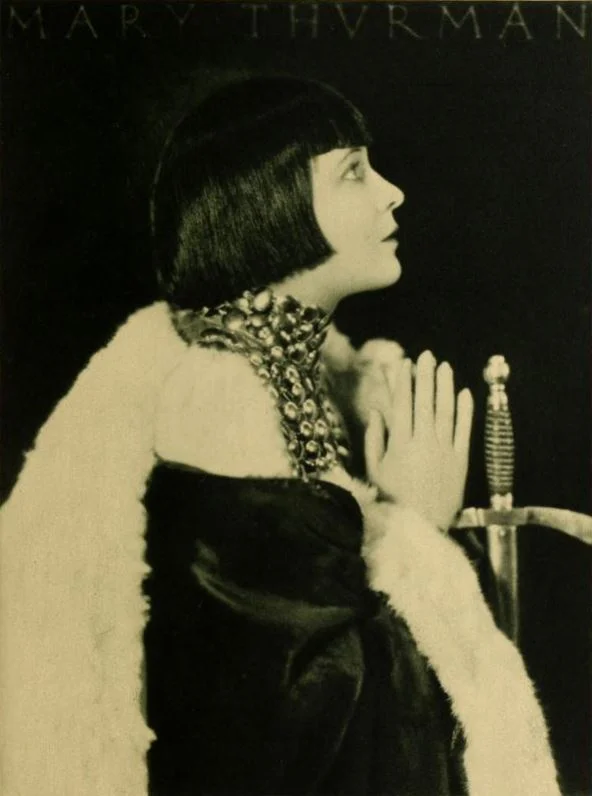
Mary Thurman’s story is short and cruel.
Born Mary Christiansen into a Danish American family in Richfield, Utah, on April 27, 1895, she graduated from the University of Utah and taught school before entering Mack Sennett comedies in California around 1915.
She became one of the original Sennett Bathing Beauties. Photoplay teased in 1921, “Mary Thurman has rosy hair and a rosy disposition. How could a girl be reared in Mack Sennett’s comedy factory and have a happy disposition?”
She graduated to serious drama. Director Allan Dwan starred her in The Scoffer (1920), A Broken Doll (1921), and The Sin of Martha Queed (1921), and she supported Gloria Swanson in Zaza (1923).
Filming Down Upon the Suwanee River in Florida swamps in 1924, she contracted what was reported as malaria; she then developed pneumonia and died on December 22, 1925, at thirty. Photoplay’s obituary summed up the arc: “She had been a university graduate, a school teacher, a belle of filmland, an ambitious red-headed young actress.”
Pearl White
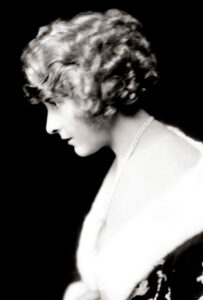
For a stretch of the 1910s, Pearl White may have been the most famous woman in the world: a film queen whose cliffhangers had audiences on five continents holding their breath.
Born Pearl Fay White in Green Ridge, Missouri, on March 4, 1889, she played Little Eva in a touring Uncle Tom’s Cabin as a child, and entered films in 1910 when throat trouble ended her stage singing. The Perils of Pauline (1914) made her famous; The Exploits of Elaine and The House of Hate kept her there. She did most of her own stunts until a spinal injury slowed her. The danger was real: in 1922, a stuntman was killed doubling for her in Plunder, while trying to leap from a moving bus to an elevated-railway girder in Manhattan.
Photoplay reported in 1919 that she had “declared herself against the [movie] serial” and would make only prestige features for Fox, a pivot that fizzled.
She wrote her own third act in Paris. She headlined a Folies Bergère revue, turned up at the Ritz in what Photoplay called “the most adorable chinchilla coat.”
She died in Paris in 1938, at forty-nine, of liver failure, and is buried at Passy Cemetery.
Several of the women above — Olive Thomas, Mae Murray, Billie Dove, Gilda Gray, and Mary Nolan among them — are profiled in Ziegfeld Girls and the Birth of Hollywood Glamour, a photographic history of fifty-three Follies performers who went to Hollywood. Browse all my books.
For the figure so many of these careers were built around, see G. Stanley Hall and the Flapper, with the full 1922 text of Flapper Americana Novissima.
Further reading: Every portrait above is by Alfred Cheney Johnston. My peer-reviewed Alfred Cheney Johnston article in Afterimage examines his studio practice in detail.